

 By Emmanuel Bamfo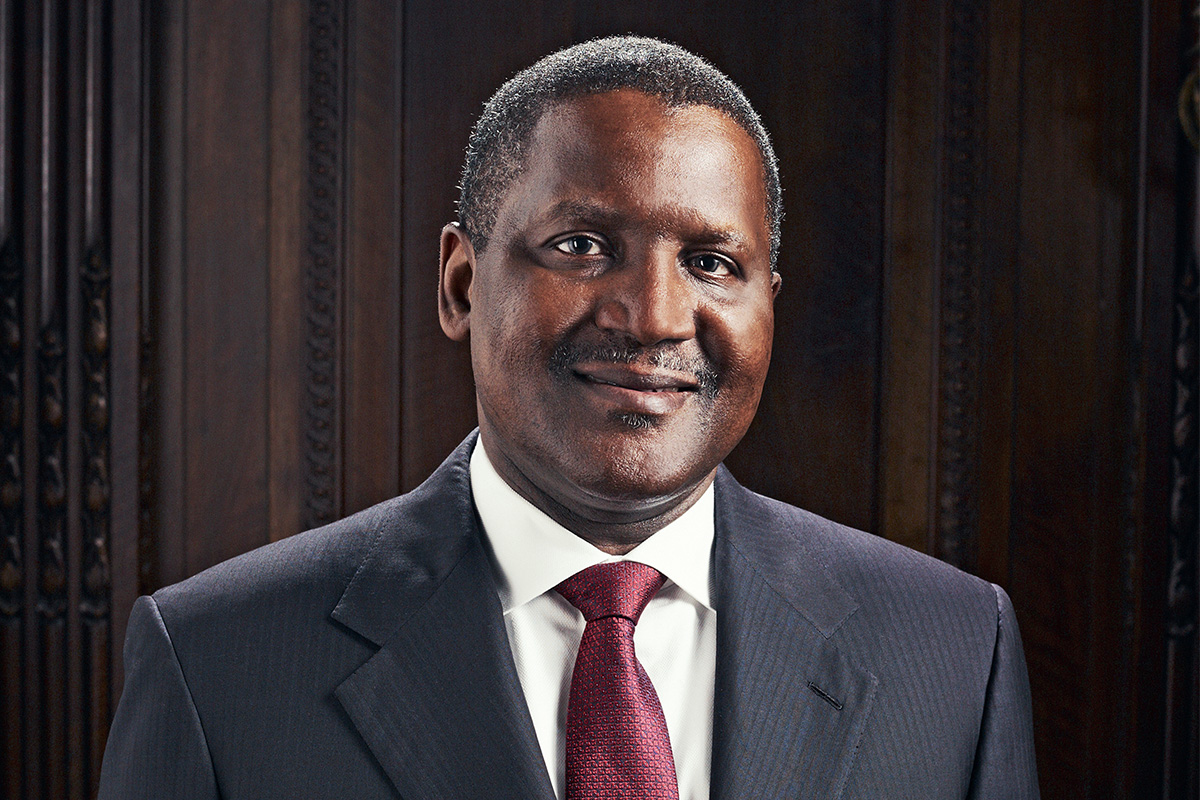
Aliko Dangote is currently worth approximately $36.5 billion according to real-time data from the Bloomberg Billionaires Index, comfortably maintaining his long-standing position as Africa’s richest human. Forbes estimates his wealth closer to $28.5 billion on their annual tracking lists, highlighting a massive personal wealth expansion driven by massive investments in local manufacturing and petroleum refining.
Many people across West Africa wonder if building a fortune of this scale requires magic, special political favours, or sheer luck. The real story comes down to strategic risk-taking, local production dominance, and an aggressive focus on essential everyday commodities like cement, sugar, salt, and fuel.
Understanding how his net worth grew so large provides valuable lessons about patience, market control, and building long-term industrial infrastructure across the continent.
What is Aliko Dangote’s exact net worth right now?
Aliko Dangote’s net worth sits at an estimated $36.5 billion, representing a gain of more than $6.5 billion within the first half of 2026 alone. Financial tracking data confirms that his current fortune easily exceeds the combined annual gross domestic product of over thirty African nations.
Tracking billionaire wealth across emerging markets requires looking at both publicly traded stocks on equity exchanges and massive private industrial holdings. While daily stock market movements can cause short-term fluctuations in paper wealth, Dangote’s core holdings remain remarkably resilient because they produce everyday goods that communities cannot survive without.
Forbes lists his wealth at $28.5 billion, whereas Bloomberg’s real-time index tracks his fortune significantly higher near $36.8 billion. This valuation gap exists primarily because different financial analysts use varying metrics to evaluate the enterprise value of his massive private petroleum refinery in Lagos before any official international stock listing.
| Financial Metric | Verified Valuation | Global Context and Economic Impact |
| Bloomberg Net Worth Index | $36.5 Billion | Ranked among the top 65 richest individuals globally |
| Forbes Billionaires Ranking | $28.5 Billion | Ranked #1 Richest Person in Africa for 15 straight years |
| Refinery Enterprise Valuation | $20 Billion to $39.1 Billion | Operates as the largest single-train crude refinery worldwide |
| Year to Date Wealth Surge | +$6.5 Billion | Fast-paced gain driven by fuel exports and cement profits |
| Economic Benchmark Scale | Greater than 33 African GDPs | Exceeds total national economic outputs of multiple nations |
Financial records show that Dangote Cement alone paid over N412 billion in federal corporate taxes to the Nigerian government across a three-year period. His corporate subsidiaries represent roughly 10 percent of the total market capitalisation on the Nigerian Exchange, demonstrating how deeply his business empire is linked to regional financial stability.
How did a small trading business transform into an industrial giant?
Dangote started his business venture in 1977 after securing a modest $3,000 loan from his uncle to trade basic commodities like rice, sugar, and flour. He quickly realized that importing finished goods placed his profit margins at the mercy of foreign suppliers, shipping lines, and exchange rate spikes.
During the late 1990s, he made a decisive strategic pivot from basic commodity trading to domestic industrial manufacturing. By constructing giant processing factories directly within West Africa, he eliminated international freight expenses, bypassed import tariffs, and consistently undercut foreign competitors on price.
This bold shift created the modern Dangote Group conglomerate, which currently commands dominant market shares in cement production, sugar refining, salt processing, and agricultural fertilizer distribution across multiple regions.
The Evolution of the Empire
In the early trading phase from 1977 through the 1980s, the company focused on bulk purchasing and distribution of imported food items. This stage generated steady cash flow and built a massive distribution network across urban and rural markets.
The transition to manufacturing began in the 1990s with local pasta mills, sugar refineries, and salt processing plants. This phase allowed the group to capture higher operating margins while retaining capital locally rather than sending funds overseas.
The heavy industry expansion phase kicked into high gear with the establishment of Dangote Cement, followed by massive investments in urea fertilizer plants and world-scale petroleum refining.
How is the Dangote Petroleum Refinery driving his wealth explosion?
The 650,000 barrels-per-day Dangote Petroleum Refinery in Lagos serves as the single largest asset pushing his total net worth toward unprecedented highs. The mega facility processes domestic crude oil into high-grade gasoline, diesel, and aviation fuel for local consumption and international export.
For decades, African nations exported unprocessed crude oil to overseas refineries only to buy back expensive refined fuel at premium market rates. Dangote identified this structural market inefficiency and spent over ten years constructing a massive $20 billion refinery complex to process energy resources on home soil.
By supplying refined petroleum products directly across West Africa, the refinery captures massive refining margins that used to flow to European and Asian trading firms. Official trade reports indicate that the refinery turned Nigeria into a net exporter of petrol, generating significant foreign exchange income that boosts his overall net worth.
Strategic Impact of Local Energy Production
Local refining drastically cuts transport distances for crude oil and finished petroleum, lowering supply chain costs across the region. This localized approach creates a reliable buffer against global shipping disruptions and foreign supply shortages.
The facility also produces high-demand industrial byproducts like polypropylene, which feed directly into regional packaging, plastic manufacturing, and textile industries. This multi-product output maximizes revenue generation from every single barrel of crude processed at the site.
Which major companies contribute the most to his daily net worth?
Dangote Cement remains the principal public foundation of his wealth portfolio, with his 86 percent controlling equity stake valued at over $12 billion. The company operates manufacturing facilities across ten African countries, producing tens of millions of metric tonnes of cement annually.
Beyond cement production, his overall net worth relies on three additional publicly traded corporate entities that deliver strong annual dividend revenues:
- Dangote Sugar Refinery: Controls roughly 70 percent of Nigeria’s refined sugar market, supplying major beverage manufacturers and food processors.
- NASCON Allied Industries: Dominates regional consumer salt refining, industrial food seasoning, and vegetable oil distribution.
- Dangote Fertilizer Plant: Features a $2.5 billion state-of-the-art complex capable of producing 3 million metric tons of urea fertilizer per year for global export.
┌────────────────────────────────────────────────────────┐
│                   DANGOTE GROUP                        │
├───────────────────┬───────────────────┬────────────────┤
│   Dangote Cement  │ Petroleum Refinery│  Sugar & Salt  │
│    (86% Stake)    │ (650,000 bpd)     │  (NASCON)      │
└───────────────────┴───────────────────┴────────────────┘
The diversified nature of these business units ensures that even if one sector experiences a temporary slowdown, the remaining industrial divisions generate strong operational cash flows.
How does Dangote’s net worth compare to other African billionaires?
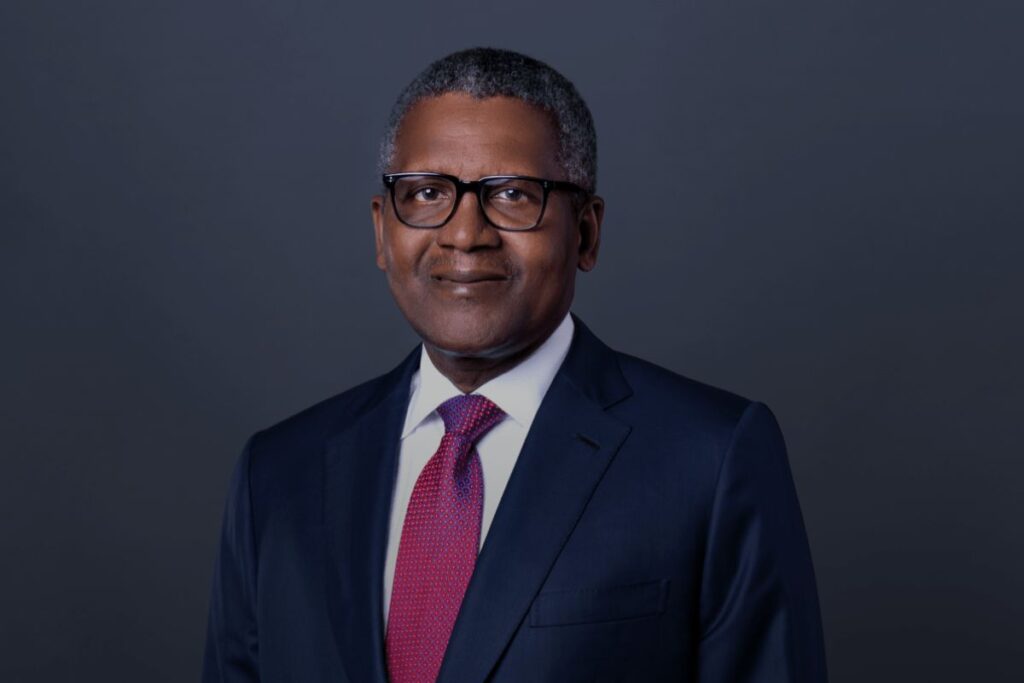
Aliko Dangote leads the African wealth rankings by a wide margin, possessing nearly double the net worth of his nearest regional competitor. South African luxury goods tycoon Johann Rupert occupies second place with an estimated fortune of $18 billion.
While many global billionaires accumulate wealth through software platforms, media networks, or luxury fashion brands, Dangote built his capital on essential physical infrastructure.
| Business Figure | Country | Estimated Net Worth | Primary Sector / Industry |
| Aliko Dangote | Nigeria | $28.5B to $36.5B | Cement, Petroleum, Sugar, Fertilizer |
| Johann Rupert & Family | South Africa | $18.0 Billion | Luxury Goods (Richemont), Fashion |
| Abdulsamad Rabiu | Nigeria | $15.9 Billion | Cement, Sugar, Real Estate (BUA Group) |
| Nathan Kirsh | South Africa | $15.2 Billion | Wholesale Food Distribution, Commercial Real Estate |
| Nicky Oppenheimer | South Africa | $10.6 Billion | Diamond Mining, Private Investments |
The stark contrast in wealth accumulation strategies reveals that heavy industrial manufacturing provides an unmatched economic moat across developing economies. Roads, bridges, housing, and food supplies require physical raw materials regardless of digital technology trends.
What major economic threats could impact his fortune in the future?
Severe currency devaluation represents the single largest hazard to Dangote’s paper net worth on global wealth trackers like Forbes and Bloomberg. Because his primary operations generate revenues in local currencies across West and Central Africa, sharp currency depreciations reduce his total valuation when converted into US Dollars.
Substantial debt service obligations also require constant strategic management because mega industrial projects require billions in foreign loan capital. Managing interest payments during volatile macroeconomic cycles requires aggressive operational efficiency and reliable cash collection across all subsidiaries.
Mitigating Foreign Exchange Risks
To protect his conglomerate against domestic currency fluctuations, Dangote has aggressively scaled export operations to earn hard currency reserves. Exporting urea fertilizer and refined petroleum products to global buyers provides direct US Dollar earnings that offset local currency devaluations.
He has also diversified geographic operations by establishing manufacturing plants in South Africa, Ethiopia, Zambia, Tanzania, and Kenya. Spreading operational risk across multiple African nations ensures that localized economic downturns do not paralyze the entire enterprise.
How does Aliko Dangote spend and protect his massive wealth?
Dangote consistently channels the vast majority of his corporate dividend payouts straight back into expanding local manufacturing plants and heavy infrastructure projects. Rather than spending billions on personal luxury assets or international sports clubs, he focuses on capital deployment that generates compounding returns.
Through the Aliko Dangote Foundation, he has committed hundreds of millions of dollars to combatting public health emergencies, severe malnutrition, and educational inequality.
- Malnutrition Initiatives: Partnered with the Bill & Melinda Gates Foundation to commit $100 million toward eliminating childhood malnutrition in West Africa.
- Higher Education Support: Donated N1.2 billion for modern student housing units and academic facilities at Ahmadu Bello University.
- Humanitarian Assistance: Provided over $10 million in direct financial relief to displaced families affected by regional conflicts.
To protect his family legacy and manage global investment risks, he established a specialized family office in Dubai. This asset management firm oversees international portfolio diversification outside of his core industrial holdings across the African continent.
What practical lessons can ambitious African entrepreneurs learn from his success?
The core principle behind Dangote’s business model is import substitution, which involves replacing imported commodities with locally produced goods. Aspiring business leaders can build scalable enterprises by spotting goods that their local economies import in huge volumes and manufacturing them domestically instead.
Another crucial takeaway is the importance of long-term patience when constructing foundational assets. The Dangote Petroleum Refinery endured years of construction delays, supply chain disruptions, and escalating costs, but staying focused on the end goal produced an unmatched competitive advantage.
Core Strategic Takeaways
- Focus on essential consumer needs rather than fleeting market trends.
- Reinvest profits into vertical integration to control raw material supplies.
- Build extensive distribution networks that competitors cannot easily duplicate.
- Maintain financial discipline and keep operational efficiency high during economic downturns.
      Identify Mass Imports
               │
               ▼
   Build Local Manufacturing
               │
               ▼
   Control Distribution Channels
               │
               ▼
   Reinvest Dividends into Expansion
By prioritizing long-term industrialization over short-term trading profits, entrepreneurs can build resilient businesses that survive changing market conditions.
Frequently Asked Questions About Aliko Dangote’s Net Worth
Is Aliko Dangote currently the richest Black person in the world?
Yes, Aliko Dangote maintains his position as the wealthiest Black individual on earth, with his net worth exceeding $36.5 billion. His nearest global peers include American tech executives and sports team owners, but Dangote remains the richest Black billionaire by a wide margin.
How much money does Dangote earn from cement production every year?
Dangote Cement generates billions of dollars in annual group revenues, delivering hundreds of millions of dollars in net dividend payouts directly to his holding companies each fiscal year. His 86 percent ownership stake ensures he receives the lion’s share of all distributed corporate profits.
Does Aliko Dangote own any major football clubs in Europe?
No, Aliko Dangote does not currently own a European football club, despite publicly expressing interest in acquiring Arsenal Football Club in past years. He chose instead to focus his investment capital on completing his $20 billion petroleum refinery and expanding regional industrial plants.
Also Read: elon musk built a worth hundreds of billions