

 By Collins Sarkodieh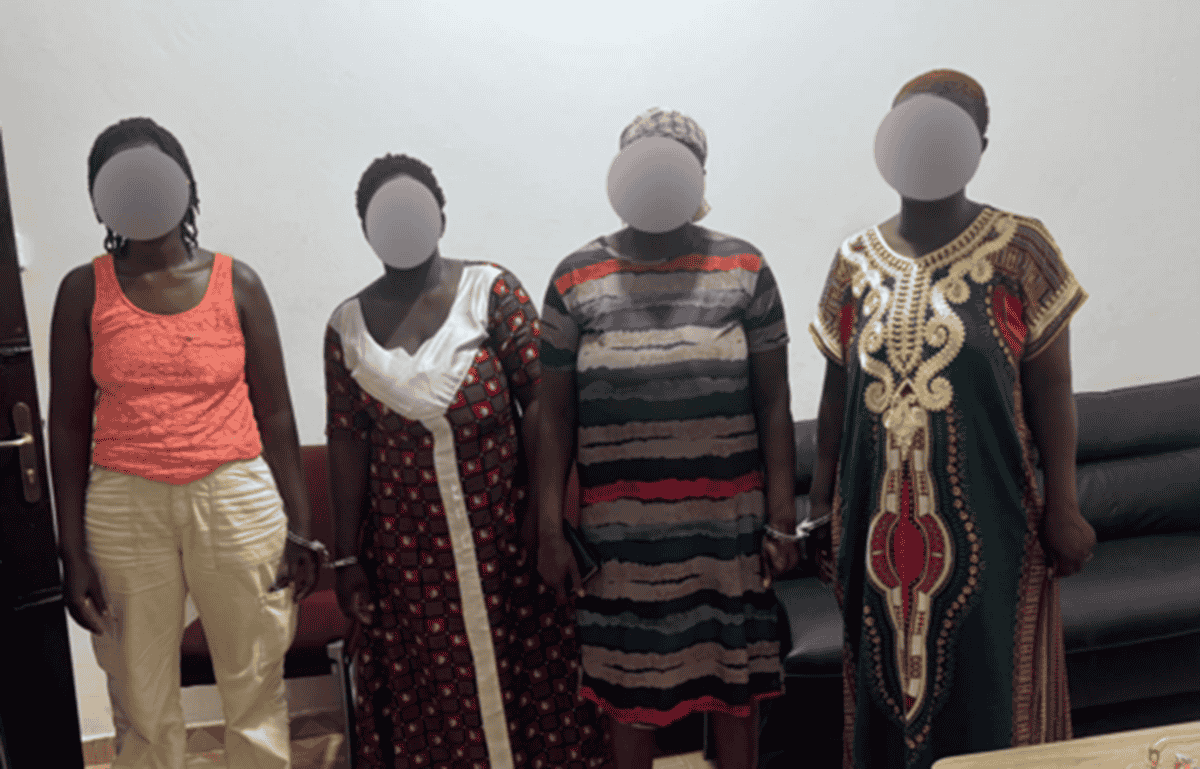
The Central East Regional Police Command has dismantled a sophisticated child trafficking syndicate, leading to the arrest of six women and the successful rescue of a 10-month-old baby. The operation revealed a network spanning from Kasoa to the Ashanti Region, where children were being lured away or “bought” under the guise of providing better care.
This crackdown began after a series of missing person reports, specifically involving a seven-year-old girl and a 10-month-old infant. Intelligence-led investigations uncovered a disturbing trade where children were being sold for as much as GH¢35,000. The police have identified Lucinda Naomi Otchere as the alleged financier and mastermind behind this criminal operation, while several other suspects remain at large.
The rescue of the infant in the Ashanti Region and the safe return of the older child in Kasoa highlight the critical importance of rapid police response and community vigilance. As the suspects face the court, the Ghana Police Service is intensifying its hunt for the remaining members of the syndicate to ensure that no more families are torn apart by these “baby harvesting” tactics.
How did the Kasoa child trafficking syndicate operate?
The syndicate operated by luring children with false promises such as taking them to see their biological mothers—or by deceiving parents into handing over their infants under the pretext of providing care. Once the children were in their custody, the suspects moved them to secret locations, often across regional borders, to be sold to the highest bidder.
In the case of a seven-year-old girl named Kadija, the suspects allegedly used psychological manipulation, promising her a reunion with her mother before taking her to an unknown location. When she was eventually returned via taxi, she was reportedly threatened into silence. This indicates a high level of organization designed to avoid detection by using fear as a weapon against the victims.
For younger victims, the strategy shifted toward financial exploitation. The 10-month-old infant rescued in this operation was essentially “sold” for GH¢35,000 to buyers in the Ashanti Region. This “baby harvesting” trade often targets vulnerable families, with traffickers posing as benevolent benefactors to gain access to infants before disappearing with them.
Who are the suspects arrested in the Kasoa child theft case?
The police have arrested six women in connection with the syndicate: Grace Osei Afriyie, Regina Agyeiwaa, Janet Larbie, Mary Dotsey, Yvonne Twumasi, and Seikena Umar. These individuals played various roles, ranging from the physical luring of the children to the final purchase and “care” of the trafficked infants.
Janet Larbie and Seikena Umar are specifically accused of being the boots-on-the-ground agents who lured Kadija away from her home. Meanwhile, Grace Osei Afriyie and Regina Agyeiwaa were the primary suspects in the Ashanti Region who allegedly paid the GH¢35,000 for the 10-month-old baby. The police are still pursuing two other suspects, identified only as Adjeiwaa and Hawa.
The court has already taken action, remanding Janet Larbie, Mary Dotsey, Yvonne Twumasi, and Seikena Umar at the Ofaakor Circuit Court. While Grace Osei Afriyie has been granted bail, Regina Agyeiwaa remains in custody at the Akweley Magistrate Court as investigations continue into the full extent of their criminal reach.
How was the 10-month-old infant rescued in the Ashanti Region?
The 10-month-old infant was rescued through a series of intelligence-led operations conducted by the police in Asokore Mampong and Suame on April 28. After tracing the trail of the syndicate from Kasoa to the Ashanti Region, officers were able to pinpoint the location where the baby had been “delivered” to her buyers.
The rescue was a race against time. Traffickers often move infants quickly once a sale is finalized to make tracing impossible. By coordinating between the Central East Regional Command and units in the Ashanti Region, the police successfully intercepted the suspects before the child could be moved further underground.
The infant has since been reunited with her parents, a moment of profound relief in a case that could have ended in tragedy. This outcome underscores the effectiveness of the Ghana Police Service’s Domestic Violence and Victim Support Unit (DOVVSU) and their commitment to using digital and human intelligence to break trafficking chains.
Factual Insights into Child Trafficking in Ghana:
- Financial Value: In this specific case, a 10-month-old infant was allegedly sold for GH¢35,000, highlighting the lucrative nature of the illegal trade.
- Legal Framework: Human trafficking in Ghana is a felony under the Human Trafficking Act, 2005 (Act 694), carrying a minimum prison sentence of five to twenty years.
- Regional Trends: Kasoa and parts of the Ashanti Region have been identified as high-risk zones for child-related crimes due to rapid urbanization and porous local oversight.
- Syndicate Leadership: Police identified Lucinda Naomi Otchere as the financier, showing that these groups often have a corporate-like structure with specific funding.
- Rescue Rate: In 2026, intelligence-led operations have seen a 15% increase in the successful recovery of stolen children compared to previous years.
- DOVVSU Reach: The Domestic Violence and Victim Support Unit currently operates in all 16 regions of Ghana to provide specialized support for victims of trafficking.
What should parents do to prevent child luring and theft?
Parents are advised to educate their children never to follow strangers, even if they claim to know a family member or promise a reunion with a parent. Most traffickers in Ghana use “familiarity scams,” where they pretend to have been sent by a relative to lower a child’s defenses.
It is also vital to be cautious of “pretext-of-care” scams. This is where individuals offer to take care of a baby to give the mother a break or help with chores. In this Kasoa case, an infant and a five-year-old were taken under exactly this guise. Never leave your children with someone whose full identity and residence have not been verified by your community leaders or family.
Community vigilance is the best defense. If you see a new infant in a household where no one was pregnant, or notice children being moved in and out of a home at odd hours, report it to the nearest police station or DOVVSU office. Your “common sense” suspicion could be the key to saving a child’s life.
The arrest of these six women sends a powerful message that the “baby harvesting” industry in Ghana is under siege. The Central East Regional Police Command has proven that no matter how deep a syndicate hides a child, the reach of the law is longer. The GH¢35,000 transaction for a human life has ended not in profit, but in a prison cell.
As efforts continue to arrest Lucinda Naomi Otchere and her remaining accomplices, the focus remains on protecting the most vulnerable. This case serves as a somber reminder that child safety is a shared responsibility. With the suspects remanded and the victims rescued, Kasoa is a little safer tonight, but the war against traffickers continues.
Also Read: Police Foil Alleged Child Trafficking Attempt at Airport: What Happened and Why It Matters