

 By Zobia Zulfqar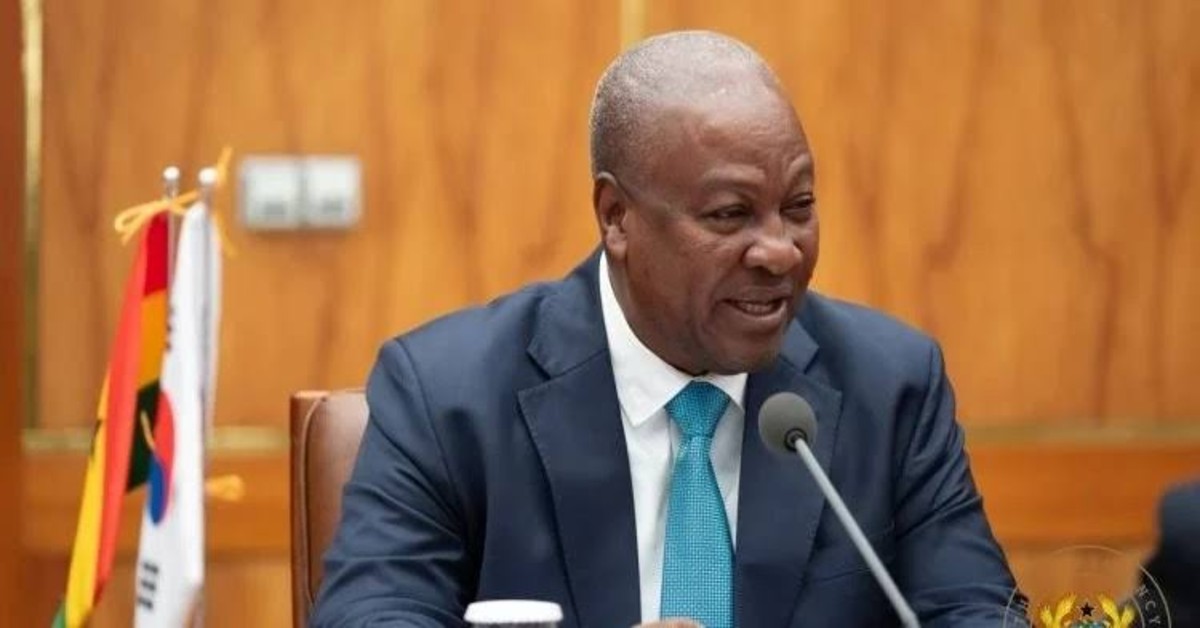
President John Dramani Mahama has called for reparatory justice efforts to fully acknowledge the unique suffering endured by enslaved women and girls during the transatlantic slave trade.
Speaking at the Heads of State Session of the Next Steps High-Level Consultative Conference in Accra on Thursday, June 18, 2026, President Mahama stressed that any meaningful reparations framework must recognize the gender-specific abuses experienced by women throughout the era of slavery.
He noted that while millions of African men, women, and children were subjected to violence, forced labor, and inhumane treatment, enslaved women faced additional forms of exploitation that have often been overlooked in historical accounts.
According to the President, the suffering of women extended beyond labor exploitation. Their bodies and reproductive capacities were used to sustain slavery across generations, creating lasting trauma and injustice that must be acknowledged in modern reparations discussions.
“Any framework for truth-telling, memorialisation, reparatory justice, or historical reckoning that fails to recognise the specific experience of women will remain incomplete,” President Mahama stated.
He paid tribute to women who resisted oppression during and after slavery, highlighting notable figures such as Harriet Tubman and Sojourner Truth. He also recognized the countless unnamed women whose resilience helped preserve families, communities, and cultural identity despite the harsh realities they faced.
President Mahama further acknowledged the contributions of women scholars, activists, policymakers, and legal experts who continue to advance global conversations on reparatory justice and historical accountability.
The President said Ghana’s efforts to champion reparations have gained international recognition following the adoption of a United Nations General Assembly resolution supported by the country. The resolution recognizes the scale, brutality, and lasting consequences of the transatlantic slave trade and racialized chattel slavery.
Looking ahead, President Mahama called for practical actions to move the reparations agenda forward. These measures include expanded research, educational initiatives, memorialization projects, restitution efforts, and stronger partnerships between Africa, the African diaspora, and the international community.
He emphasized that the pursuit of reparatory justice is not about assigning personal blame to present generations for historical actions. Rather, it is about acknowledging the enduring impact of past injustices and taking responsibility for addressing their consequences.
“History does not ask us to inherit guilt, but it asks us to inherit responsibility,” he said.
President Mahama concluded by urging leaders and stakeholders to move beyond declarations and resolutions, noting that the true measure of success will be the ability to transform recognition of historical wrongs into meaningful action and lasting change.
Source: Daily Graphic