

 By Ishmeal
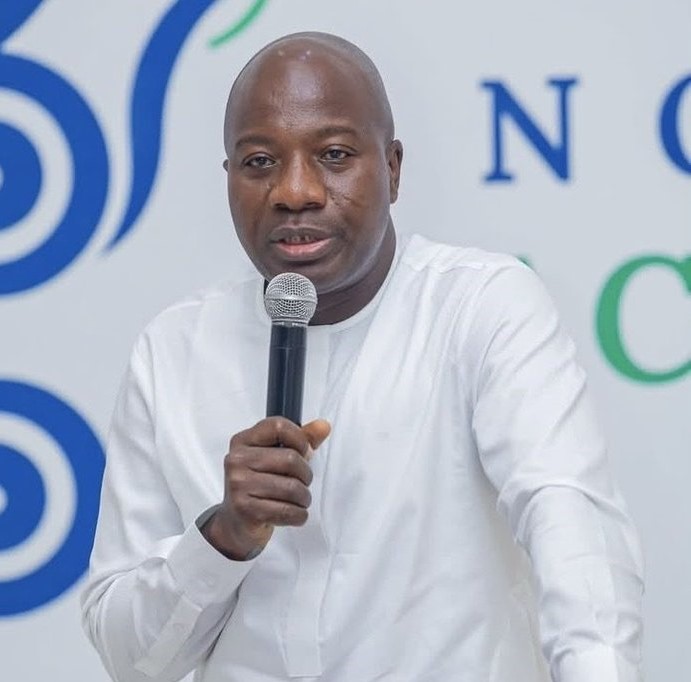
The Minister for Local Government, Chieftaincy and Religious Affairs, Mahama Ayariga, has called on Metropolitan, Municipal and District Assemblies (MMDAs) to take the lead in Ghana’s response to climate change by turning national environmental commitments into practical action at the community level.
He said local authorities were at the forefront of the country’s climate response because communities were directly experiencing the effects of flooding, drought, pressure on land and water resources, and threats to farming livelihoods.
Mr Ayariga made the call at the Ghana National Climate and Environmental, Social and Governance (ESG) Policy Summit 2026, held at the Mövenpick Ambassador Hotel in Accra on Tuesday, October 27.
He stressed that climate change was no longer a distant environmental concern but a present challenge affecting livelihoods, food security, infrastructure, public health and economic stability.
MMDAs Urged to Integrate Climate Action into Development Plans
The Minister said Ghana’s green transition must begin at the district level, with climate change and ESG considerations incorporated into the development plans and budgets of local assemblies.
He explained that national climate commitments would only produce meaningful results if local authorities had the resources, skills and institutional support needed to implement them.
Mr Ayariga said decentralising the green transition required assemblies to strengthen their ability to plan, finance, implement and report on climate-related initiatives.
He also called for better coordination between national institutions and local government authorities to ensure that environmental policies were translated into measurable improvements in communities.
Traditional Authorities and Communities Have a Role
The Minister highlighted the importance of traditional authorities in Ghana’s climate response, describing them as essential partners because of their role as custodians of land and natural resources.
He said cooperation among local assemblies, traditional leaders, community members, government institutions and development partners would be necessary to protect the environment and build resilience against climate-related challenges.
Mr Ayariga also emphasised the need for climate policies to address the circumstances of vulnerable communities, women, young people and people whose livelihoods depend directly on natural resources.
He maintained that the benefits of the green transition should be shared fairly, with no community left behind.
Stronger Coordination and Financing Needed
The Minister said his ministry would continue working with the Office of the Minister of State for Climate Change and Sustainability, the Ministry of Environment, Science and Technology, the District Assemblies Common Fund (DACF), the National Association of Local Authorities of Ghana (NALAG) and development partners to advance climate action.
He further highlighted the importance of transparency, accountability, institutional capacity and reliable data in implementing environmental and sustainability policies.
According to him, public and private institutions must adopt credible sustainability practices, improve environmental and social risk management, and measure their progress against clear standards.
Effective implementation, he noted, would require sustained commitment, adequate financing and stronger partnerships across government, business, academia and civil society.
Summit Calls for Practical Climate Solutions
The Ghana National Climate and ESG Policy Summit 2026 brought together government officials, local government leaders, private sector representatives, development partners and civil society organisations to discuss climate resilience, sustainable investment and the adoption of ESG principles in Ghana.
Held under the theme “Decoding Policy and Regulation for the Next Economy,” the summit focused on how policy and regulation could support sustainable development and responsible economic activity.
Mr Ayariga urged participants to move beyond discussions and ensure that recommendations from the summit led to concrete commitments and practical solutions, particularly at the district level.
He said the success of Ghana’s green transition would depend on how effectively national policies were implemented in local communities.
For MMDAs, this means making climate resilience part of everyday development planning, budgeting and decision-making, while working with communities to protect natural resources and strengthen local livelihoods.
Also Read:Goosie Tanoh Expects 24 Hour Economy Jobs Within Two Years