

 By Collins Sarkodieh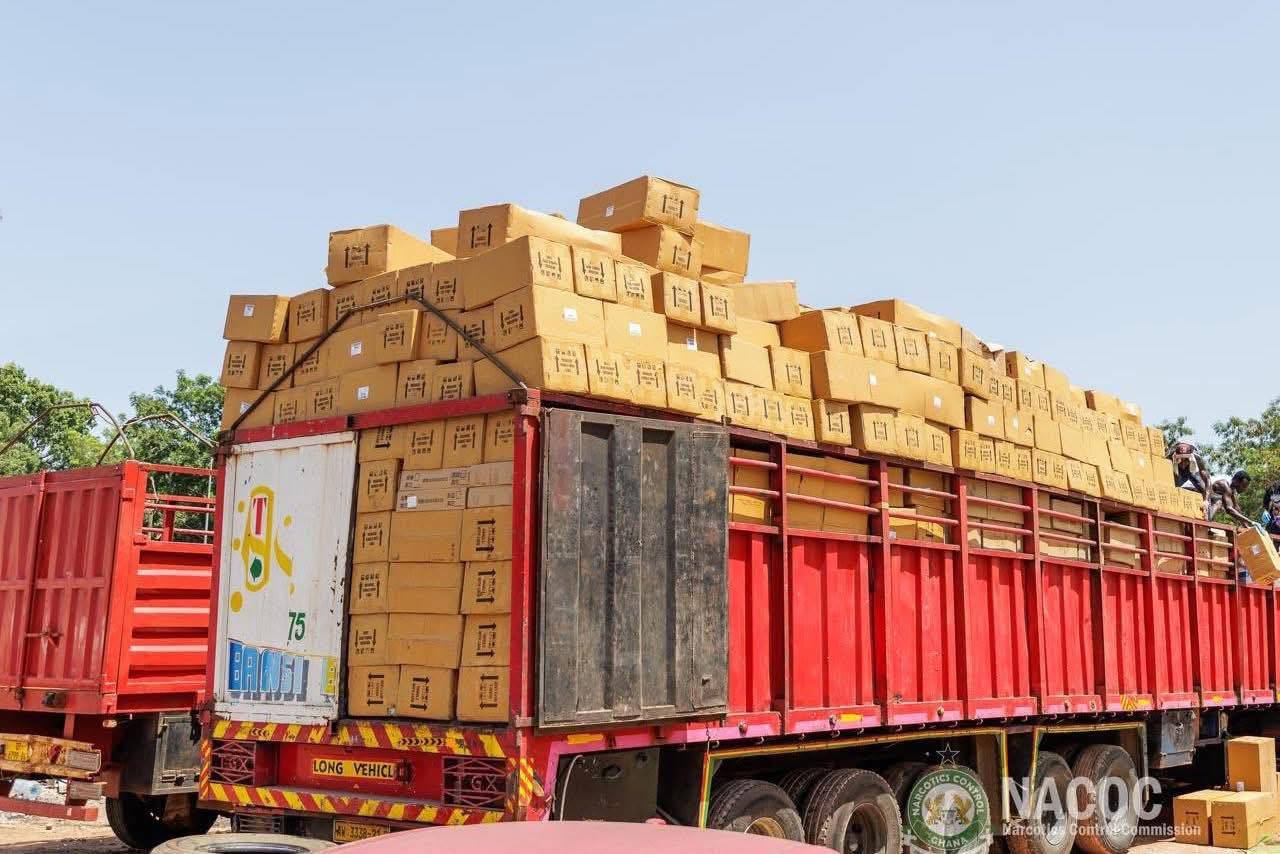
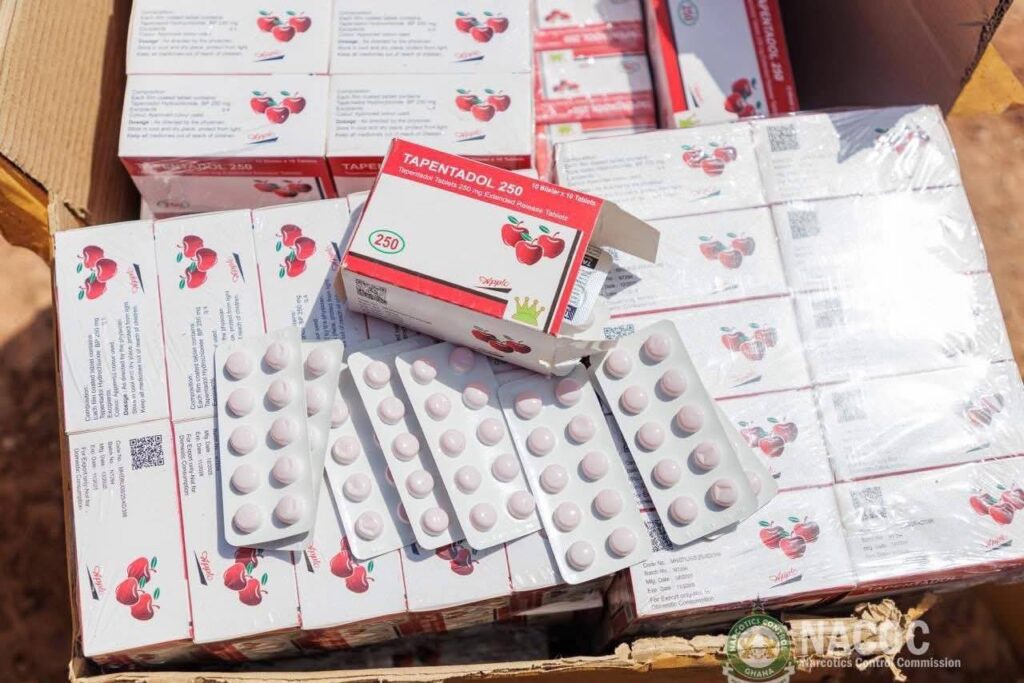
Ghana’s Narcotics Control Commission (NACOC) has executed one of the most significant pharmaceutical drug seizures in the country’s recent history, intercepting five million tablets of Tapentadol. The high-dosage 250mg tablets were discovered concealed within a 40-foot trailer during an intelligence-led anti-drug operation. Authorities confirmed that the massive consignment was in transit to Niger when it was intercepted on Ghanaian soil.
The operation, which NACOC announced via official social media channels on April 30, 2026, marks a major blow to cross-border trafficking syndicates. According to the Commission, four suspects are currently in custody and assisting with ongoing investigations. While their identities have not yet been disclosed to the public, NACOC officials have indicated that further arrests are expected as they continue to dismantle the network responsible for this record-breaking haul.
What is Tapentadol and why is this seizure significant?
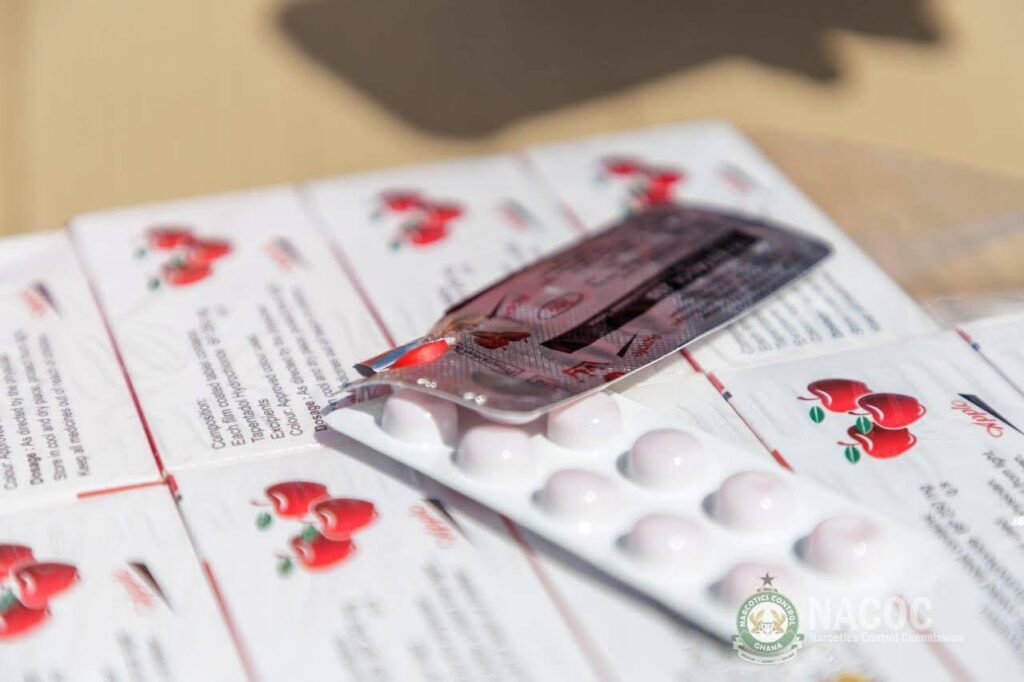
Tapentadol is a potent synthetic opioid painkiller that is strictly regulated worldwide due to its high potential for addiction, physical dependence, and abuse. In Ghana, the drug has gained notoriety on the streets under the alias “Red”. It has been increasingly linked to a burgeoning opioid crisis affecting urban communities across the West African sub-region.
The scale of this single operation is unprecedented. To put the five-million-tablet haul into perspective, NACOC had recorded a cumulative total of 3.7 million tablets seized over the previous three-year period combined. By intercepting this single trailer, authorities have removed more illicit opioids from the black market than in several prior years of enforcement efforts combined, underscoring a dramatic escalation in trafficking volume.
How does the trafficking route connect Ghana to the Sahel region?
The intercepted consignment follows a known smuggling pattern where coastal West African states are used as transit points for landlocked countries in the Sahel. NACOC’s data indicates a steady rise in this specific trade, with the majority of intercepted Tapentadol shipments originating from pharmaceutical exporters based in India.
Traffickers frequently exploit the porous borders and trade corridors of the ECOWAS region to move controlled substances north toward Niger and Mali. By utilizing a 40-foot trailer, the syndicates attempted to move a massive quantity of the drug under the guise of legitimate commercial transit. NACOC’s successful intervention highlights the critical role of intelligence-sharing in identifying these high-capacity shipments before they reach their final destination.
What are the next steps for the NACOC investigation?
NACOC has stated that the arrested individuals are believed to be part of a sophisticated, wider trafficking network involved in the international movement of controlled substances. The focus of the probe has now shifted toward mapping the full distribution network and identifying the financiers behind the operation.
The Commission is currently collaborating with international law enforcement partners to trace the exact origin of the consignment back to the manufacturer and exporter. This international cooperation is essential for tackling the root of the supply chain, as these synthetic opioids are rarely produced within the transit countries themselves. As the investigation deepens, authorities hope to uncover the local and international entities that facilitate such large-scale illegal logistics.

Factual Insights into the Tapentadol Crisis:
- Total Seizure: 5,000,000 tablets of 250mg Tapentadol.
- Operational Date: The seizure was officially announced on April 30, 2026.
- Transport Method: Concealed in a single 40-foot trailer.
- Intended Destination: The consignment was bound for Niger.
- Arrests Made: Four suspects are currently in custody.
- Historical Context: This single haul exceeds the 3.7 million tablets seized over the previous three years combined.
- Street Name: Tapentadol is commonly referred to as “Red” in Ghana.
Why is the rise of “Red” a public health concern?
The proliferation of Tapentadol poses a severe threat to public health because it often serves as a cheaper, more accessible alternative to other opioids. Its high potency means that the risk of fatal overdose is significant, particularly when the tablets are sold in non-clinical settings without professional supervision.
Also Read: FDA Warns of Fake HIV Test Kits Circulating in Ghana
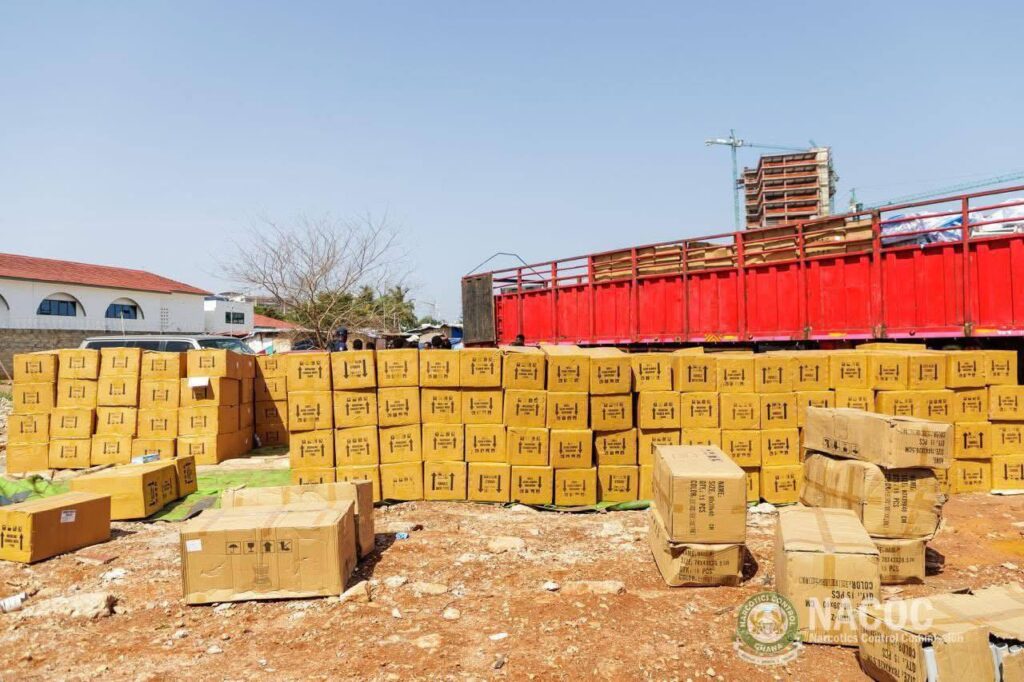
The “Red” crisis is not just a law enforcement issue but a social one, as addiction rates continue to climb in urban centers. By disrupting this supply chain, NACOC is attempting to prevent the further entrenchment of opioid dependency in the region. However, the sheer volume of this latest seizure suggests that the demand remains high and that traffickers are becoming increasingly bold in their logistics.
Also Read: Ghana Navy Seizes Canoe Loaded with 37 Sacks of Suspected Indian Hemp