

 By Zobia Zulfqar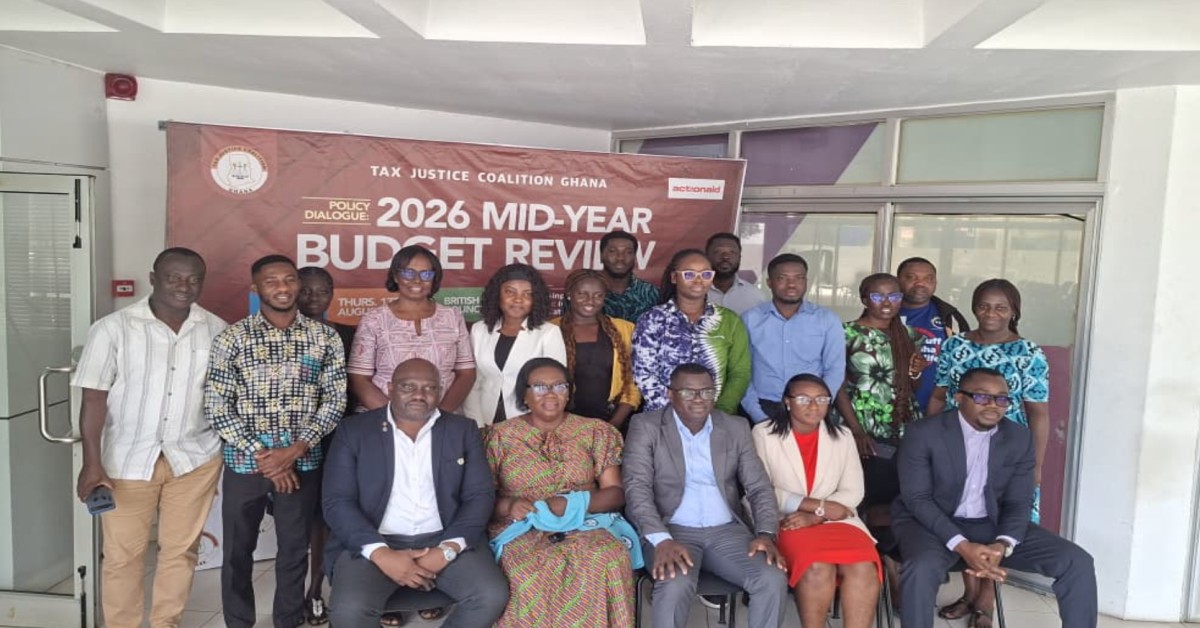
The Natural Resource Governance Institute (NRGI) has urged the Government to improve tax mobilisation from artisanal and small-scale mining to increase domestic revenue and ensure the state captures a greater share of the value generated by the sector.
Mr Patrick Stephenson, Country Manager of NRGI, said artisanal and small-scale mining now accounted for a significant share of Ghana’s gold production, yet its contribution to government revenue remained relatively low.
He made the call during a policy dialogue on the 2025 Mid-Year Budget Review organised by the Tax Justice Coalition-Ghana in Accra.
Mr Stephenson said discussions about domestic revenue mobilisation often centred on introducing new taxes, despite the opportunities available within Ghana’s extractive sector.
He identified artisanal and small-scale mining as an area where stronger revenue collection measures could provide additional resources for the government.
According to him, recent developments in the mining industry indicated that small-scale miners were responsible for a larger share of Ghana’s gold production than previously recognised.
He said the growing contribution of the sector to gold production made it important for the government to examine how effectively the existing revenue system was capturing the economic value generated by miners.
“The question is not whether the sector is producing. The question is whether the revenue system is capturing the value being generated within the sector,” Mr Stephenson said.
His comments come as Ghana continues to implement reforms aimed at improving governance and revenue mobilisation within the gold sector.
The artisanal and small-scale mining sector plays an important role in Ghana’s economy and provides livelihoods for a large number of people. However, the informal nature of many operations presents challenges for taxation, monitoring and regulatory enforcement.
NRGI has previously highlighted taxation of artisanal and small-scale mining as a difficult area for governments because of informality within the industry. Improving formalisation, compliance and local service delivery could help strengthen revenue collection while supporting communities involved in mining.
Ghana has also introduced major changes to the gold trading system through the establishment of GoldBod. The new framework gives GoldBod a central role in buying, selling, assaying and exporting gold produced by artisanal and small-scale miners. The reforms are intended to improve the gold trade, increase earnings and reduce smuggling.
Mr Stephenson’s call for improved tax mobilisation therefore comes within a broader effort to strengthen Ghana’s management of its mineral resources.
A more effective revenue system could help the government benefit from the increasing contribution of small-scale mining to gold production without relying entirely on new tax measures.
Improving revenue collection would also require effective monitoring of production and sales. Accurate information about the quantity of gold produced and the value of transactions is important for determining the taxes and other payments owed to the state.
Weak monitoring and incomplete reporting could make it difficult for tax authorities to establish the actual scale of economic activity within the sector.
NRGI and other natural resource governance organisations have previously advocated stronger systems for monitoring production and improving revenue reporting in extractive industries.
Technology could also play a role in strengthening monitoring and reducing opportunities for under-reporting. Previous NRGI-supported research has proposed the use of remote monitoring technologies to help tax authorities independently verify production and sales information in the extractive sector. (Scribd)
For artisanal and small-scale mining, however, revenue mobilisation needs to be balanced with the economic realities facing miners.
The sector provides employment and income for many households, meaning tax and regulatory reforms need to avoid creating excessive costs or barriers that could push legitimate operators further into informality.
Greater formalisation could instead provide an opportunity to improve compliance while giving miners clearer access to legal markets and government services.
Mr Stephenson’s remarks also highlight the need for policymakers to focus on improving the effectiveness of existing revenue systems rather than relying solely on new taxes.
As Ghana seeks to increase domestic revenue, ensuring that the country’s mineral wealth contributes adequately to public finances remains an important policy issue.
The growing role of artisanal and small-scale miners in gold production makes the sector particularly important to this discussion.
Improving tax collection, strengthening monitoring and encouraging formal participation could help Ghana capture more value from its gold resources while supporting a more transparent and accountable mining industry.
The government and relevant institutions will therefore need to balance revenue objectives with measures that support responsible mining, compliance and sustainable livelihoods within the artisanal and small-scale mining sector.