

 By Collins Sarkodieh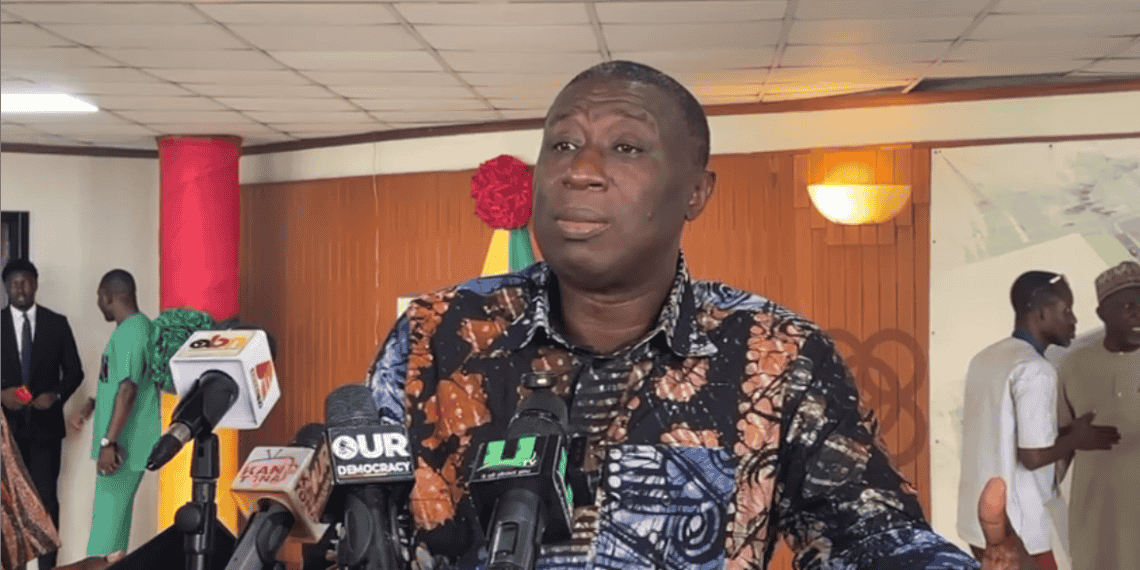
The annual arrival of the rainy season has once again plunged Ghana’s capital into a familiar infrastructure crisis. Member of Parliament for Okaikwei Central, Patrick Yaw Boamah, has issued an urgent call for sustained fiscal investment in drainage infrastructure alongside a radical change in public attitudes toward civic sanitation.
Commenting on the perennial flash floods that submerge key economic corridors during heavy downpours, the lawmaker stressed that resolving this systemic challenge requires deep discipline, long-term urban planning, and a massive national financial commitment.
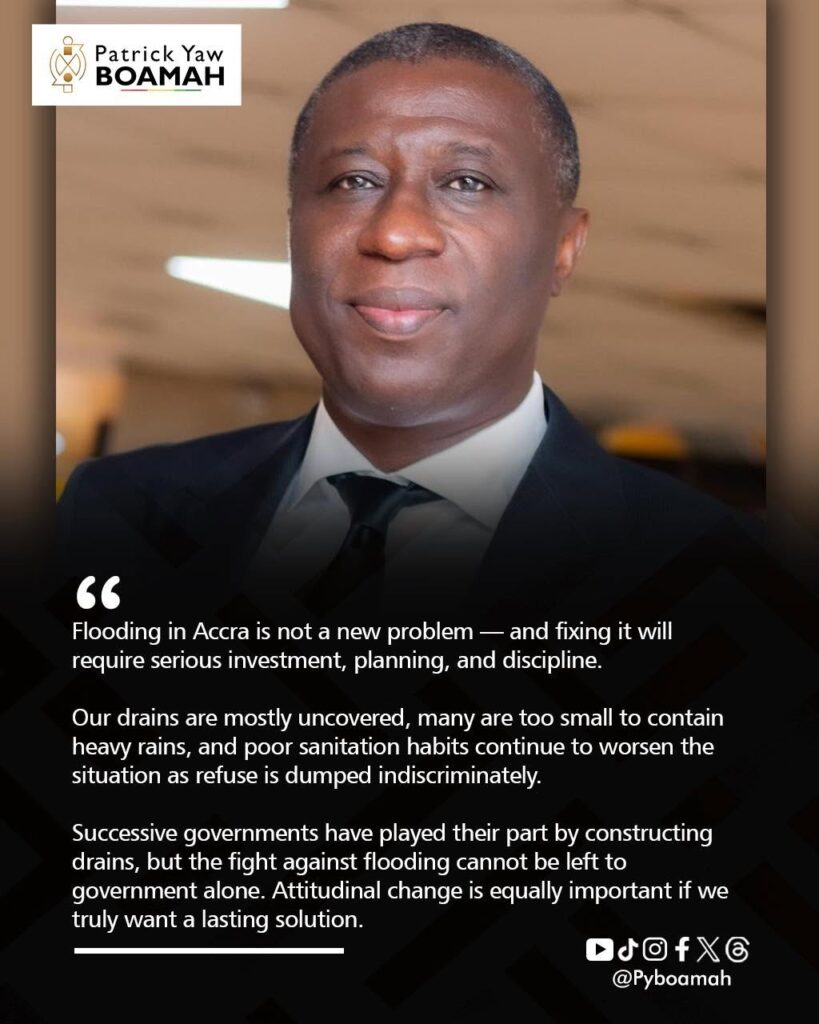
The structural realities of Accra’s primary channels reveal severe operational deficits that municipal engineers struggle to fix. In an official public statement, Boamah highlighted that a significant portion of the city’s drainage network remains completely uncovered and structurally too narrow to handle high-volume mountain runoffs.
Logic dictates that even the most expensive concrete channels will fail if residents treat them as neighborhood trash cans. The lawmaker noted that poor sanitation habits, specifically the indiscriminate dumping of solid household refuse and plastic waste into open culverts, continue to choke critical waterways and accelerate flash floods.
While acknowledging that successive governments have consistently funded drainage expansion projects, the MP insisted that state interventions alone cannot deliver a permanent solution. True ecological resilience relies on shared civic responsibility. Environmental experts and urban planners echo this sentiment, warning that rapid urbanization, unchecked wetland encroachment, and weak building code enforcement will continue to leave roads inundated and businesses damaged until municipal assemblies strictly penalize illegal waste disposal.
Hoping that the Ministry of Works and Housing can magically engineer a flood-proof city while individuals continue to toss garbage bags into open gutters during rainstorms is a hilarious logical error. While upgrading secondary storm drains requires millions of dollars in capital expenditure, changing how we discard empty bottles costs absolutely nothing.
True structural progress relies on matching heavy state infrastructure funds with strict, community-led discipline at the local level. By covering open channels, protecting natural waterways from real estate developers, and taking individual sanitation habits seriously, Accra can finally transform its urban landscape into a safe, dry, and resilient environment for the next generation.
Also Read: Stay Alert: Ghana Meteorological Agency Issues Flash Flood Warning for Major Cities
Source: Ghananewspage.com