

 By Collins Sarkodieh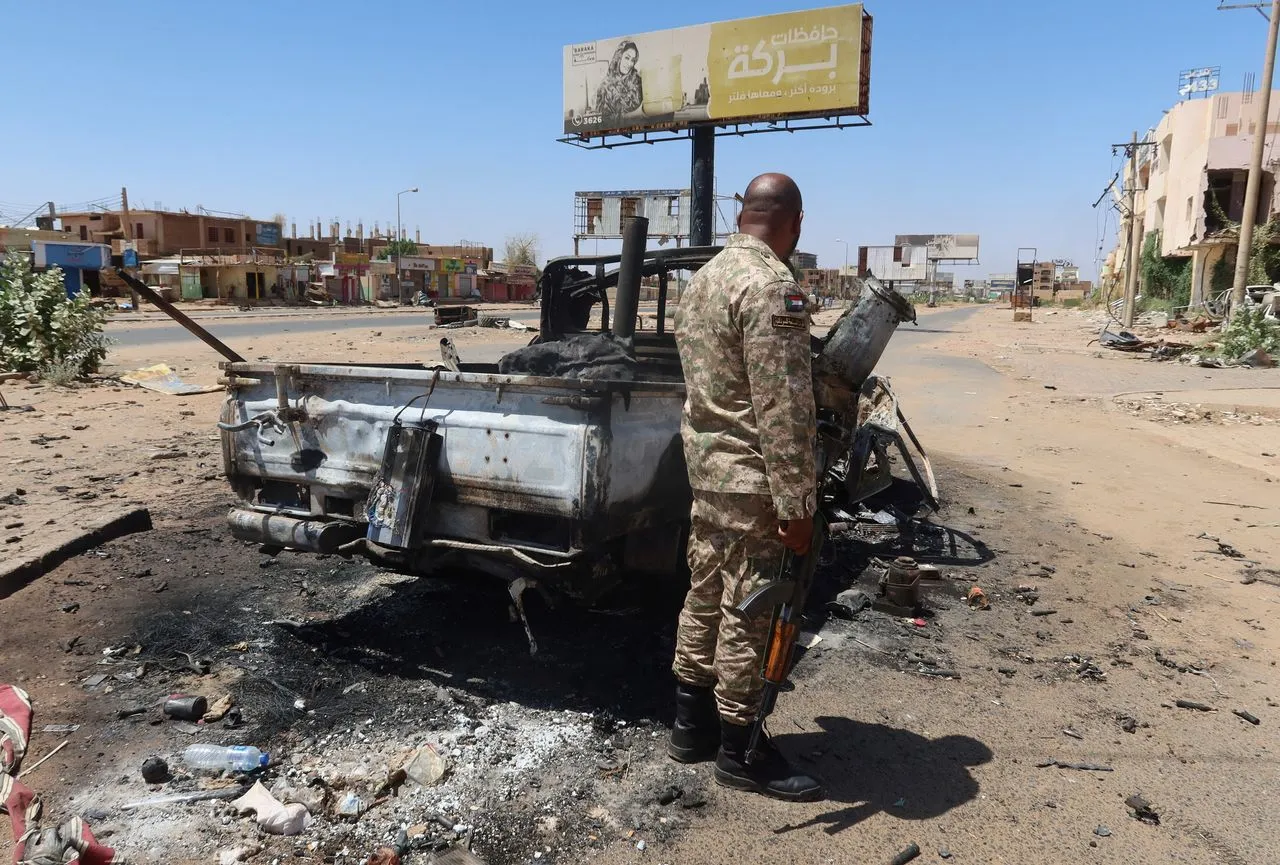
A paramilitary drone strike attributed to the Rapid Support Forces (RSF) killed five civilians on the outskirts of Khartoum on Saturday morning. The attack targeted a civilian vehicle traveling on Jumu’iyyah Road in southern rural Omdurman, resulting in the immediate death of all five passengers.
This incident marks a sharp escalation in the Sudanese conflict, occurring despite the capital region being largely under the control of government forces. Human rights monitors have condemned the strike as a systematic failure to protect non-combatants in a war that has now entered its fourth year. For the international community and residents of the capital, this breach of relative stability signals a dangerous new phase in the use of remote technology against civilian infrastructure.
What happened during the drone strike in Omdurman?
The strike occurred Saturday morning when a paramilitary drone hit a civilian vehicle traveling from White Nile province toward Omdurman. Emergency Lawyers, a rights group tracking violence in the region, confirmed that all five passengers died in the blast.
The vehicle was hit while traversing Jumu’iyyah Road in the southern rural sector of the capital’s sister city. This specific event is the second drone attack recorded in the Khartoum region within a single week. Because the strike occurred in an area recently recaptured by the military, it has raised serious questions about the security of public roads and the ability of the RSF to strike deep into government-held territory.
Who is responsible for the civilian deaths in Khartoum?
The Rapid Support Forces (RSF) have been held accountable for the strike by the Emergency Lawyers rights group. While the paramilitary organization has not immediately claimed the attack, rights monitors state that the RSF is fully responsible for the resulting loss of life.
The RSF has been at war with the Sudanese Armed Forces since April 2023 following disputes over military integration. This pattern of targeting civilians on public roads is described by legal advocates as a brazen violation of international humanitarian law. The lack of distinction between combatants and non-combatants in this strike reflects a continuing pattern of attacks in populated areas that have significantly worsened the humanitarian situation.
How is modern drone technology changing the conflict in Sudan?
Modern warfare in Sudan has seen a 47% increase in drone strikes over the last year, according to recent ACLED conflict data. These remote platforms have become a primary cause of casualties, with 80% of all child killings and injuries in the conflict now attributed to drone attacks.
- Systemic Failure: Drones are increasingly used without a clear distinction between military and civilian targets.
- Infrastructure Risks: Earlier in the week, a drone struck a hospital in Jebel Awliya, further disrupting essential services like water and electricity.
- Urban Stability: The use of drones mirrors trends in other African conflicts where remote technology puts returning displaced residents at high risk.
- Death Traps: Humanitarian groups describe these aerial platforms as “death traps” for civilians using public roads.
What is the current scale of the humanitarian crisis in Sudan?
Sudan currently represents the largest displacement crisis on Earth, with 11.6 million people forcibly displaced from their homes. UN Relief Chief Tom Fletcher has warned that the world is failing Sudan as the war pushes millions toward the brink of famine.
Over 3 million Sudanese have sought safety in neighboring countries like Chad and Egypt to escape the violence. Approximately 24 million people two-thirds of the population now require urgent humanitarian assistance. Famine has already been confirmed in parts of Darfur and the Kordofans, exacerbated by global instability and the rising costs of food and fuel imports.
Also Read: Global Oil Markets on Edge as Iran Signals Leverage Over Strait of Hormuz
Factual Insights into the Sudanese Drone Escalation:
- Fatalities: Five civilians were killed in the Jumu’iyyah Road strike on Saturday morning.
- Displacement: 11.6 million people are currently displaced, making it the world’s largest such crisis.
- Drone Surge: ACLED data shows a 47% increase in the use of drone strikes in Sudan over the past 12 months.
- Child Casualties: Drone attacks are responsible for 80% of child injuries and deaths during the conflict.
- Famine Risk: 24 million people in Sudan are in need of urgent aid, with famine confirmed in multiple regions.
- Regional Instability: More than 3 million refugees have crossed into neighboring countries since the war began.
- Urban Return: Nearly 1.8 million residents had returned to Khartoum before the recent spike in drone attacks.
Why is the Khartoum region no longer considered safe?
The region is seeing a return of violence despite military officials previously declaring the area “completely free” of RSF presence. This relative peace had allowed the airport to resume domestic flights and residents to return, but the latest drone strikes have shattered that sense of security.
The use of remote drones allows paramilitary forces to bypass traditional front lines and strike into the heart of civilian zones. This technology makes it difficult for government forces to guarantee the safety of public roads or essential infrastructure like hospitals. The recent strike in southern rural Omdurman demonstrates that even “cleared” areas remain vulnerable to aerial harassment.
What are the legal implications of targeting civilian vehicles?
Legal advocates and rights groups categorize these strikes as flagrant violations of international humanitarian law. This body of law strictly prohibits targeting civilians under any pretext and requires combatants to distinguish between military and non-military targets.
Emergency Lawyers have emphasized that such acts amount to serious crimes that require accountability without impunity. The pattern of targeting civilians on public roads is seen as a deliberate attempt to expand the risks to civilian life and disrupt the restoration of basic services. Rights groups are calling for an end to the repeated targeting of innocent lives and for a reinforced respect for protection rules during active conflict.
How does Sudan’s displacement compare to other global crises?
Sudan’s displacement crisis is currently the largest in the world, surpassing those in the Middle East and Eastern Europe. The UNHCR reports that over 11.6 million people have been uprooted, creating a massive strain on regional resources in Chad, Egypt, and South Sudan.
The speed and scale of the displacement have overwhelmed international aid efforts. Unlike other crises where displacement is localized, the Sudanese conflict has scattered nearly a quarter of the population across vast distances. UN officials warn that without a significant increase in global attention and funding, the humanitarian situation will continue to deteriorate as famine spreads further into populated regions.
Also Read: US and Iran Agree to Two-Week Ceasefire as Israel Strikes Lebanon
source -gbcghanaonline