

 By Collins Sarkodieh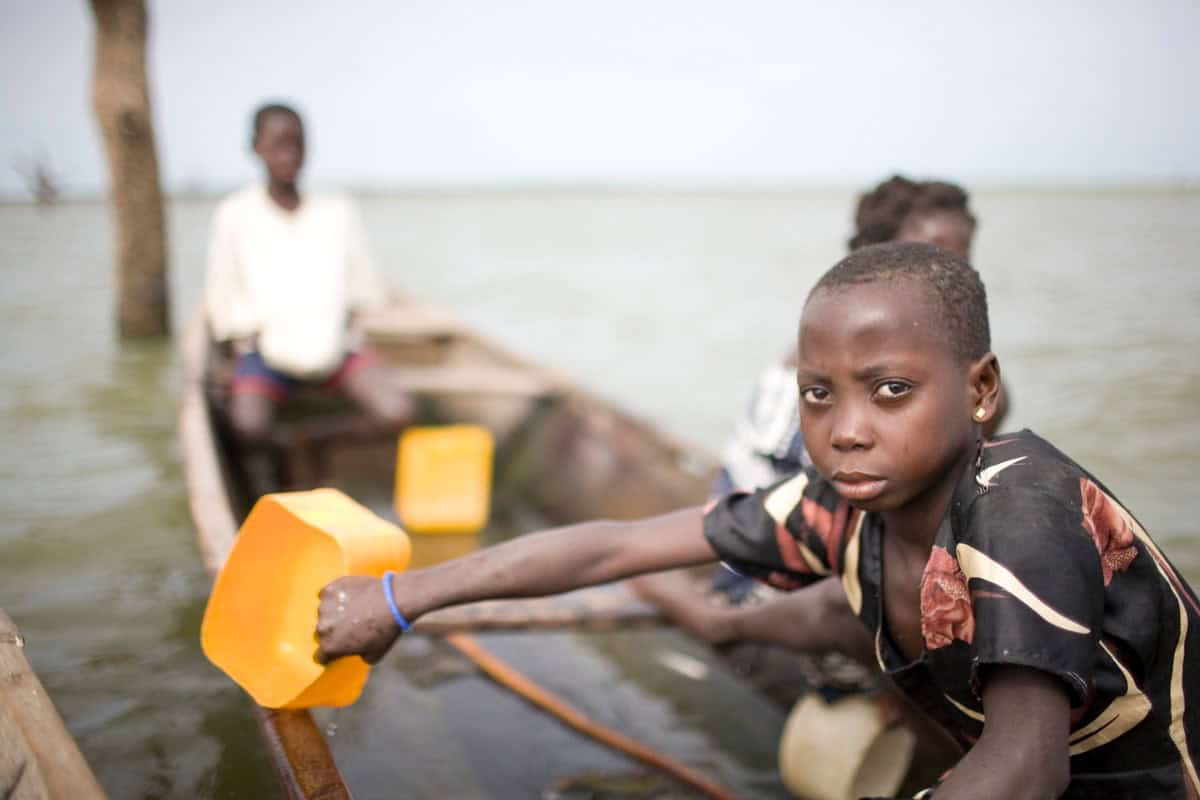
A landmark intervention by the International Organization for Migration (IOM) has exposed a vast network of child trafficking and labor exploitation within the fishing communities of Yeji. After extensive fact-finding missions to Jakalai No 3, Tonka, and Kaduegbordzi Kope, officials have identified over 1,200 children currently held in conditions akin to modern slavery, setting the stage for a massive repatriation and rehabilitation effort.
For many of these children, life consists of dawn-to-dusk labor, pulling heavy nets from the depths of the Volta Lake under the threat of physical punishment. The mission, led by Dr. Ernest Taylor in collaboration with the Ministry of Women and Children Affairs, represents a critical pivot toward addressing the root causes of child labor in the Brong Ahafo region. By engaging directly with “slave-masters” and offering alternatives like modern fishing equipment, the IOM aims to secure the freedom of these young boys and reunite them with their distant families.
What is the true extent of child trafficking on the Volta Lake?
Initial surveys conducted in just three small fishing communities near Yeji revealed that more than 1,200 children are being harbored and exploited for their labor. On average, each “slave-master” employs approximately 13 children, though some households were found to hold as many as 28 children at a time.
These children are primarily boys trafficked from the Volta and Central Regions, often from families who are themselves involved in the fishing industry. The sheer density of this problem in such a localized area suggests that the total number of children enslaved across the entire expanse of the Volta Lake could be significantly higher than previously estimated. The absence of basic infrastructure such as schools or even clean wells in these villages creates a vacuum where exploitation can thrive without oversight.
How are children being bought and sold into the fishing trade?
The trafficking process usually involves a direct financial transaction between the trafficker and the child’s parents or guardians, with sums ranging from 400,000 to 1.5 million Cedis ($47 to $177). Contracts for the child’s labor typically last between one and three years, though many children remain in the communities for six years or more, eventually losing memory of their original homes.
Deception plays a major role in these negotiations. Many children reported being told by their parents that they were going to live with an “uncle” who would ensure they received an education. Instead, they are handed over to master fishermen who pay an initial 50% deposit for the child’s services. In these transactions, the child is treated as a commodity, stripped of their agency and forced into a cycle of hazardous work they never agreed to.
What are the daily conditions and hazards for enslaved fishing boys?
The boys’ primary task is the physically demanding work of pulling fishing nets, but the most dangerous duty involves diving to the bottom of the lake to release nets that have become snagged. This practice has led to numerous unrecorded cases of drowning, as young children are forced into deep waters without any safety equipment or training.
Their workday begins at dawn and continues until late at night, especially during the peak fishing season. Food is strictly rationed, provided only in the morning before departure and at night upon return. Many boys shared accounts of being beaten or punished for dozing off while on the boats. The combination of exhaustion, malnutrition, and the constant threat of violence creates a psychological environment of total subjection to the slave-master.
Can a dialogue with “slave-masters” actually lead to the children’s freedom?
Surprisingly, IOM officials found that slave-masters were willing to engage in dialogue and even acknowledged that using children for such hazardous work is morally wrong. However, their cooperation is contingent on a “remedy for their loss,” as they view the children as essential labor for their survival in a struggling industry.
To address this, the IOM and its partners have promised to provide training and modern fishing equipment to the fishermen in exchange for the release of the children. This approach treats the issue as an economic problem rather than just a criminal one. If the fishermen can be shown that modern methods are more efficient than child labor, the structural incentive to buy children is significantly reduced. So far, 571 children have been successfully registered for release under this cooperative framework.
What role does the new transit center in Yeji play in the rescue mission?
The Atebubu District Assembly has provided a transit center in Yeji town to serve as a safe haven for the first wave of freed children. This facility will act as a temporary home where the boys can receive medical attention, psychological counseling, and basic care while the IOM begins the arduous task of family tracing.
Rescuing a child is only the first step; the transition back to a normal life is complex. Many of these boys have been away for so long that they no longer remember their parents’ names or their hometowns. The transit center provides a stable environment to begin the process of reintegration, ensuring that children are not simply moved from one form of instability to another. It is the bridge between the “mud houses” of the lake and a return to their true families.
How does poverty act as the primary driver of child trafficking in Ghana?
Poverty is the fundamental reason families sell their children, often out of a desperate need for the initial “contract payment” to support their remaining household members. Without addressing the financial instability of the families in the Volta and Central Regions, the cycle of trafficking will inevitably repeat itself once the IOM mission concludes.
The IOM plan includes the provision of micro-credits to the families of rescued children to help them generate enough income to support their children’s return. This economic support is intended to ensure that the children can join schools or vocational training programs instead of being sent back into the workforce. Tackling the root cause means treating poverty as a systemic failure that requires long-term investment, rather than a series of isolated criminal acts.
What are the next steps for the IOM and the Ghanaian government?
The immediate priority is the successful family tracing and reunification of the 571 registered children, followed by a broader expansion of the program across other districts of the Volta Lake. The collaboration with the Ministry of Manpower Development and Employment is crucial for creating the vocational pathways these children will need as they grow into adulthood.
The Ghanaian government’s involvement signals a growing national recognition of child trafficking as a major human rights priority. By working with NGOs like “APPLE” and “Free the Slaves,” the state is building a multi-sectoral defense against exploitation. The success of this mission in Yeji will serve as a blueprint for future interventions across West Africa, proving that with the right combination of economic incentives and persistent advocacy, even the most entrenched systems of modern slavery can be dismantled.
Why is the 2003 intervention a turning point for child rights in West Africa?
This mission marks one of the first times an international body has successfully negotiated the release of trafficked children by addressing the economic needs of the “buyers.” It moves away from purely punitive measures toward a holistic social reform that seeks to improve the lives of everyone involved in the fishing community.
For the boys of Volta Lake, this is the beginning of a second chance. For the nation, it is a wake-up call regarding the hidden costs of our local industries. As Dr. Ernest Taylor and his team continue their work, the goal remains clear: to ensure that no child in Ghana has to trade their education and safety for the price of a fishing net.
Factual Insights for Trust:
- Economic Scale: The payment for a child (up to 1.5 million Cedis) in 2003 is roughly equivalent to a significant portion of a rural family’s annual income.
- Geographic Scope: The Volta Lake is one of the largest man-made lakes in the world, covering approximately 8,502 square kilometers.
- Trafficking Volume: IOM estimates indicate that thousands of children are trafficked annually within West Africa for various forms of labor.
- Risk Factors: Drowning is a leading cause of death for children in unregulated fishing industries globally, due to lack of swimming skills and safety gear.
- Regulatory Context: Ghana’s Children’s Act of 1998 (Act 560) explicitly prohibits the engagement of children in hazardous work, providing the legal basis for these rescues.
- Micro-credit Success: Data suggests that micro-finance interventions can reduce the likelihood of families resorting to child labor by up to 30% in high-risk regions.
The rescue mission in Yeji is a stark reminder of the work required to protect the most vulnerable members of society. By understanding the economic and social pressures that lead to trafficking, we can better support the efforts of organizations like the IOM in their quest to free the child slaves of the Volta Lake.
Also Read: Beyond “Shock and Awe”: Why Ghana’s Child Trafficking Discourse Needs a Reality Check