

 By Zobia Zulfqar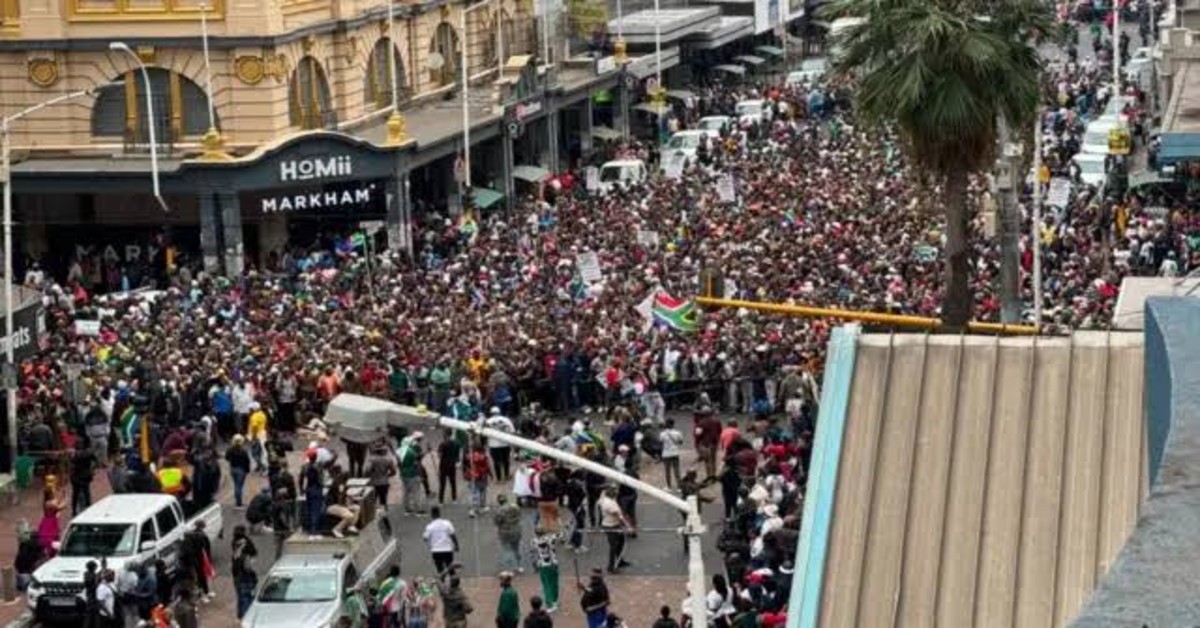
South African authorities have rejected claims by the Government of Ghana that a Ghanaian citizen was killed during anti-immigration protests held on June 30, insisting that the fatal shooting occurred a day earlier and was unrelated to the nationwide demonstrations.
The dispute follows the death of Bashiru Isak, a Ghanaian national who had lived in South Africa for nearly two decades. Ghana’s Ministry of Foreign Affairs initially linked his killing to anti-immigration violence that swept through parts of South Africa, prompting strong diplomatic protests and calls for justice.
In a statement, the Ghanaian government identified the deceased as 40-year-old Bashiru Isak and said he was fatally shot in Khayelitsha, Cape Town, during the June 30 anti-immigration protests. The ministry condemned the killing and called for a full investigation, urging South African authorities to arrest and prosecute those responsible.
Ghana also announced that its High Commission in Pretoria had formally lodged a protest with South Africa’s Department of International Relations and Cooperation, while simultaneously reporting the matter to the South African Police Service.
The Foreign Affairs Ministry described the incident as deeply troubling, particularly given growing concerns over attacks, harassment and looting targeting African migrants in South Africa before and during the nationwide protests.
Officials further disclosed that Bashiru Isak’s family had been informed of his death and that arrangements were underway to repatriate his body to Ghana for burial after an autopsy conducted by South African authorities.
The ministry reiterated its demand for a comprehensive investigation and justice for the deceased, extending condolences to his family.
According to media reports in Ghana, Bashiru Isak worked as a tailor and had lived in South Africa for approximately 20 years. Reports indicated he was shot inside his shop and was survived by three children, with the eldest reportedly being 10 years old.
However, South African authorities have disputed Ghana’s account of the incident.
Speaking to the BBC, the South African Police Service stated that the shooting occurred on Monday, June 29, one day before the nationwide anti-immigration protests took place.
Police said the victim, whom they identified as a 35-year-old man, was shot during what investigators believe was an extortion-related robbery in Nyanga township, Cape Town.
According to the police, armed suspects entered a barbershop where the victim was working and demanded money before opening fire. The attackers reportedly fled the scene immediately after the shooting, and no arrests have yet been made.
Investigators believe the incident was connected to criminal extortion rather than xenophobic violence linked to the protests.
South Africa’s Department of International Relations and Cooperation also rejected the Ghanaian government’s description of the incident.
Department spokesperson Clayson Monyela described Ghana’s claim linking the killing to the anti-immigration demonstrations as a “fabricated tale,” insisting that available evidence does not support that conclusion.
Police explained that extortion has become an increasingly common criminal activity in several South African communities, where gangs demand so-called protection fees from businesses and residents operating in high-crime areas.
Under these schemes, criminals threaten business owners and claim they can provide protection from other offenders in exchange for regular payments. Authorities have not indicated whether the suspects or victims involved in such cases belong to any specific nationality.
Despite rejecting the link between Bashiru Isak’s death and the protests, South African police acknowledged that the June 30 demonstrations were accompanied by violence and criminal activity in several parts of the country.
Law enforcement agencies confirmed incidents of looting, property destruction and attacks on businesses in various provinces as demonstrations unfolded.
In the Free State Province, police reported widespread public disorder that resulted in multiple arrests.
Authorities said three suspects were arrested in Odendaalsrus after businesses were looted during the protests.
In Thabong’s Sunrise View area, seven shops were reportedly looted while two South African police vehicles were damaged during the unrest.
Police also reported that about 20 shops were looted in Vredefort, where several suspects were arrested on charges including public violence and malicious damage to property.
Security agencies said operations continued across affected areas to restore order and apprehend individuals involved in criminal acts committed during the demonstrations.
The anti-immigration protests have heightened tensions across South Africa, where migrant communities have increasingly expressed concerns about their safety.
Governments including Ghana, Nigeria and Malawi have previously urged South African authorities to strengthen protections for their citizens living in the country amid growing reports of xenophobic attacks and intimidation.
While investigations into Bashiru Isak’s death continue, the differing accounts from Ghana and South Africa have created a diplomatic disagreement over the circumstances surrounding the killing.
Authorities in both countries have indicated they will continue cooperating as investigations proceed, while Ghana maintains its call for accountability and justice for its deceased citizen.