

 By Collins Sarkodieh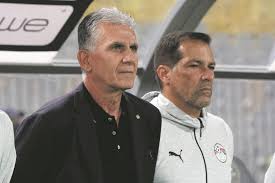
South African coach Roger De Sá has warned that the primary obstacle facing the Ghana national football team is the severe lack of preparation time before the 2026 FIFA World Cup qualifiers. Linked closely to Carlos Queiroz’s incoming technical team, De Sá revealed that while extensive scouting is underway, the reality of having only two weeks to assemble and drill a cohesive squad presents a massive logistical and tactical headache.
Building a world-class national team usually requires months of trial and error, but the current schedule offers no such luxury. De Sá and Queiroz are inherited a talented but fragmented roster that has struggled for consistency over the last two years. With the official unveiling of the new technical bench set for Thursday, April 23, 2026, the duo must quickly transition from watching video films to making high-pressure selection calls that could determine Ghana’s footballing future for the next decade.
Who is Roger De Sá and what is his likely role with the Black Stars?
Rogerio Paulo Cesar De Sá is a seasoned South African coach and former goalkeeper who is widely reported to be the primary assistant to the new Black Stars head coach, Carlos Queiroz. De Sá has a long history of working alongside Queiroz, most notably during their successful stint with the Egyptian national team and their time with Qatar, making him the “tactical right hand” in this new Ghanaian era.
His appointment brings a wealth of African continental experience, having managed top clubs like Orlando Pirates and led them to a CAF Champions League final. At the international level, De Sá is known for his meticulous attention to detail and his ability to organize defensive structures. For Ghana, his role will likely involve bridging the gap between the European-based stars and the tactical demands of the “Queiroz system,” ensuring that the transition to a new style of play is as seamless as possible despite the ticking clock.
Why does the “time pressure” mention by De Sá worry football analysts?
The concern stems from the fact that international football windows are notoriously short, often providing coaches with less than ten days of actual training time with the full squad. Roger De Sá pointed out to KickOff Magazine that a two-week window is barely enough to implement a new philosophy, let alone evaluate the chemistry between players who have never played together.
Football at the highest level relies on “automations”—the split-second decisions where a player knows exactly where their teammate will be without looking. These patterns take time to build. Without an extended pre-tournament camp, the Black Stars risk entering their 2026 World Cup qualifiers as a group of talented individuals rather than a unified machine. This lack of time is especially dangerous when facing organized underdogs who have had the same core squad and coaching staff for years.
How is the technical team using technology to bridge the scouting gap?
To combat the time deficit, De Sá confirmed that the technical team is currently immersed in an intensive digital scouting process, watching thousands of hours of match films and club-level videos. This “film study” allows the coaches to analyze the current form, fitness levels, and tactical versatility of Ghanaian players across the Eredivisie, Premier League, La Liga, and beyond.
By using advanced data analytics and video software, the coaches can filter players based on specific metrics that fit Queiroz’s defensive-first approach. For example, they can track which left-backs have the highest successful tackle rate or which midfielders cover the most ground under pressure. While video can never replace the “eye test” of a live match, it is the only way to effectively scout a global diaspora of players in a matter of weeks.
What are the biggest selection headaches facing the new Black Stars coaches?
The most significant challenge is deciding between established veterans who provide leadership and the surging young talents who offer energy but lack tournament experience. De Sá’s admission that “picking the right squad won’t be easy” refers to the delicate balance of finding a starting eleven that can survive the physical demands of African qualifiers while maintaining the tactical discipline required for the World Cup.
The “Left-Back Puzzle” and the search for a consistent striking partner for Antoine Semenyo are at the top of the list. Furthermore, the coaches must decide how to integrate returning players like Baba Rahman without disrupting the current team dynamic. Every selection carries a high opportunity cost; picking a player who isn’t 100% fit or tactically aligned could result in a dropped point that proves fatal in a tight qualifying group.
Will the official unveiling on April 23 provide more clarity on the squad?
The official unveiling of Carlos Queiroz and his backroom staff on Thursday, April 23, 2026, is expected to include a preliminary roadmap for the squad selection process. Fans and journalists are eager to see if Roger De Sá is formally introduced as the assistant coach and what specific criteria they will use to invite players for the June international window.
This press conference will be the first time the public hears directly from the men tasked with leading the “Africa to the World” charge. Beyond just naming names, the technical team will likely address how they plan to use the “short preparation time” De Sá mentioned. It is a moment of high tension for many players who are currently on the “bubble” of the squad, as the new regime’s preferences might differ significantly from the previous administration.
How does Roger De Sá’s experience with Egypt benefit the Black Stars?
During their time with the Egyptian Pharaohs, Queiroz and De Sá demonstrated an uncanny ability to take a squad and make them incredibly difficult to beat in a very short period. They led Egypt to the final of the 2021 AFCON and the final playoff of the 2022 World Cup qualifiers, relying on a compact defense and lightning-fast transitions.
Ghanaian fans have often complained about a “leaky” defense, and the De Sá-Queiroz partnership is famous for plugging those holes. Their experience in navigating the specific challenges of African travel, hostile away crowds, and varying pitch conditions is exactly what Ghana needs. If they can replicate the “Egyptian Wall” with the more expansive and creative talent found in the current Ghanaian pool, the Black Stars could become the most formidable team on the continent.
What can fans expect from the “Two-Week” preparation window?
According to De Sá, the two-week window will be a “tactical bootcamp” focused on defensive positioning, set-piece organization, and mental conditioning. There will be little time for basic fitness work; the coaches will expect players to arrive in peak physical condition from their respective clubs so that every minute on the pitch is spent on strategy.
The intensity of these sessions will likely be higher than what some players are used to. Queiroz is known for his “Professor” approach to the game, demanding total focus on the blackboard and on the grass. Players who cannot adapt to the tactical instructions within those first few days might find themselves sidelined regardless of their reputation. In a race against time, the fastest learners are often the first names on the team sheet.
Is the GFA doing enough to support this hurried preparation?
The Ghana Football Association (GFA) has reportedly cleared all bureaucratic hurdles to ensure the new technical team has everything they need, from advanced GPS tracking data to specialized scouting software. The decision to appoint a veteran like Queiroz and an experienced hand like De Sá suggests the GFA has finally moved away from “experimentation” in favor of proven results.
However, the real test for the GFA will be in the logistics of the next few weeks. Ensuring that all invited players arrive in camp on day one and that high-quality friendly matches are secured for the short window will be vital. De Sá’s warnings are a subtle nudge to the administrators that the technical team cannot do it alone; the “off-pitch” preparation must be just as fast and efficient as the “on-pitch” scouting.
Why is the 2026 World Cup the ultimate goal for this project?
The 2026 World Cup, hosted across North America, represents the biggest stage in football history, and for Ghana, it is an opportunity to reclaim their status as Africa’s premier footballing nation. Roger De Sá’s urgency reflects the high stakes: missing out on this tournament would be a massive financial and cultural blow to the country.
With the expanded format of the 2026 tournament, more African teams will qualify, but the path remains treacherous. The “time pressure” De Sá speaks of is the only thing standing between Ghana and a successful campaign. If the technical team can solve the squad puzzle by June, the momentum could carry them all the way to the United States, Mexico, and Canada.
Also Read: The Road to North America, Predicting Ghana’s Final 26-Man World Cup Squad