

 By Collins Sarkodieh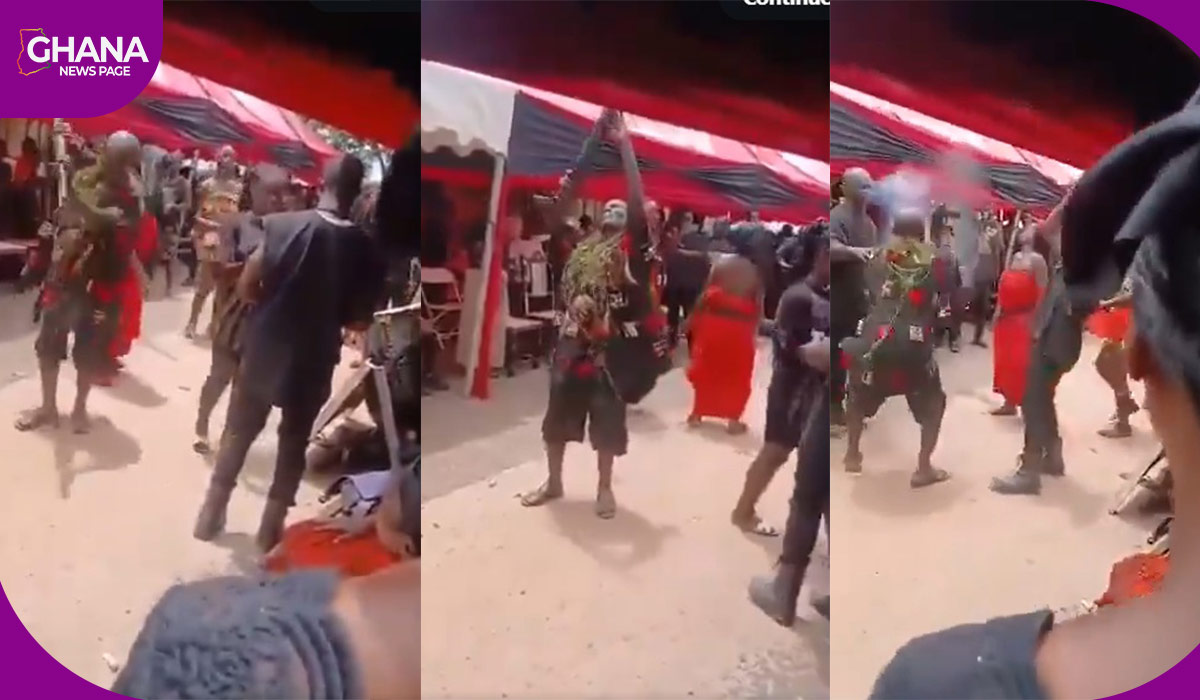
Nana Kwabena Okyere, the Mmratehene of Ayanfuri in the Central Region, has tragically passed away following an accidental self-inflicted gunshot wound on May 9, 2026. The traditional ruler was performing a celebratory dance at a funeral ceremony when his firearm discharged into his chest, leading to fatal injuries despite attempts to save his life at a local hospital.
The incident, captured on video, shows the chief brandishing a pump-action shotgun while dancing to traditional music. In a sequence of events that has shocked the mining community of Ayanfuri, the ruler appeared to be gesturing with the weapon toward his own body. After an initial failure to fire, he cycled the action of the gun, and the subsequent trigger pull resulted in a point-blank discharge.
This heartbreaking event highlights the thin line between cultural celebration and physical danger. Traditional displays involving musketry and firearms are a staple of Ghanaian funeral rites, yet this tragedy underscores the urgent need for stricter safety protocols and education regarding live ammunition during public gatherings.
How did the Ayanfuri chief shooting incident occur?
The shooting occurred during a funeral performance where Nana Kwabena Okyere was dancing with a pump-action shotgun. Video evidence reveals that the chief pointed the weapon at his chest multiple times; after the gun failed to fire initially, he racked the fore-end to chamber a round (or clear a jam), pointed it at his shoulder/chest area again, and pulled the trigger.
Witnesses at the scene were initially cheering as the chief performed, a common sight at high-profile funerals in the Central Region. The transition from celebration to chaos happened in seconds. Once the shot was fired, the Mmratehene collapsed immediately, and onlookers rushed to carry him away for medical attention.
Unfortunately, pump-action shotguns carry immense kinetic energy at close range. Even if the intent was a “blank” or a celebratory shot, the proximity of the muzzle to the body often results in catastrophic trauma. The chief was pronounced dead shortly after arriving at the health facility, leaving the Ayanfuri community in mourning.
Why is firearm safety critical in traditional Ghanaian ceremonies?
Firearm safety is paramount because traditional ceremonies often involve vintage or poorly maintained weapons used in crowded, high-energy environments. When alcohol, dancing, and “spraying” of cash are mixed with live firearms, the risk of accidental discharge increases exponentially, often with lethal consequences as seen in the Ayanfuri case.
In many Ghanaian cultures, the firing of musketry (locally known as aburuburu or hunter’s guns) signifies respect for the deceased. However, modern pump-action shotguns operate differently and with much higher reliability and force than antique muzzleloaders. Using them as dance props while loaded violates the most basic rule of gun safety: never point a firearm at anything you do not intend to destroy.
Safety experts suggest that for such displays, firearms should be deactivated or loaded only with specific blank ammunition that contains no projectile. The Ayanfuri incident serves as a grim reminder that a “misfire” is often just a temporary delay, and racking the slide typically readies the weapon for a successful, and in this case, tragic discharge.
What are the legal regulations for firearms at public gatherings?
Under Ghanaian law, specifically the Arms and Ammunition Act, the public display and discharge of firearms are subject to strict licensing and permit requirements. While traditional authorities often have leeway for cultural rites, the use of modern pump-action shotguns in a manner that endangers public safety can lead to legal repercussions for organizers.
The Ministry of Interior and the Ghana Police Service have previously cautioned traditional leaders against the use of live ammunition in populated areas. Following this tragedy, there may be renewed calls for “Safety Officers” to be present at funerals to inspect weapons and ensure they are either empty or safely handled during performances.
The death of a Mmratehene (Youth Chief) is a significant loss to the traditional hierarchy. Beyond the emotional toll, the legal aftermath often involves investigations into where the ammunition was sourced and whether the firearm was legally registered to the deceased or the stool.
Factual Insights into Traditional Weaponry and Safety:
- Regional Context: Ayanfuri is a major mining town in the Upper Denkyira West District of the Central Region, known for its vibrant traditional culture.
- Weapon Mechanics: Racking a pump-action shotgun (moving the fore-end back and forth) ejects a spent shell or misfire and chambers a new live round from the magazine tube.
- Cultural Significance: The “Mmratehene” is the leader of the youth in a traditional area, often seen as a protector and a vibrant figure during festivals.
- Medical Reality: Point-blank shotgun wounds to the chest have a mortality rate exceeding 90% due to massive internal organ damage and hemorrhage.
- Gun Population: Estimates suggest there are over 1.1 million unregistered small arms in Ghana, many of which appear at traditional ceremonies.
- Safety Precedents: Similar accidents in the past have led some traditional councils to ban the use of live rounds entirely, opting for “powder-only” displays.
How can communities prevent future accidental shooting tragedies?
Preventing these tragedies requires a shift from viewing firearms as “toys” or “props” to treating them as lethal tools, even during festive occasions. Community leaders must enforce a “muzzle away” policy, ensuring that guns are always pointed toward the sky or the ground, never toward the performer or the audience.
Education is the most effective tool. Many performers may not fully understand the mechanics of modern firearms compared to traditional muskets. Training sessions for “warrior groups” or funeral performers on how to safely clear a jam or misfire without pointing the gun at themselves could save lives.
Furthermore, the “Cash Spraying” culture can be a major distraction. In the Ayanfuri video, the chief was being showered with money while handling the gun. This divided attention often leads to a lapse in safety awareness. Ensuring that firearms are handled only by focused, sober individuals is a necessary step for the safety of the entire community.
A Somber Lesson for Traditional Authorities
The tragic loss of Nana Kwabena Okyere is a dark day for Ayanfuri and the Central Region. It serves as a painful illustration of how a moment of joy can turn into a lifetime of grief through a single safety oversight. As the mining town lays its Mmratehene to rest, the conversation must turn toward how to preserve rich Ghanaian traditions without sacrificing the lives of those who lead them.
Traditional rites are the soul of the nation, but they must evolve to respect the lethality of modern weaponry. If firearms must remain part of the dance, let them be empty symbols of strength rather than loaded instruments of tragedy. The “Iron Boy” of Ayanfuri may be gone, but the lesson he left behind should be heard by every palace across the country.
Also Read: The Silent Killer: Understanding the Ablekuma Generator Fume Tragedy