By Collins Sarkodieh
In a country still rebuilding trust in its financial system, a competition focused on ethics in banking is beginning to carry more weight than many might expect.
The victory of the University of Ghana at the latest National Banking and Ethics Challenge is not just another academic achievement. It reflects a deeper shift in how Ghana is preparing the next generation of financial professionals.
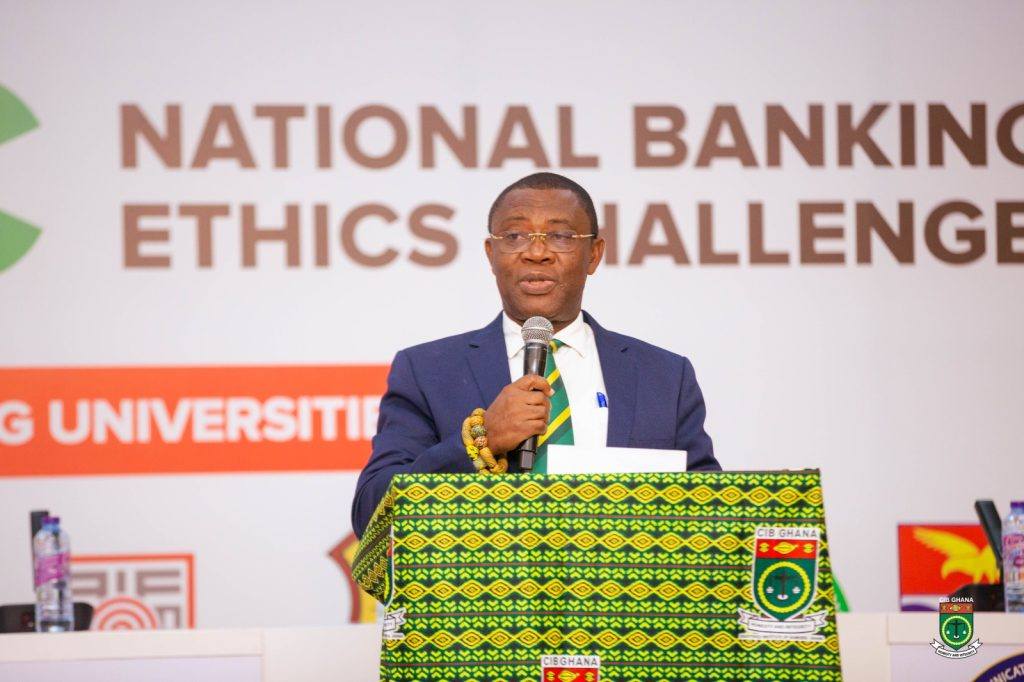
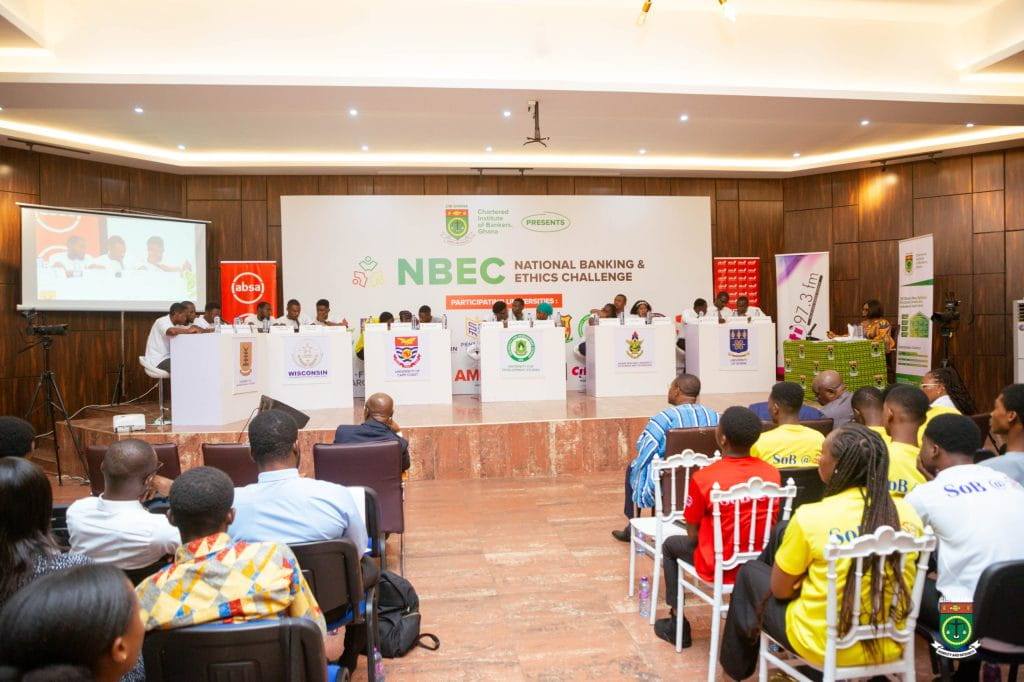
Organised by the Chartered Institute of Bankers Ghana, the competition brought together universities from across the country, testing not only technical knowledge but also judgment, integrity, and real-world decision-making. That combination is deliberate. Ghana’s banking sector has learned, sometimes the hard way, that technical expertise without ethical grounding can be costly.
The numbers from the competition tell one story. The University of Ghana Business School emerged on top, outperforming institutions like University of Professional Studies Accra and University for Development Studies in a closely contested final. But the broader narrative is about scale and intent. Participation has more than doubled compared to the previous edition, drawing in institutions ranging from Kwame Nkrumah University of Science and Technology to private universities such as Central University and Pentecost University College.
That expansion matters. It signals growing recognition that banking is no longer just about numbers. It is about trust.
Why Ethics Is Becoming the Core of Banking
At the heart of this initiative is a clear message from industry leaders. The future of banking in Ghana will be defined less by innovation alone and more by the character of the people driving that innovation.
This perspective is shaped by recent history. Ghana’s financial sector has gone through significant stress, including the well-documented clean-up exercise that exposed weaknesses in governance, risk management, and internal controls. For many customers, confidence was shaken. Rebuilding that confidence requires more than regulation. It requires a new generation of professionals trained to think differently.
The National Banking and Ethics Challenge is designed as an early intervention. Instead of waiting until graduates enter the workforce, it introduces ethical reasoning at the university level. Students are tested on real scenarios involving fraud detection, digital banking risks, customer protection, and even sensitive issues like handling dormant accounts or managing estates after death.
From an expert standpoint, this approach is strategic. Behavioral patterns in professional life are often shaped early. Embedding ethical thinking during training increases the likelihood that it carries into the workplace.
Bridging Theory and Industry
One of the most practical elements of the competition is its direct link to industry exposure. Through partnerships with institutions like GCB Bank, participants gain access to internships, mentorship, and professional pathways that extend beyond the classroom.
This is where the initiative stands out. Many academic competitions end with certificates. This one is structured to create continuity. Students are not just tested. They are absorbed into a pipeline that leads into the banking sector.
There is also a deliberate effort to make the knowledge accessible beyond participants. Questions are designed in a way that even audience members can learn. Topics such as cybersecurity, mobile fraud, and digital financial safety are increasingly relevant, especially as Ghana’s economy becomes more digitized.
The Bigger Shift in Ghana’s Financial Ecosystem
The emphasis on ethics aligns with a broader transformation within Ghana’s financial system. As digital banking expands and financial inclusion increases, the risks also evolve. Cyber fraud, SIM swap schemes, and insider threats are becoming more sophisticated.
This means the definition of a competent banker is changing. It is no longer enough to understand financial products. Professionals must also understand risk, technology, and human behavior.
The certification pathway outlined by the institute reflects this reality. With multiple levels ranging from foundational knowledge to strategic leadership, the system is designed to produce specialists who can adapt to different roles within the industry. The inclusion of ESG training, digital learning platforms, and ethics certification shows an awareness of global trends shaping finance.
Why This Matters Now
For Ghana, the stakes are high. A strong banking sector is essential for economic growth, investment, and financial stability. Without trust, the system cannot function effectively.
Competitions like this may seem academic on the surface, but they are part of a larger effort to rebuild and future-proof the industry. By focusing on students, the initiative targets the source of long-term change.
There is also a regional dimension. As Ghana positions itself as a financial hub in West Africa, the quality of its banking professionals becomes a competitive advantage. Countries that can produce skilled, ethical, and globally aware professionals are better positioned to attract investment and partnerships.
What Comes Next
The planned expansion of the competition into regional zones suggests that access will improve, especially for institutions outside major urban centers. This could help uncover talent that might otherwise remain underrepresented.
Future editions are also expected to incorporate emerging topics such as digital assets and non-performing loans, reflecting the evolving challenges within the financial sector. This adaptability is crucial. Banking is changing quickly, and training systems must keep pace.
There is also an ambition to extend influence beyond Ghana, positioning the institute as a leading authority in banking education across Africa. If executed effectively, this could elevate standards across the continent.
A Quiet but Important Transformation
The image of students holding a trophy may capture attention, but the real story lies beneath it. Ghana is investing in something less visible but far more impactful. It is investing in the mindset of its future bankers.
In an industry where one poor decision can affect thousands of lives, that investment could prove to be one of the most important decisions the country makes.
Also Read: