

 By Zobia Zulfqar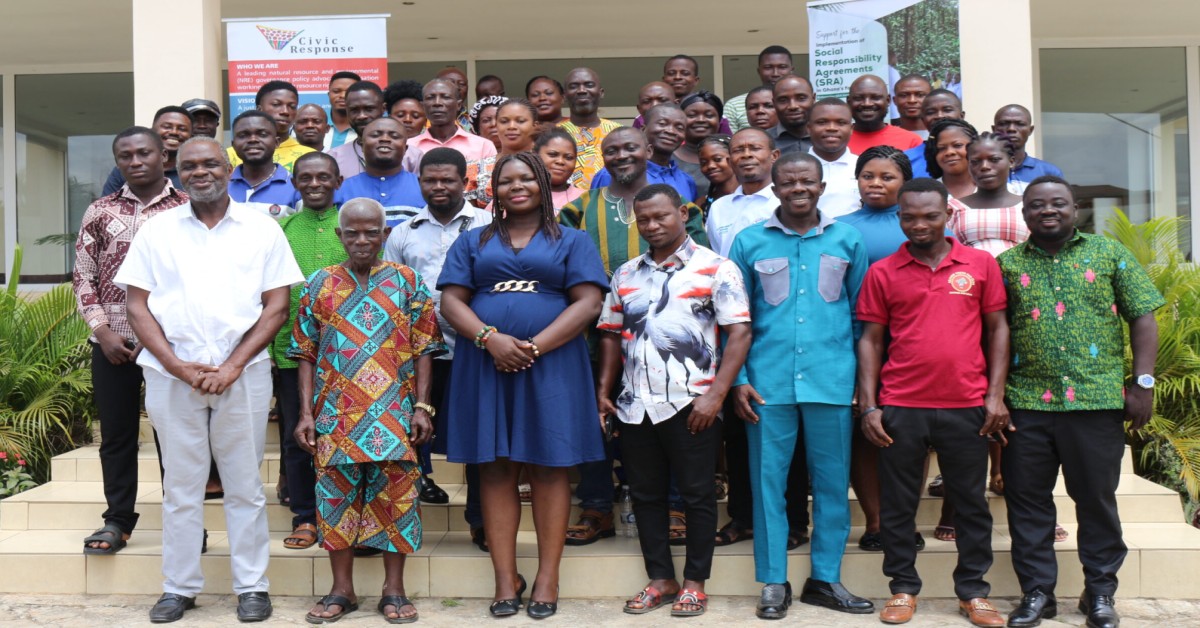
About 1,000 community representatives are being trained to improve transparency and accountability in the management of benefits from timber harvesting in forest-fringe communities across Ghana.
The training involves members of Social Responsibility Agreement (SRA) committees from 150 communities and is scheduled to run from July to October.
The initiative is aimed at strengthening the ability of local communities to understand their rights and responsibilities under agreements governing timber operations and to hold relevant duty-bearers accountable for commitments made to communities.
Mr Albert Katako, Head of Programmes at Civic Response and a training facilitator, said the programme was designed to help communities better understand their roles and those of other stakeholders within the forestry sector.
He said the training would give community representatives a clearer understanding of the rights and responsibilities associated with Social Responsibility Agreements.
“So the training is about letting communities know what their rights and responsibilities are and what the rights and responsibilities of other stakeholders in the forestry sector are,” he said.
The training is being organised by Civic Response under the project, “Support for the Implementation of Social Responsibility Agreements in Ghana’s Forestry Sector – Enhancing SRA Implementation in Ghana.”
The project is supported by development partners and focuses on improving the implementation of SRAs and strengthening the participation of forest-fringe communities in decisions concerning timber resources and related benefits.
Social Responsibility Agreements are intended to ensure that communities affected by timber harvesting receive agreed benefits from timber operators while also establishing responsibilities for operators working in community forest areas.
The agreements are an important part of Ghana’s forest governance system because they provide a framework for communities and timber operators to agree on social benefits associated with timber operations.
These benefits could support community development projects such as schools, roads, water facilities, electricity infrastructure and other services identified as priorities by beneficiary communities.
However, the effective implementation of such agreements requires communities to understand the terms, participate meaningfully in negotiations and monitor whether agreed commitments are being fulfilled.
The current training therefore seeks to strengthen the capacity of local SRA committees to perform these responsibilities.
Community representatives are expected to gain knowledge that would help them participate more effectively in negotiations, monitor the implementation of agreements and demand accountability from stakeholders where necessary.
The programme also seeks to improve communication between communities, timber operators, government agencies and other organisations involved in forest management.
Mr Katako said communities needed to understand not only their own responsibilities but also the obligations of other stakeholders in the forestry sector.
Greater awareness among community representatives could help improve transparency in the management of timber benefits and reduce misunderstandings surrounding the implementation of Social Responsibility Agreements.
The training comes against the background of longstanding efforts to improve community participation in Ghana’s forestry sector.
Studies on SRA implementation in Ghana have identified limited community capacity to negotiate and enforce agreements as important challenges. Research has also highlighted the importance of accountability, monitoring and documentation in improving the success of SRAs.
The broader forest governance framework requires communities to participate in agreements with timber operators and receive benefits linked to timber harvesting. SRAs also provide a mechanism for establishing social responsibilities that timber operators are expected to fulfil in communities where they operate.
Strengthening community capacity is therefore expected to contribute to more inclusive and transparent forest governance.
The training could also help community representatives identify situations where agreed benefits are not being delivered or where communities are not adequately involved in decisions affecting their interests.
For forest-fringe communities, effective management of timber benefits is important because income and development support associated with forestry activities can contribute to local infrastructure and social services.
Improving accountability could also strengthen trust between communities and timber companies while encouraging compliance with agreed responsibilities.
The initiative forms part of wider efforts to improve the governance of Ghana’s forest resources and ensure that communities benefit more effectively from economic activities taking place on or around their lands.
The training of representatives from 150 communities is expected to create a wider network of people with knowledge of SRA processes and community rights.
As the programme continues through October, the participating committees are expected to apply the knowledge gained to improve engagement with timber operators and other forestry stakeholders.
The initiative also highlights the importance of giving local communities the information and skills required to participate meaningfully in forest management.
Mr Katako said the programme would help communities understand the different responsibilities within the forestry sector and strengthen their ability to hold duty-bearers accountable.
The organisers believe stronger community participation, improved understanding of SRA obligations and better monitoring of timber-related benefits could contribute to greater transparency in Ghana’s forestry sector.
Ultimately, the training seeks to ensure that communities affected by timber harvesting are better equipped to understand, monitor and advocate for the benefits and responsibilities established under Social Responsibility Agreements.