

 By Zobia Zulfqar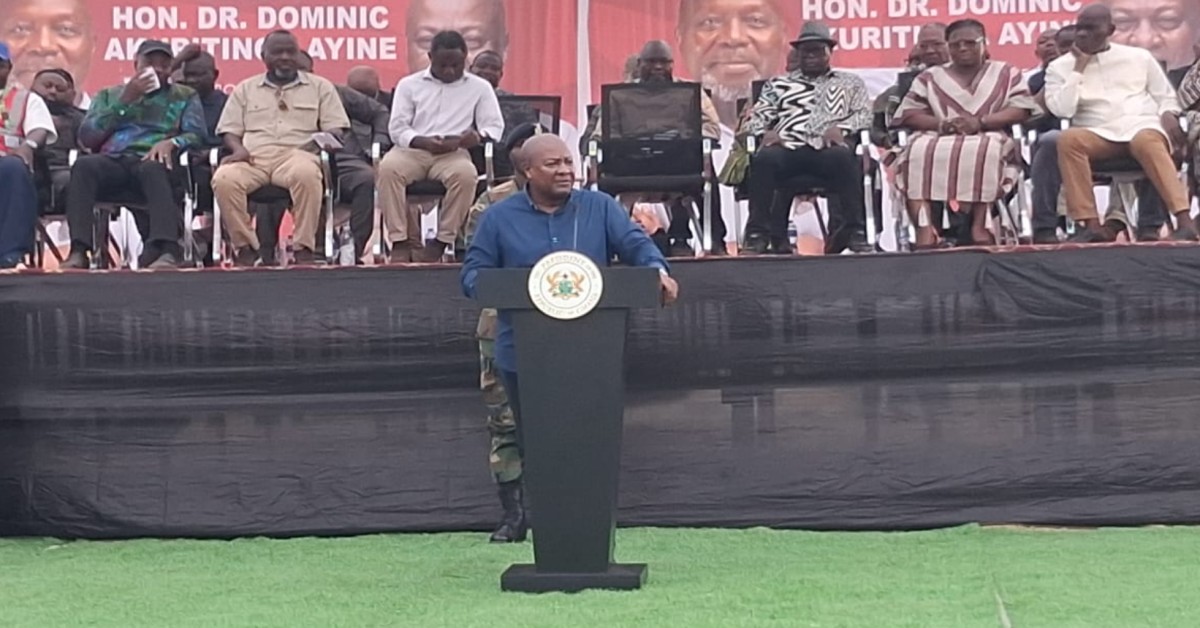
President John Dramani Mahama has urged Ghanaians to embrace the Government’s Free Primary Healthcare Programme, which is designed to improve access to basic medical services and reduce out-of-pocket healthcare costs.
The President made the call during a community engagement on the Free Primary Healthcare Programme at Zuarungu in the Bolgatanga East Municipality on the first day of his two-day Resetting Ghana Tour of the Upper East Region.
President Mahama said the programme would bring basic healthcare services closer to communities through home visits by nurses, basic health screenings and access to local health facilities.
He explained that nurses under the programme would visit people in their homes to check for health conditions such as hypertension and diabetes. The approach, he said, would support early detection and treatment of diseases before they become more serious.
The President said the programme formed part of a three-tier healthcare delivery system being implemented in Ghana.
According to him, the three levels comprise the National Health Insurance Scheme (NHIS), the Free Primary Healthcare Programme and the Ghana Medical Trust Fund, popularly known as MahamaCares.
He explained that the Free Primary Healthcare Programme would operate at the basic level of healthcare delivery. Services would be provided through health kiosks, Community-based Health Planning and Services (CHPS) compounds, health centres and polyclinics.
President Mahama said patients requiring treatment beyond the polyclinic level would enter the National Health Insurance system when referred to district hospitals.
He said the Government had also introduced another level of support for people suffering from serious and expensive-to-treat conditions.
These include cancers, kidney diseases, heart attacks and other complicated illnesses requiring treatment at tertiary healthcare facilities.
“In such cases, the patient will be referred from the district hospital to a tertiary treatment centre,” the President explained.
President Mahama said the different components of the healthcare system were intended to ensure that Ghanaians received appropriate care according to the nature and severity of their medical conditions.
He emphasised the importance of strengthening primary healthcare because early detection could help identify illnesses before they require more complicated treatment.
The home-based component of the Free Primary Healthcare Programme is expected to give health workers greater opportunities to reach people who might otherwise delay seeking medical attention.
Hypertension and diabetes, in particular, require regular monitoring and early intervention. Through community and household visits, health workers would be able to identify people who require further assessment and treatment.
The President also spoke about the role of the Ghana Medical Trust Fund in addressing major non-communicable diseases.
He said the Fund had been established to help address conditions such as diabetes, strokes and cancers, which often require expensive diagnosis and treatment.
President Mahama said the Government had started equipping major hospitals to strengthen their ability to diagnose and treat serious illnesses.
He listed CT scanners, MRI machines, X-ray machines and other medical equipment among the facilities being provided to major hospitals.
The investment in diagnostic equipment, he said, formed part of efforts to improve the country’s healthcare system and increase the capacity of hospitals to provide specialised medical services.
Access to appropriate diagnostic equipment is important for the effective management of serious illnesses because doctors require accurate medical information to determine suitable treatment.
The President’s comments in Zuarungu also highlighted the Government’s broader approach to healthcare delivery, with primary healthcare serving as the first point of contact for many patients and more specialised services available for those requiring advanced treatment.
The Free Primary Healthcare Programme is expected to bring basic medical services closer to communities and reduce some of the barriers people face when seeking care.
By encouraging home visits, screenings and local clinic services, the programme seeks to promote preventive healthcare alongside treatment.
President Mahama urged Ghanaians to take advantage of the services being provided under the programme and cooperate with health workers visiting communities.
The initiative is also expected to improve the early identification of health conditions and support timely referrals when patients require higher levels of care.
For communities in the Upper East Region, the President’s engagement provided an opportunity to explain how the various components of the Government’s healthcare plans are expected to work together.
The President said the Free Primary Healthcare Programme would serve as the foundation of the system, while NHIS coverage and the Ghana Medical Trust Fund would provide support at higher levels of healthcare need.
The Government’s approach therefore places emphasis on bringing basic healthcare closer to households while strengthening access to specialised treatment for serious conditions.
President Mahama’s engagement formed part of his two-day Resetting Ghana Tour of the Upper East Region, during which he is expected to interact with communities and assess development initiatives.
The President said the Government remained committed to improving access to healthcare and ensuring Ghanaians received medical attention without facing unnecessary financial barriers.
Also Read: Cabinet Approves Major Mining Law Reforms to Strengthen Sector Governance