

 By Emmanuel Bamfo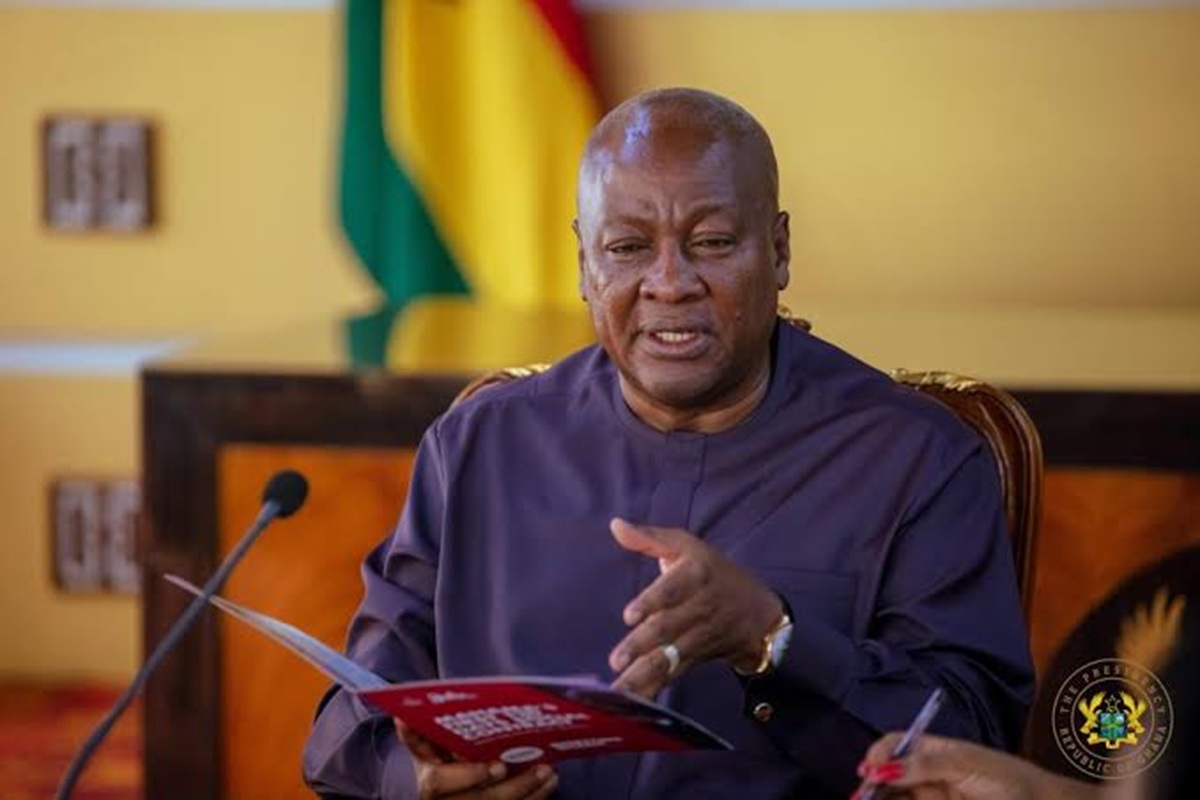
President John Dramani Mahama has made a bold call on the world stage, demanding that developing nations take full control over their healthcare resources, funding, and pharmaceutical production. Speaking in New York on Monday, September 21, 2026, at the 81st UN General Assembly, he declared that true health sovereignty is impossible when foreign donors dictate key decisions.
The President officially launched the High-Level Panel Report of the Accra Reset initiative, titled A Sovereign Future for Health. The milestone event brought together international leaders to challenge the continuous dependence of African and Global South nations on foreign aid magnanimity for basic survival needs.
Highlighting the fundamental flaw in traditional aid models, President Mahama noted that asking developing nations to own foreign-funded health programs makes zero sense. He used a vivid Ghanaian metaphor, stating that developing nations were handed a broken cauldron and told to own soup prepared entirely in someone else’s kitchen.
He stressed that true country ownership requires total control over the manufacturing systems, financial backing, and supply chains that keep healthcare functional. Without local control over these pillars, African nations remain vulnerable to shifting political priorities in foreign capitals.
Key Takeaways from the Accra Reset Report
| Strategic Objective | Implementation Action |
| Local Manufacturing | Produce essential medicines locally to end foreign reliance |
| Maternal Health Focus | Target ending unacceptable maternal mortality rates across Africa |
| Financial Sovereignty | Shift away from donor dependence toward sustainable domestic funding |
| Domestic Accountability | Match financial authority with strict anti-corruption and fiscal controls |
Domestic Accountability Must Match Control
While demanding greater authority for Global South governments, President Mahama cautioned that control is not a blank check. He made it clear that transferring decision-making power from international organizations to local leaders must come with absolute domestic accountability.
He emphasized that Ghana’s own domestic policy agenda focuses heavily on tightening fiscal discipline, fighting public sector corruption, and protecting taxpayer funds. Leaders must earn real sovereignty through uncompromising transparency and dedication to their citizens.
To turn this vision into reality, the Accra Reset focuses immediately on tackling high maternal mortality rates across Sub-Saharan Africa as its first major battleground. The goal involves enabling local pharmaceutical companies in Ghana and partner countries to produce essential drugs directly for domestic and regional markets.
By partnering with nations across Africa, India, and Indonesia, the Global South aims to build self-sustaining networks for medical research and distribution. This pragmatic self-reliance will build stronger, more resilient health systems that protect everyday citizens across the continent.
Also Read: Euro spa owner Jessica Hartog remanded over cocaine case
Source: Ghana News Page