

 By Collins Sarkodieh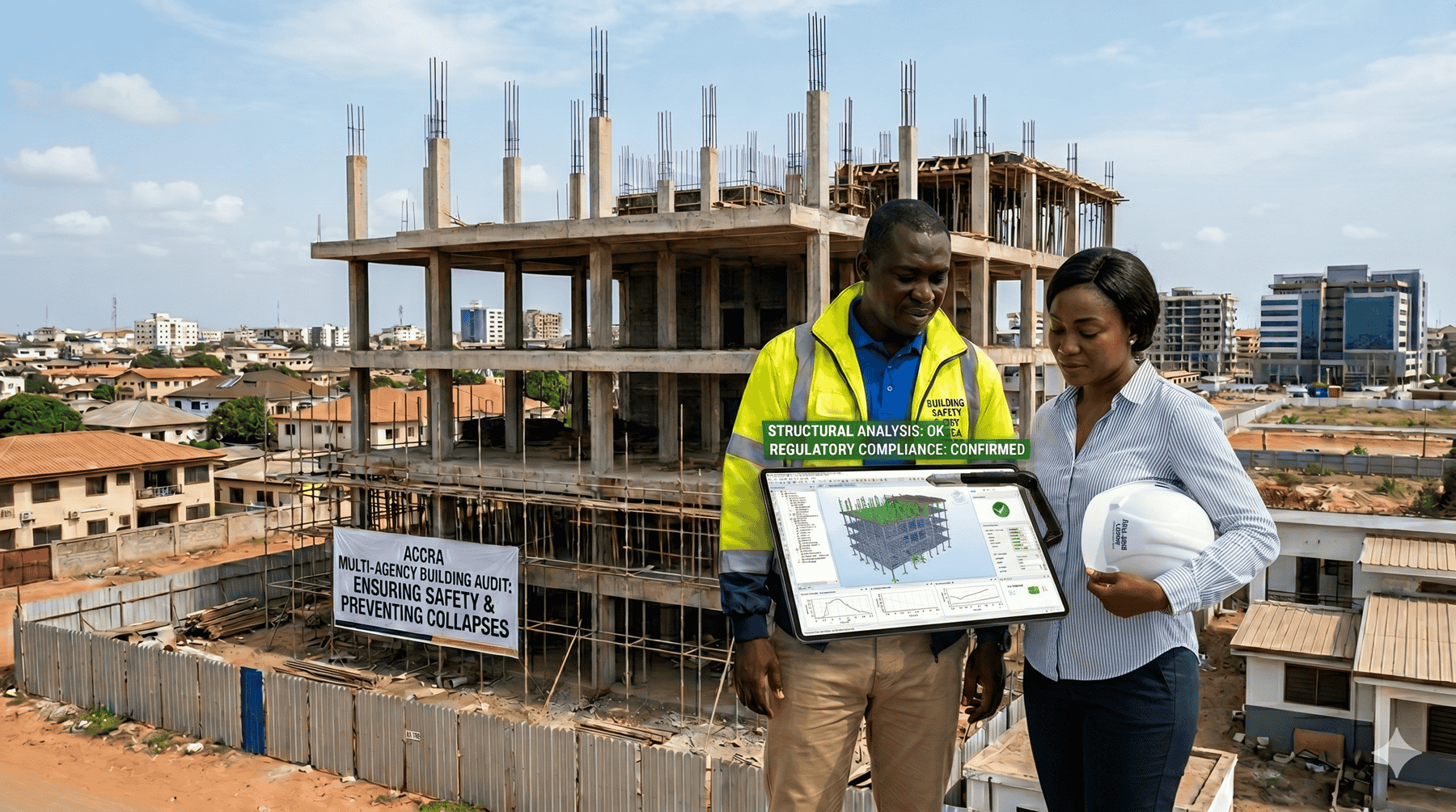
The Greater Accra Regional Coordinating Council (GARCC) has officially launched a comprehensive, multi-agency audit of all multi-storey buildings across the region. This decisive move follows a wave of tragic disasters that struck the capital on June 3, 2026, including a deadly building collapse at Adenta New Site.
Regional Minister Linda Obenewaa Akweley Ocloo declared that Accra will no longer be a sanctuary for indiscipline. The audit aims to ensure that all ongoing and recently completed structures comply with approved permits and essential safety regulations.
This crackdown addresses several systemic failures that have long plagued the capital’s urban development. Authorities identified unauthorised construction, encroachment on waterways, and a blatant disregard for planning laws as primary contributors to the recent crises.
Building on this, industry experts have long advocated for mandatory structural audits. The Ghana Institute of Architects previously highlighted that prolonged exposure to weather conditions can significantly weaken the structural integrity of abandoned or uncompleted buildings.
Factual insights into the current crisis include the following critical observations:
- Building permits generally expire after five years, after which structural assessments become mandatory before any renewal.
- There is a severe shortage of qualified professionals in local assemblies, with reports of only about 10 architects available to supervise over 261 districts.
- Public institutions have acknowledged lapses in oversight, which previously allowed unsafe construction practices to persist across the region.
The new measures include the aggressive removal of structures built in waterways, road reservations, and other protected public spaces. This task will involve close collaboration between the Regional Coordinating Council and all municipal and district assemblies.
To ensure lasting change, the Regional Spatial Planning Committee will strengthen its oversight role to improve development control. The council is also introducing improved mechanisms for residents to report illegal developments and suspected misconduct by public officials.
Sanitation enforcement is also intensifying to curb indiscriminate waste disposal. Authorities emphasize that blocked drainage channels are a major driver of the perennial urban flooding that often exacerbates structural risks in the capital.
Government officials have pledged to implement these measures consistently and without fear or favour. The ultimate goal is to build a safer, cleaner, and more resilient capital city that prioritizes the lives of its citizens over unchecked development.
Also Read: Heartbreaking: Three worshippers killed as unfinished church building collapses in Accra
Source: Ghana News Updates