By Collins Sarkodieh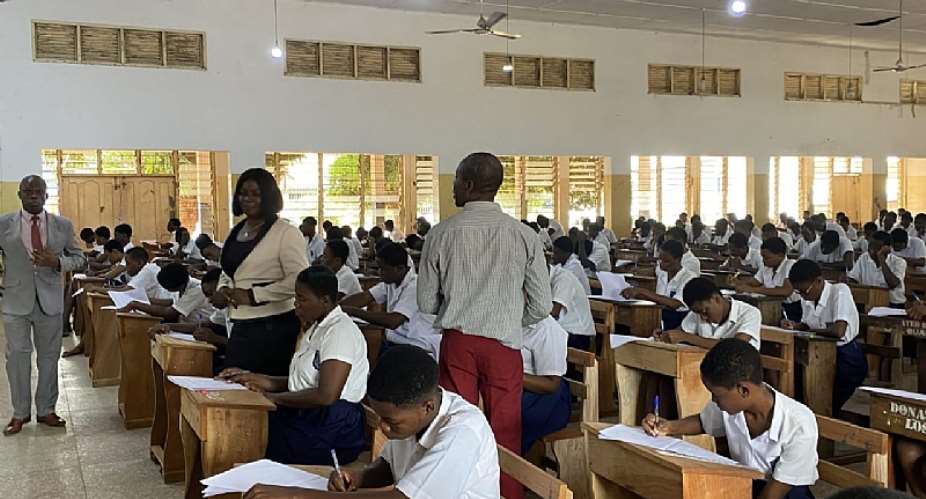
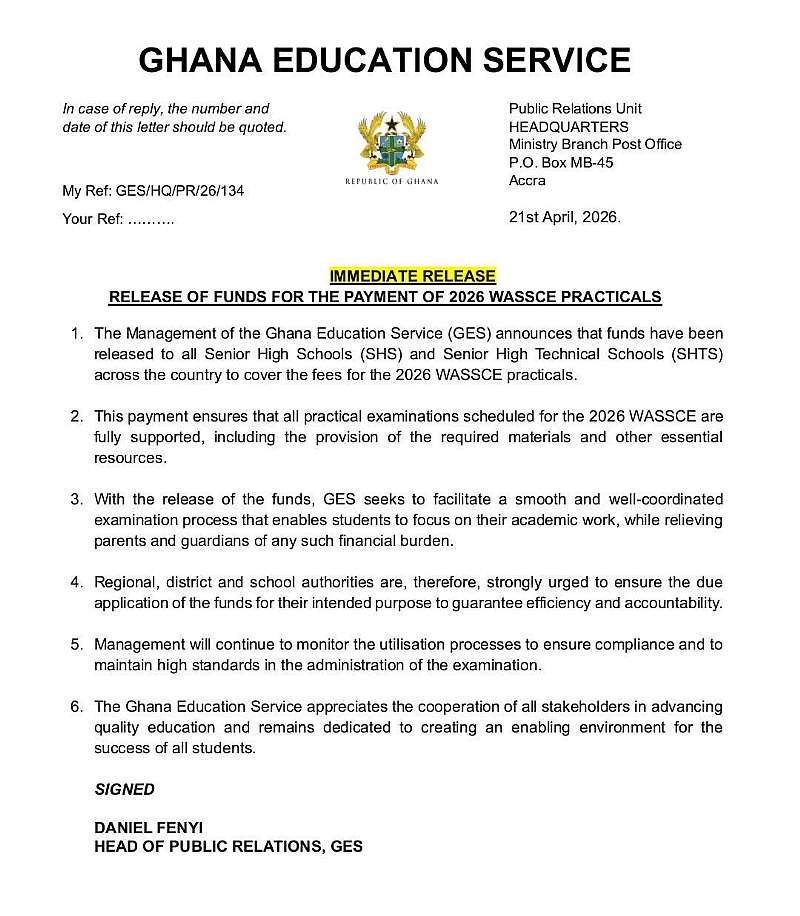
The Ghana Education Service (GES) has officially released the required funding for the WASSCE 2026 practical fees to all public Senior High Schools (SHS) across the country. This timely disbursement ensures that heads of schools can procure the necessary materials for science, home economics, and visual arts practical examinations without placing a financial burden on parents or students.
This move by the GES comes after weeks of anticipation from educational stakeholders who were concerned about potential delays in the examination calendar. By settling these practical fees directly, the government is upholding its commitment to the Free SHS policy, ensuring that no student is barred from participating in the West African Senior School Certificate Examination (WASSCE) due to a lack of resources. For hundreds of thousands of candidates, this release of funds is the green light they need to focus purely on their academic performance as the April-May practical window begins.
Why is the release of WASSCE 2026 practical fees by GES so critical?
The release of these funds is critical because it prevents school heads from charging illegal “levies” to cover the cost of perishable items and laboratory equipment needed for the exams. Without this central funding, schools would struggle to provide the chemicals for chemistry, ingredients for food and nutrition, or tools for technical drawing required for a successful practical session.
In previous years, delays in fund disbursement often led to friction between school administrations and the GES, sometimes resulting in students being asked to bring their own materials. The 2026 proactive release ensures a standardized testing environment where every student, regardless of their location or economic background, has access to the same quality of materials. This level playing field is a cornerstone of the West African Examinations Council (WAEC) standards and is essential for the credibility of the final results.
How many students are affected by the WASSCE 2026 practical fees disbursement?
Approximately 450,000 to 500,000 students across Ghana’s public Senior High Schools are directly impacted by this funding, as it covers a wide range of elective subjects. While every student sits for core subjects, those in specialized tracks like Science, Technical, and Vocational programs rely heavily on these practical funds to complete their certification.
The scale of this operation is massive, involving thousands of schools from the Greater Accra region to the furthest reaches of the Upper West. Parents who were previously anxious about “hidden costs” associated with the WASSCE 2026 practicals can now breathe a sigh of relief. This funding doesn’t just buy test tubes and fabric; it buys peace of mind for families who are already navigating the high-stress environment of a final examination year.
What happens if a school still asks parents to pay for practical materials?
The GES has been very clear that under the current funding model, no public school head is authorized to collect fees for WASSCE 2026 practicals from parents. Any school found charging such fees is in direct violation of the Ghana Education Service directives and could face severe disciplinary action.
Parents are encouraged to report any instances of illegal fee collection to their respective District or Regional Education Directorates. The GES has established a “Whistleblower” system to ensure that the Free SHS policy remains truly free at the point of use. If you are asked to pay for anything labeled as “practical fees,” it is likely an unauthorized charge, and you should seek clarification from the official GES communication channels before making any payments.
Which subjects are covered under the WASSCE 2026 practical fees?
The funds released by the GES cover all subjects that require a “hands-on” component, including Biology, Chemistry, Physics, Agricultural Science, and all Home Economics options. It also extends to the Visual Arts department for ceramics, sculpture, and graphic design practicals, as well as Technical subjects like Building Construction and Woodwork.
Each of these subjects has a specific “specimen list” provided by WAEC, and the GES funds are calculated based on the market price of these items. For instance, in Food and Nutrition, the funds cover the cost of fresh protein, vegetables, and cooking fuel. In the sciences, it covers reagents and specialized glassware. By covering such a broad spectrum of subjects, the GES ensures that the “vocational” and “technical” pride of Ghana’s education system is well-supported.
Is the WASSCE 2026 timetable affected by this funding release?
No, the WASSCE 2026 timetable remains on track, and the timely release of funds actually helps solidify the schedule by ensuring that schools are prepared well in advance of their assigned dates. WAEC has already circulated the preliminary timetable, and the practical sessions are expected to run throughout the month of May.
If the funds had been delayed, there was a risk that certain practical sessions would have to be rescheduled, leading to a “domino effect” on the theory papers. With the money now in the hands of school bursars, there is no logistical reason for any delay. Students should continue their revision based on the existing calendar provided by their school’s academic office, as the “administrative” side of the exams is now fully sorted.
Also Read: SHS Fires: Education Ministry Suspects Arson After Northern Region Incidents
How does the GES calculate the amount of money sent to each school?
The GES uses a formula based on the “Candidate Population” per subject at each school to ensure that larger institutions receive proportionally more funding than smaller ones. Heads of schools are required to submit their final registration numbers to the GES headquarters, which then triggers the disbursement via the Integrated Financial Management Information System (GIFMIS).
This digital approach to funding minimizes “leakage” and ensures that the money reaches the school’s official account rather than being handled as cash. It also allows the GES to track exactly how much has been spent on WASSCE 2026 practical fees across the country. Transparency is key here; by using verified WAEC registration data, the government ensures that every cedi is accounted for and directed toward the students who actually need it.
What role does the Free SHS Secretariat play in this process?
The Free SHS Secretariat acts as the coordinating body that ensures the budget for examination fees and practical materials is integrated into the national education budget. They work closely with the Ministry of Finance to ensure that liquidity is available just before the WASSCE season begins.
The Secretariat’s role is to act as the “buffer” between the policy and the practice. While the GES handles the administration of the schools, the Free SHS Secretariat handles the broader financial sustainability of the program. Their involvement ensures that the WASSCE 2026 practical fees GES Ghana project is prioritized as a “non-negotiable” expense, protecting it from general budget cuts that might affect other sectors.
Why is “WASSCE 2026” such a high-trending keyword in Ghana right now?
The keyword “WASSCE 2026” trends every April because it is the “Final Boss” of the Ghanaian secondary education journey, representing years of hard work and significant future opportunities. For students, it is the gatekeeper to university admission; for parents, it is the culmination of their investment in their children’s future.
Because the exams are so high-stakes, there is a constant demand for information regarding timetables, practical requirements, and funding updates. Search engines see a massive spike in queries like “WASSCE 2026 practical fees GES Ghana” as people look for official confirmation of rumors. By providing this information clearly and accurately, the GES is helping to reduce the “misinformation” that often circulates on social media during exam seasons.
What advice should students follow during the WASSCE 2026 practical window?
Students are advised to focus on their laboratory techniques and ensure they are familiar with the specific “specimens” mentioned in the WAEC briefs. With the funding for materials now secured, the only thing left for the student is to demonstrate their mastery of the subject matter.
It is also important for students to stay healthy and manage their time effectively. Practical exams can be physically demanding, often requiring hours of standing in a lab or kitchen. Since the GES has handled the “logistical stress” of buying the materials, students should use that mental energy to double-check their calculations and ensure their practical reports are neat and accurate. This is the final lap of a long race, and preparation is the only thing that beats anxiety.
Also Read: Ghana Free SHS Programme Faces Disruption as Schools Report Severe Food Shortages