

 By Collins Sarkodieh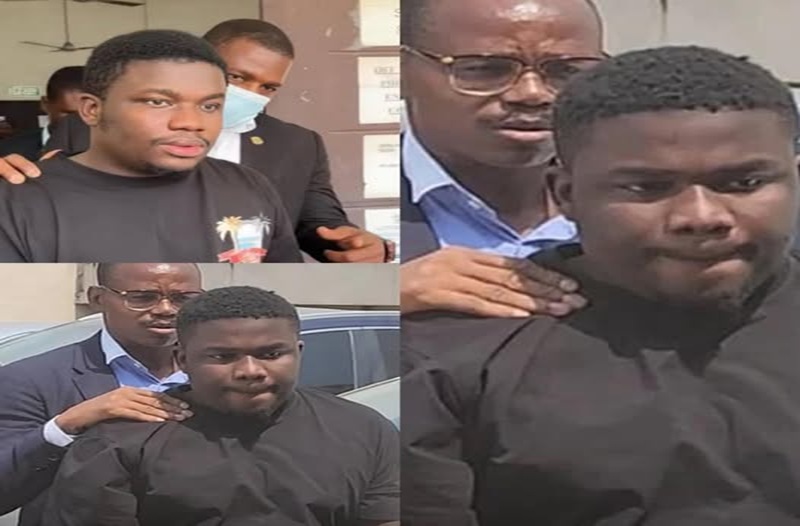
The Ghana High Court has granted bail in the sum of GH₵30 million to Frederick Kumi, widely known as Abu Trica, as his extradition proceedings to the United States move forward. Abu Trica faces serious allegations including wire fraud and money laundering connected to an $8 million romance scam syndicate that targeted victims across North America.
The bail condition requires the accused to provide two sureties who are justified with landed property, alongside the surrender of his passport to the court registry. While the defense argues that Kumi is a legitimate businessman and a law-abiding citizen, the state maintains that he played a pivotal role in a transnational criminal organization. This legal battle is one of the most high-profile extradition cases in 2026, highlighting the increasing cooperation between Ghana’s Office of the Attorney General and the United States Department of Justice (DOJ).
What are the specific charges against Abu Trica in the United States?
Frederick “Abu Trica” Kumi is indicted on multiple counts of conspiracy to commit wire fraud, substantive wire fraud, and money laundering in the US. Federal prosecutors allege that he was a key figure in an organized group that utilized “romance scam” tactics to swindle over $8 million from unsuspecting individuals, many of whom were elderly or vulnerable.
Romance scams typically involve the creation of fake online identities to gain a victim’s trust and affection before soliciting large sums of money for fabricated emergencies or investment opportunities. In the case of Abu Trica, US authorities claim to have tracked a digital paper trail linking several Ghanaian bank accounts and luxury asset purchases to the proceeds of these fraudulent activities. Money laundering charges were added because the funds were allegedly moved through various shell companies to conceal their illicit origins.
Why did the Ghana High Court grant such a high bail amount?
The GH₵30 million bail sum reflects the severity of the financial crimes alleged and serves as a financial deterrent to prevent the accused from fleeing the jurisdiction during extradition hearings. The High Court judge noted that while the right to liberty is constitutional, the international nature of the charges and the substantial amount of money involved necessitate stringent conditions.
Bail in extradition cases is often contentious because the primary objective of the court is to ensure the subject is available for surrender if the extradition request is approved. By requiring two justified sureties with landed property, the court places the burden of monitoring the accused on individuals with significant assets at stake. This “anchor” ensures that the legal process can proceed without the state needing to keep the individual in custody, which can sometimes take months or years depending on the complexity of the appeals.
Also Read: Gbese District Court Approves Abu Trica’s Extradition to US Over $8 Million Romance Scam Case
How do extradition proceedings work between Ghana and the US?
Extradition between Ghana and the US is governed by a long-standing treaty and the Extradition Act of Ghana, which requires the requesting country to provide “prima facie” evidence of the crimes committed. The process begins with a formal request from the US State Department, which is then handled by Ghana’s Ministry of the Interior and the Attorney General’s office.
Once a person is apprehended, the High Court must determine if the offenses charged are “extraditable offenses” and whether they would also be crimes if committed in Ghana. This is known as the principle of dual criminality. The court does not determine ultimate guilt or innocence; it merely decides if there is enough evidence to justify a trial in the requesting country. Abu Trica’s legal team is expected to challenge the “sufficiency of evidence” and argue against the physical transfer on human rights or procedural grounds.
What is the significance of the $8 million romance scam ring?
The $8 million figure associated with this case places it among the largest romance scam operations ever tracked back to the West African corridor. It highlights a sophisticated evolution in cybercrime where syndicates use emotional manipulation rather than technical hacking to extract wealth from their targets.
These rings often operate as “corporate” entities with specific roles, including “scriptwriters” who engage victims, “pickers” who receive the money locally, and “launderers” who convert the cash into assets. US authorities have become increasingly aggressive in pursuing these cases because of the devastating social impact on victims, some of whom lose their entire life savings. The prosecution of Abu Trica is seen as a “deterrence signal” aimed at breaking the perception that international borders offer immunity for digital fraud.
Can Abu Trica avoid extradition to the United States?
While the bail grant allows Abu Trica to stay out of jail for now, avoiding extradition entirely is a difficult legal uphill battle if the dual criminality requirements are met. His legal team would need to prove that the request is politically motivated, that the evidence is fundamentally flawed, or that he would face “cruel and unusual punishment” in the US justice system.
Ghanaian courts have historically been cooperative with international extradition requests, especially in cases involving financial crimes and cyber-enabled fraud. However, the legal process allows for multiple levels of appeal, which can significantly delay the actual transfer. If the High Court rules in favor of extradition, the final decision often rests with the executive branch of the Ghanaian government to sign the surrender warrant.
What role did the FBI play in the Abu Trica investigation?
The Federal Bureau of Investigation (FBI) worked in tandem with Ghana’s Economic and Organised Crime Office (EOCO) to build the case against Abu Trica through years of digital surveillance and financial tracking. This partnership involved “Mutual Legal Assistance” (MLA) requests that allowed US agents to access specific bank records and communication logs within Ghana.
The FBI’s involvement is crucial because they provide the primary testimony and the forensic data obtained from victims in the US. By collaborating with local Ghanaian law enforcement, the FBI ensures that suspects cannot simply hide their assets or identities in another jurisdiction. This cross-border cooperation is a cornerstone of modern law enforcement strategy, particularly in the fight against “Yahoo Boys” and organized fraud syndicates operating out of the West African sub-region.
How has the public in Ghana reacted to the Abu Trica bail news?
The public reaction in Ghana has been divided between those who see Abu Trica as a successful “big boy” and those who view his alleged activities as a stain on the nation’s reputation. On social media, the hashtag #AbuTrica has trended with debates ranging from the fairness of the GH₵30 million bail to the ethics of romance scams.
There is a growing concern among the Ghanaian youth that the “quick money” culture associated with such scams is damaging the country’s ease of doing business and the credibility of Ghanaian passports. Conversely, supporters of the accused argue that until he is proven guilty in a court of law, he should be treated as a legitimate entrepreneur. This case serves as a national conversation starter about the intersection of wealth, digital ethics, and international law in 2026.
What are the “wire fraud” laws that Abu Trica is accused of violating?
Wire fraud is a federal crime in the United States that involves any scheme to defraud another person using electronic communications, such as the internet, phone calls, or emails. Because the alleged scams involved international bank transfers and social media interactions, they fall squarely under the jurisdiction of the US federal courts.
The penalties for wire fraud in the US are severe, often carrying up to 20 years in federal prison per count. If the fraud affects a financial institution, the penalties can increase to 30 years and fines of up to $1 million. For a foreign national like Abu Trica, a conviction would also likely mean the permanent forfeiture of all assets identified as “proceeds of crime,” regardless of where those assets are located globally.
What is next in the Abu Trica High Court case?
Following the grant of bail, the court will move into the “committal” phase of the extradition proceedings, where the judge will review the formal evidence submitted by the US government. This phase will involve intense legal arguments regarding the admissibility of digital evidence and the credibility of the witnesses cited in the US indictment.
The case is expected to draw significant international media attention as it progresses throughout 2026. The outcome will set a vital precedent for how Ghana handles “high-value” citizens accused of transnational crimes. For now, Abu Trica remains in Ghana under strict bail conditions, awaiting a decision that could see him spend the next few decades in an American courtroom rather than the luxury circles of Accra.
Also Read: Lawyer Claims FBI Set Up Ghanaian Socialite Abu Trica with a $13,000