

 By Collins Sarkodieh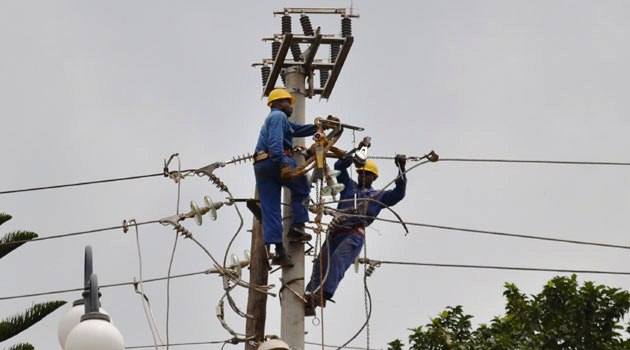
The Electricity Company of Ghana (ECG) has confirmed significant power outages across the Accra West, Western, Ashanti, and Central regions for today, April 22, 2026. These interruptions are a combination of planned maintenance schedules and emergency fault repairs aimed at stabilizing the national grid and improving the long-term reliability of power distribution.
Residents in the affected areas should expect the outages to last between six to eight hours in most zones, although emergency repairs on high-voltage lines may extend beyond the estimated timeframe. The ECG has stated that these “system improvements” are necessary to prevent larger, unplanned collapses of the regional distribution networks. While the timing is inconvenient for businesses and households, the utility provider maintains that regular maintenance is the only way to mitigate the impact of aging infrastructure.
Which specific regions are affected by the ECG power outage on April 22?
The primary regions facing power interruptions today include the Accra West, Western, Central, and parts of the Ashanti region. These areas contain high-density residential zones and major industrial hubs that rely heavily on a stable 24-hour supply of electricity.
In the Accra West region, areas such as Kasoa, Mallam, and Ablekuma are likely to see the most significant downtime as crews work on sub-station upgrades. The Western and Central regions are undergoing maintenance specifically focused on coastal line stabilization, which is often affected by salt spray and corrosion. For residents in the Ashanti region, the outages are more localized, focusing on upgrading transformers in fast-growing suburban communities.
What is the difference between a “planned” and an “emergency” outage?
A planned outage is a scheduled maintenance window communicated in advance, whereas an emergency outage occurs when a critical fault is detected that requires immediate isolation to prevent fire or equipment damage. Today’s interruptions are a mix of both, with many neighborhoods experiencing “planned” downtime to allow for “emergency” repairs on interconnected lines.
Planned maintenance usually involves activities like tree trimming near power lines, replacing worn-out insulators, or upgrading transformer capacities. Emergency outages often follow sudden equipment failure, such as a blown fuse at a sub-station or a cable fault caused by external factors. Understanding this distinction helps consumers realize that not every outage is a sign of a “failing” grid, but rather an active intervention to keep the system safe and functional.
Why is April 22 a critical date for ECG maintenance works?
The timing of these outages on April 22 is strategic, coinciding with a period of high ambient temperatures that place immense strain on cooling systems and transformers. By performing maintenance now, the ECG aims to strengthen the grid before the peak demand of the upcoming rainy season and potential storm surges.
The ECG uses data-driven scheduling to pick dates where the load on the national grid is slightly lower, such as mid-week windows between public holidays. This minimizes the overall economic impact while allowing technicians enough daylight hours to complete complex wiring tasks. While it feels like a “bad day” for productivity, these maintenance windows are selected to avoid the massive surges in demand typically seen during weekends or the height of the summer heatwaves.
How can businesses in Accra West and the Western Region prepare?
Businesses are advised to disconnect sensitive electronic equipment before the scheduled start time to avoid potential damage from “power surges” when the electricity is restored. High-capacity industries should rely on automated backup systems like Uninterruptible Power Supplies (UPS) and industrial generators to bridge the six-to-eight-hour gap.
For small-scale entrepreneurs, such as cold-store operators or barbers, the outage means adjusting operating hours or investing in solar-powered backup solutions. The ECG encourages business owners to check the “ECG Power App” for real-time updates on restoration times. Proper preparation can mean the difference between a minor delay and a total loss of perishable inventory or specialized hardware.
What role does aging infrastructure play in these frequent outages?
Much of the distribution hardware in the Central and Western regions was installed decades ago and is currently operating at or near its maximum thermal capacity. These planned outages are essential for replacing older “aluminum” lines with more efficient, modern conductors that can handle the increased load of a growing population.
Transformers that were designed to serve 100 homes are now often serving 300 due to rapid urbanization. When these units are pushed beyond their limits, they overheat and fail, leading to those “emergency” outages we see today. The maintenance on April 22 is part of a multi-year project to modernize the “last mile” of electricity delivery, ensuring that the power produced by the Volta River Authority (VRA) actually reaches your home without being lost in transmission.
Also Read: ECG Attributes Accra West Power Outage to Transformer Fault at Shiabu
Will the power return exactly on time today?
While the ECG provides an estimated restoration time, usually around 6:00 PM, residents should be aware that technical complications can sometimes delay the “re-energizing” of the grid. If a technician discovers a deeper fault while replacing a component, the safety protocol requires that the power stays off until the system is 100% verified.
The process of turning the power back on is done in stages to prevent a “load surge” that could trip the circuit breakers again. If your neighbors have power and you do not, it might be an isolated fuse issue or a localized fault within your street’s transformer. In such cases, it is vital to report the specific location through the ECG customer service portal rather than assuming the general outage is still in effect.
How does the “salt spray” in coastal regions affect the power supply?
In regions like the Central and Western coastlines, salt from the Atlantic Ocean settles on power lines and insulators, creating a conductive layer that can lead to “short circuits” or “flashovers.” This environmental factor is one of the leading causes of power instability in coastal Ghana, requiring frequent cleaning and replacement of insulators.
Today’s maintenance in the Western region specifically includes the “washing” of insulators and the application of protective coatings to resist sea-salt corrosion. This is a specialized task that cannot be performed while the lines are live. By addressing this now, the ECG prevents the random “tripping” of power that often happens during light drizzles or high-wind days on the coast.
What are the long-term benefits of the “ECG power outage areas April 22 2026” works?
The long-term benefits include a drastic reduction in “voltage fluctuations” that often cause household appliances like fridges and televisions to burn out. A stabilized grid means that the power you receive is consistently at the correct voltage, extending the life of your expensive electronics.
Furthermore, these upgrades allow for a more efficient integration of renewable energy sources, such as solar and wind, into the national grid. As Ghana moves toward a greener energy future, the distribution network must be robust enough to handle “bi-directional” power flows. The temporary inconvenience of today is an investment in a future where power outages become a rare exception rather than a weekly expectation.
Why is communication from the ECG so important during these events?
Transparent communication helps maintain public trust and allows for better national planning, reducing the frustration that comes with “surprise” darkness. The ECG has been praised for its increased use of social media and mobile apps to provide granular details about which neighborhoods are affected.
By knowing exactly which areas are down, emergency services like hospitals and police stations can switch to their backup protocols without delay. It also allows the public to hold the utility provider accountable; when an outage is “announced” but restoration is “delayed,” it creates a clear paper trail for consumer advocacy groups to investigate.
Also Read: ECG Power Outage Areas Today April 21 2026: Full List, Reasons, and What to Expect