

 By Collins Sarkodieh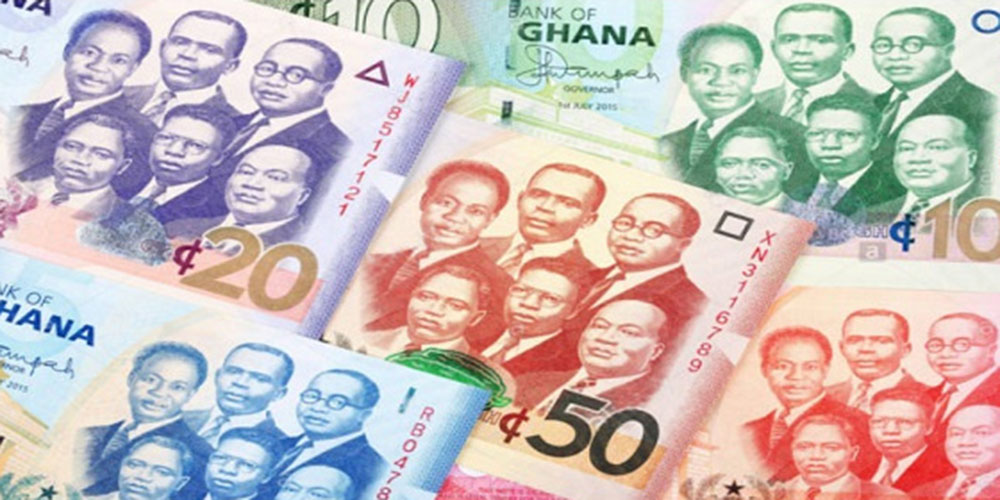
The Bank of Ghana (BoG) successfully slashed its currency production and issuance costs by more than 50% in 2025, dropping from over GH¢1 billion to GH¢471.4 million. This massive fiscal save occurred despite a steady rise in the public’s demand for physical cash, showcasing a rare intersection of operational efficiency and rising circulation.
The primary driver for this reduction was a significant 72% decrease in the direct costs associated with printing banknotes and minting coins. By optimizing procurement and managing existing stock more effectively, the central bank reduced its manufacturing bill from GH¢986 million to just GH¢277 million in a single fiscal year.
For the average Ghanaian, this means the institution responsible for the cedi is becoming leaner and more digitally focused. While we are still carrying physical wallets, the backend of the money-making machine is being fine-tuned to ensure that the cost of creating a “cedi” doesn’t outweigh the value it brings to the economy.
How did the Bank of Ghana reduce currency costs while cash demand rose?
The Bank of Ghana achieved this by dramatically lowering the cost of printing and minting, which fell from GH¢986 million in 2024 to GH¢277 million in 2025. This was likely achieved through more favorable international printing contracts and a strategic reliance on existing banknote inventory rather than fresh production runs.
Currency issuance is a complex logistical dance involving specialized high-security printers, expensive cotton-based paper, and advanced anti-counterfeiting technologies. By timing their orders better and perhaps leveraging longer-lasting polymer or hybrid notes introduced in previous years, the BoG avoided the heavy manufacturing overhead seen in 2024.
It is a bit of a paradox: more cash is moving through the hands of traders in Makola, yet the cost to put that cash there has plummeted. This suggests that the “velocity of money” how fast cash changes hands—might be high enough that the bank doesn’t need to constantly refresh the supply with brand-new, crisp notes every month.
What is the total drop in the BoG’s currency issuance budget?
The total expenditure on currency issuance dropped from a high of GH¢1.05 billion in 2024 to approximately GH¢471.4 million in 2025. This represents a total saving of nearly GH¢580 million, providing a much-needed boost to the central bank’s operational efficiency during a period of wider macroeconomic recovery.
This budget covers more than just ink and paper; it includes the armored transportation, security personnel, and regional vault management required to move cedis from the headquarters to commercial bank branches. Even as fuel and logistics costs rose globally, the BoG managed to trim the fat from its distribution network.
Seeing a 72% drop in manufacturing costs specifically is an outlier in central banking, where costs usually trend upward with inflation. This move signals that the BoG is prioritizing “fiscal discipline” at a time when the government is under pressure to show better management of state resources.
Why is cash in circulation still increasing in Ghana?
Cash in circulation is increasing because a significant portion of the Ghanaian economy remains informal, relying on physical cedis for daily transactions in markets, transportation, and small-scale retail. Despite the rise of mobile money (MoMo), cash remains the “king” of liquidity for millions of citizens who do not yet have full access to digital banking.
The demand for cash often rises during periods of inflation or economic uncertainty as people prefer to keep “hard” currency on hand. While the BoG is pushing for a “cash-lite” society, the reality on the ground is that the physical cedi is still the most trusted medium of exchange for the average person.
Furthermore, as the population grows and more people enter the workforce, the total volume of money needed to facilitate trade naturally expands. The challenge for the BoG is to meet this demand without letting the cost of “producing” that money eat into the national budget.
Factual Insights into Bank of Ghana’s Currency Management:
- Manufacturing Savings: The cost to print notes and mint coins fell by 72%, dropping from GH¢986 million to GH¢277 million in 2025.
- Total Issuance Cost: The bank spent GH¢471.4 million on currency-related activities in 2025, down from over GH¢1 billion the previous year.
- Inventory Strategy: Central banks often maintain “buffer stocks” of banknotes to avoid printing during years when international costs are high.
- Digital Influence: Ghana is one of the world leaders in mobile money penetration, which slowly reduces the “wear and tear” on physical banknotes.
- Security Features: Banknote costs are heavily influenced by the price of security threads, holograms, and color-shifting inks sourced from overseas.
- Logistical Efficiency: A portion of the GH¢471.4 million spend is dedicated to the high-security transport of cash across Ghana’s 16 regions.
- Fiscal Reporting: These figures were officially unveiled in the BoG’s 2025 audited financial statements released in early May 2026.
Does this mean the Bank of Ghana is printing less money?
Not necessarily; it means they are spending less to maintain the supply. The BoG can increase the “amount of cash in circulation” by releasing reserves already held in its vaults, which doesn’t require a new printing bill.
The total value of money in an economy is managed through monetary policy, not just by how many physical pieces of paper are produced. By using existing stock and improving the durability of the notes currently in the market, the BoG can keep the economy liquid while keeping the production presses quiet.
Think of it like a car owner who spends less on maintenance in a year because they did a major overhaul the year before. The car is still on the road more often, but the owner isn’t constantly in the shop buying new parts. 2024 was the “major overhaul” year, and 2025 is the year of smooth, low-cost cruising.
How does this cost-cutting benefit the Ghanaian economy?
By cutting currency production costs by over GH¢500 million, the Bank of Ghana reduces its total operating expenses, which ultimately helps improve its bottom line and the national balance sheet. Every cedi saved on printing is a cedi that doesn’t have to be factored into the bank’s operational deficit.
Operational efficiency at the central bank is a positive signal to international investors and organizations like the IMF. It shows that the institution is taking steps to modernize its processes and reduce waste, which is essential for long-term currency stability.
Lowering the cost of the “money supply” also reduces the pressure on the national budget. In an era where Ghana is navigating debt restructuring and fiscal consolidation, a leaner central bank is a significant win for the broader “Operation Recover All Loot” (ORAL) and efficiency mindsets.
Also Read:
What role does Mobile Money play in these reduced costs?
Mobile money and digital banking platforms act as a natural “shock absorber” for physical cash, meaning the BoG doesn’t have to replace worn-out banknotes as frequently. When you pay for a taxi via MoMo instead of a GH¢10 note, that note stays in better condition for longer, extending its “life cycle” in the economy.
Ghana’s digital financial revolution has created a “hybrid” economy. While we still need physical notes for many things, the billions of cedis moving through digital wallets mean the physical paper doesn’t have to work quite as hard. This reduced “friction” directly correlates to lower replacement costs for the central bank.
As the BoG continues to promote the eCedi (its central bank digital currency), we can expect the costs of physical currency to continue their downward trend over the next decade. The goal isn’t to kill the physical cedi, but to make it a secondary, lower-cost companion to a digital-first system.
What are the next steps for BoG’s currency strategy?
The Bank of Ghana is likely to continue its push for digital adoption while maintaining a “high-durability” strategy for its remaining physical notes. We can expect more focus on polymer-based notes for smaller denominations, which last significantly longer than traditional paper.
Additionally, the BoG will likely continue to optimize its regional distribution centers to reduce the GH¢471.4 million logistical spend. By using data to predict where cash is needed most—such as during cocoa harvesting seasons—they can move money more efficiently and avoid unnecessary transport costs.
The 2025 financial statement proves that the BoG has found a way to manage the physical needs of a growing economy without breaking the bank. For the Ghanaian taxpayer, it’s a rare piece of good news: the money in your pocket is becoming cheaper to produce, but its value remains the focus of the bank’s mission.
Also Read: