

 By Collins Sarkodieh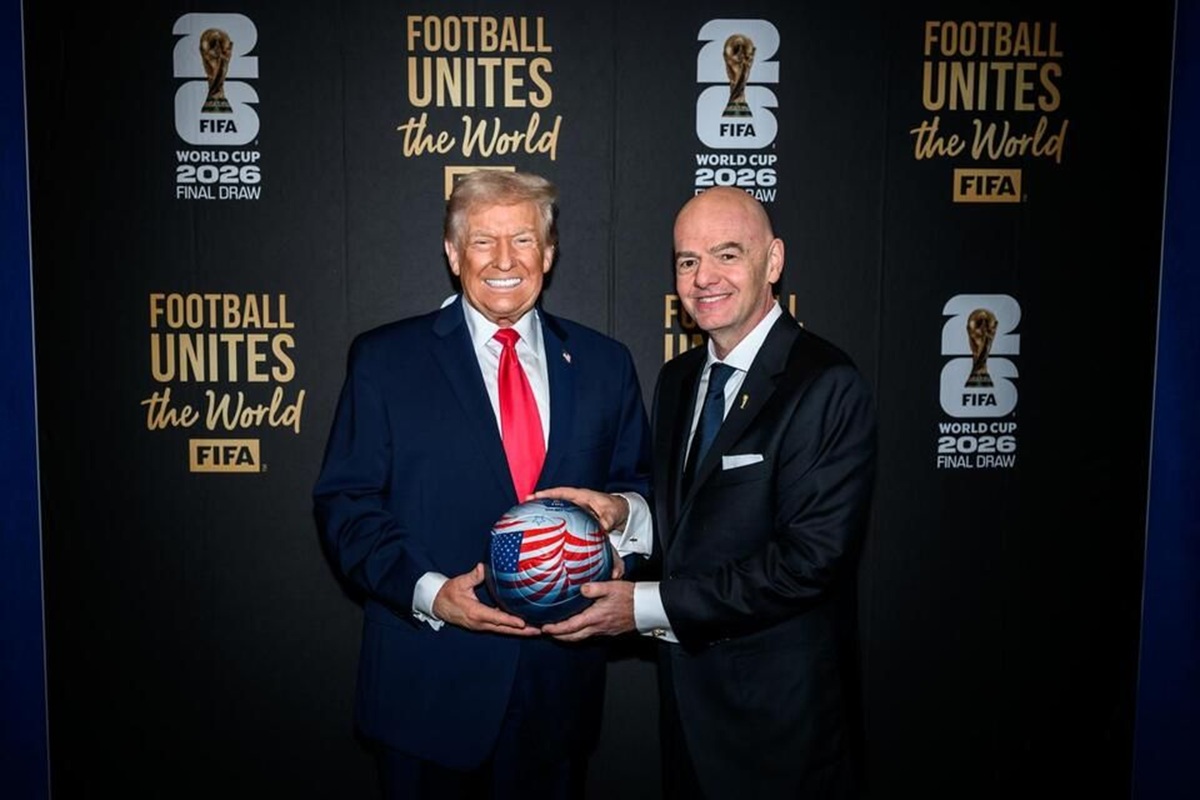
United States President Donald Trump has publicly criticized the $1,000 price tag for tickets to the USA’s 2026 World Cup opening match against Paraguay, stating he “wouldn’t pay it either.” The President expressed disappointment that his supporters from areas like Queens and Brooklyn might be priced out of the historic event in Los Angeles on June 12.
The 2026 FIFA World Cup, co-hosted by the US, Canada, and Mexico, is facing intense scrutiny over an “extortionate” pricing strategy. Unlike previous tournaments that used flat-rate pricing for group stages, FIFA has implemented “dynamic” pricing based on team popularity. This means watching a high-demand team like the US comes with a premium that many average fans find impossible to afford.
Despite the backlash, FIFA President Gianni Infantino has defended the costs, arguing they align with other major US sporting events like the Super Bowl or NBA Finals. However, with resale fees reaching 30% and transportation costs spiking, the “beautiful game” is currently feeling a lot more like a luxury commodity than a community sport.
Why are 2026 World Cup tickets so expensive?
World Cup tickets are exceptionally expensive because FIFA has adopted a market-driven pricing model that prioritizes the perceived popularity of specific matchups. For the 2026 edition, high-profile games—especially those involving host nations are priced significantly higher than matches between lower-ranked teams in the same group stage.
In a departure from tradition, FIFA is also capitalizing on the US secondary market. Infantino noted that if tickets are sold too low, “scalpers” will simply flip them for a profit anyway. By keeping initial prices high and taking a 30% cut from their official resale platform (15% from both buyer and seller), FIFA is essentially acting as its own primary and secondary market regulator.
While FIFA did introduce a limited number of “Category 4” tickets priced at approximately $58 (£45) for all 104 matches, these are notoriously difficult to secure. For the majority of fans looking to guarantee a seat at the Rose Bowl or MetLife Stadium, the four-figure price point is becoming the new, uncomfortable reality.
What did Donald Trump say about the $1,000 ticket price?
President Donald Trump told The New York Post that he was unaware of the $1,000 figure but was firm in his stance that even he wouldn’t pay that much to attend. He emphasized his desire for his voting base—specifically mentioning people from Queens and Brooklyn—to be able to experience the tournament without financial hardship.
Trump described the tournament as an “amazing success” in terms of scale but remained critical of the barriers to entry for local fans. His comments reflect a growing populist concern that the World Cup, which should be a unifying national moment, is being reserved exclusively for the wealthy elite and corporate sponsors.
The President’s intervention adds significant political pressure to FIFA, which is already navigating complex logistics across three countries. When the leader of a host nation publicly balks at the cost of admission, it highlights a massive disconnect between the organization’s “football for everyone” slogan and its actual financial operations.
How much does it cost to travel to a World Cup game in New Jersey?
Fans traveling from Penn Station in Manhattan to MetLife Stadium in New Jersey initially faced a staggering $150 return train fare, though this has recently been reduced to $105. This “special event” pricing is nearly ten times the usual $12.90 return fare, causing widespread outrage among commuters and visiting supporters.
The price reduction came after Governor Mikie Sherrill intervened, requesting private sponsorships to help subsidize the costs. New Jersey Transit CEO Kris Kolluri confirmed the 30% price cut, but many still argue that $105 for an 18-mile journey is predatory. These inflated transit costs, combined with high ticket prices, create a “double tax” on fans attending games in the New York metropolitan area.
New Jersey isn’t alone in these struggles. Across all host cities, hotels and local transport are seeing “World Cup premiums” that are pricing out even those who managed to win the ticket lottery. The logistical cost of attending a single game can now easily exceed $2,000 when factoring in a ticket, transit, and basic accommodation.
Factual Insights into 2026 World Cup Costs:
- Host Cities: The tournament features 16 host cities across the US, Canada, and Mexico, the first time three nations have shared hosting duties.
- Match Count: The 2026 edition is the largest ever, featuring 48 teams and a record-breaking 104 matches.
- Resale Tax: FIFA takes a 15% commission from both the buyer and the seller on its official resale platform, a 30% total rake per transaction.
- Toronto Exception: In Ontario, Canada, a ban on reselling tickets above face value means Toronto matches are the only ones where price gouging is legally restricted.
- Inaugural Date: The tournament officially kicks off on June 11, with the US opening its campaign the following day in Los Angeles.
- Comparison: FIFA’s $1,000 opener price is roughly five times higher than the equivalent group-stage tickets at the 2022 World Cup in Qatar.
Can fans buy tickets at face value in Toronto?
Yes, fans attending matches in Toronto can only buy and sell tickets at their original face value due to the Ontario government’s strict ban on secondary market price gouging. This makes Toronto one of the few “islands of affordability” in a tournament otherwise dominated by dynamic pricing and inflated resale values.
This legislative shield is a rare win for fans. While supporters in Los Angeles or New Jersey are forced to navigate a wild-west resale market, those in Toronto can rest assured that the price printed on the ticket is the price they will pay. This has led to a massive surge in interest for games at BMO Field, as fans look to avoid the 30% fees found on FIFA’s US-based platform.
However, the supply of these face-value tickets is incredibly low. With millions of fans vying for a few thousand seats, the “face value” protection only works if you are lucky enough to be selected in the initial lottery. Once those are gone, the lack of a legal secondary market in Ontario might ironically lead to a “black market” where tickets are sold under the table for even higher untraceable cash amounts.
The “Luxurification” of the World Cup
The 2026 World Cup is shaping up to be the most commercially successful and most expensive event in football history. President Trump’s refusal to pay $1,000 for a ticket serves as a symbolic middle finger to the “luxurification” of a sport that was built on the backs of the working class. While New Jersey has made strides in reducing transit costs, the overall barrier to entry remains historically high.
FIFA’s defensive stance, comparing World Cup games to high-ticket American sports, ignores the global nature of the tournament. If the people from Queens, Brooklyn, and Mexico City cannot afford to see their nations play, the 2026 World Cup risks losing the very soul that makes it special. Success should be measured in atmosphere and access, not just in the ” amazing success” of a billion-dollar ticket gate.