

 By Collins Sarkodieh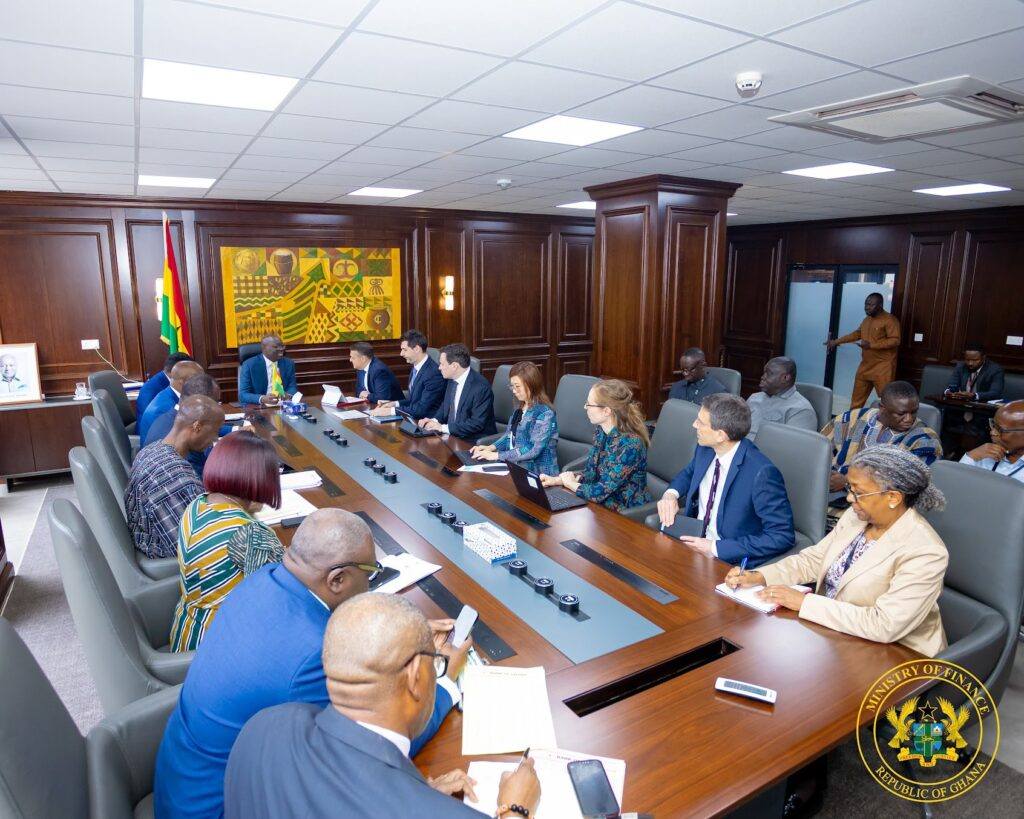
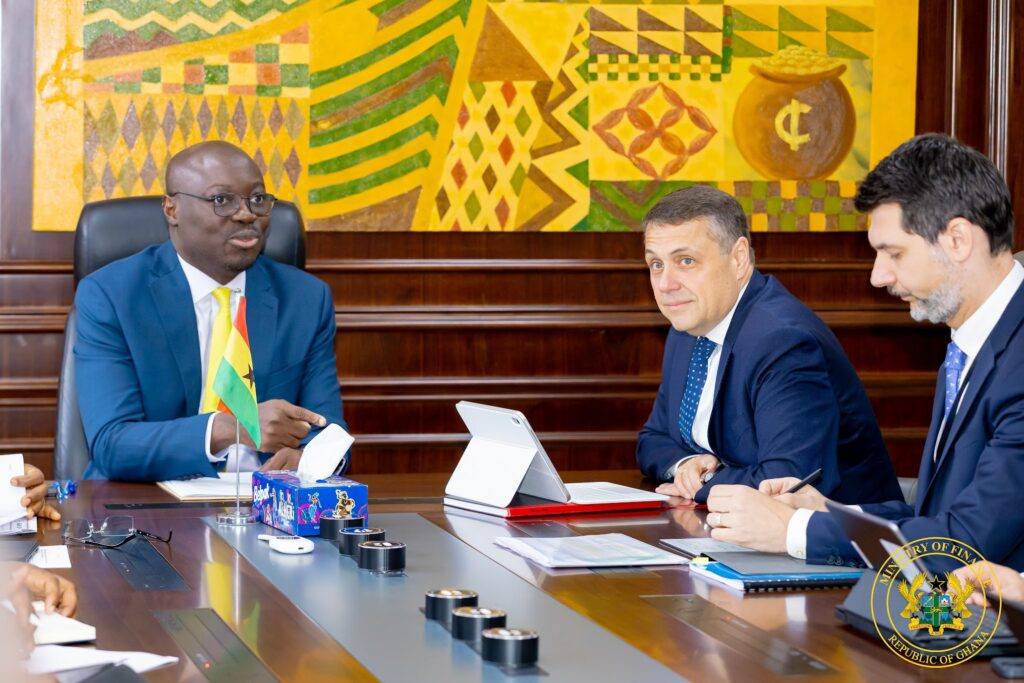
Finance Minister Dr. Cassiel Ato Forson has officially welcomed the International Monetary Fund (IMF) mission team to Accra for the sixth and final review of Ghana’s Extended Credit Facility. He described the partnership as a transformative success that has successfully restored the nation’s economic credibility and stabilized the macroeconomy following the 2022 crisis.
While the Finance Minister celebrated the restoration of investor confidence and fiscal discipline, he issued a stern warning regarding the “unresolved challenge” of youth unemployment. Dr. Forson emphasized that the current macroeconomic stability must now be converted into tangible opportunities and jobs for young people to avoid placing unsustainable pressure on the state. The arrival of the IMF team, led by Ruben Atoyan, marks the beginning of a two week evaluation that will determine the final phase of Ghana’s current reform agenda.
What are the primary achievements of the IMF Ghana 6th review April 2026 mission?
The primary achievements cited by the Finance Minister include the stabilization of the Cedi, the rebuilding of national foreign exchange reserves, and the restoration of Ghana’s international financial credibility. These gains were achieved through what Dr. Forson describes as “discipline and difficult decisions” taken during the height of the 2022 economic downturn.
The IMF team has reportedly acknowledged the strong government efforts that have brought the country to this significant milestone. This review is not just a routine check; it is a validation of the transformative partnership between the Fund and the Ghanaian government. Logic suggests that without these reforms, the country would still be grappling with the hyperinflation and debt defaults seen four years ago. Now, with the foundation laid, the government is looking to exit the programme with a clean bill of health.
Why is youth unemployment the Finance Minister’s biggest concern in 2026?
Dr. Cassiel Ato Forson warned that youth unemployment remains an “unsustainable pressure” on the state that could undermine the gains made under the IMF programme. He argues that macroeconomic stability is meaningless if it does not translate into sustainable job creation and broader opportunities for the younger generation.
The logic behind this concern is simple: a stable economy with an idle workforce is a recipe for social unrest. While the numbers on the central bank’s dashboard look positive, the reality on the streets requires a shift in focus from “stabilization” to “expansion.” The Minister’s path forward is deliberate, aiming to use the restored investor confidence to attract foreign direct investment into sectors that are labor intensive, such as manufacturing and the 24 hour economy.
How has Ghana’s credibility changed since the 2022 economic crisis?
According to the Finance Minister, Ghana has moved from a state of “restored credibility” where international markets and local stakeholders once again trust the government’s fiscal management. This shift is evidenced by the successful return of investor confidence and the willingness of bilateral partners to engage in long term economic reforms.
Rebuilding trust with the IMF was the first step in a “long and demanding” journey. In 2022, the lack of fiscal discipline led to a crisis that saw the Cedi plummet and prices soar. By sticking to the IMF’s Extended Credit Facility (ECF) guidelines, the government has proven it can make the “difficult decisions” necessary for the national interest. This renewed hope is the “invisible currency” that allows the government to negotiate better trade deals and attract the capital needed to solve the very unemployment issues Dr. Forson is worried about.
What “Key Decisions” will be made before the conclusion of the IMF mission?
The Finance Minister disclosed that the government will finalize decisions on the “next phase” of economic reforms before the IMF mission ends its two week stay in Accra. These reforms will specifically focus on strengthening policy credibility, enforcing strict fiscal discipline during the upcoming election cycle, and further boosting investor confidence.
These decisions are likely to involve new frameworks for state owned enterprise management and enhanced digital tax collection methods. The goal is to ensure that once the IMF leaves, the “discipline” stays. Dr. Forson wants to ensure that the “momentum” of the past three years is not lost. The logic is to future proof the economy so that Ghana never has to return to the Fund for another bailout.
Factual Insights on Ghana’s IMF Journey and Economic Status 2026:
- Growth Stability: Ghana’s GDP growth is currently outperforming the regional average for Sub Saharan Africa, sitting at a projected 4.8 percent for 2026.
- Inflation Progress: From a 2022 peak of over 50 percent, inflation is now on a steady path toward the government’s 7.9 percent year end target.
- Review Significance: This 6th review is the final hurdle before the official conclusion of the ECF programme on August 16, 2026.
- Debt Management: The government has successfully restructured both domestic and external debts, significantly reducing the debt to GDP ratio.
- Investor Sentiment: Capital inflows from the diaspora and foreign institutional investors have reached a three year high in the first quarter of 2026.
- Social Spending: Despite the austerity, the government has maintained funding for the “National Health Insurance” and “Free SHS” as part of the IMF’s social safeguard requirements.
- The Atoyan Factor: Ruben Atoyan’s team is focusing specifically on the “energy sector” and “banking system” reforms during this visit.
What role does Ruben Atoyan play in the IMF Ghana 6th review April 2026?
Ruben Atoyan is the IMF Mission Chief for Ghana, leading the team of experts currently in Accra to evaluate the country’s performance against the agreed upon benchmarks. His role is to verify that the government has met its “Prior Actions” and to provide the technical report that will unlock the final $360 million disbursement.
Atoyan’s team acts as the “referees” of the economic game. Their acknowledgment of Ghana’s progress is a major signal to the global financial community. When the IMF says “Ghana is on track,” it acts as a “seal of approval” that lowers the risk profile of the country. This is why Dr. Forson welcomed the team with such optimism; their presence is the final bridge to a “Post-IMF” era where Ghana can manage its own prosperity.
How can macroeconomic stability be converted into lasting prosperity?
Lasting prosperity is achieved when the “paper gains” of low inflation and a stable exchange rate allow businesses to plan, invest, and hire with certainty. The Finance Minister’s priority is to move from “survival mode” to “growth mode,” using the current stability to anchor long term industrial projects.
The logic is that stability is a foundation, not a house. You cannot live on a foundation. You need to build the “walls” of infrastructure and the “roof” of social services. By regaining credibility, the government can now borrow at lower interest rates to fund the “24-Hour Economy” initiative. This should, in theory, create the jobs Dr. Forson is so concerned about. The “Ato Forson IMF Ghana” partnership has cleared the land; now the government must do the actual building.
Also Read: IMF Ghana Debt-to-GDP Ratio 2026 Projection: What Investors and Citizens Need to Know
What are the risks of “Complacency” as the IMF programme nears its end?
The risk of complacency lies in the temptation to increase government spending and abandon fiscal discipline once the strict oversight of the IMF is removed. Dr. Forson warned that the gains are “milestones,” but they are not permanent unless the culture of discipline becomes a permanent part of governance.
Historical logic in Ghana shows that election years often lead to “fiscal slippages” where the government spends more than it earns to win votes. This is exactly what the “Key Decisions” mentioned by the Minister are meant to prevent. By enforcing fiscal discipline now, the government is trying to “bind the hands” of future administrations to prevent a return to the 2022 crisis. Complacency today is the “economic heart attack” of tomorrow.
What is the “Deliberate Path” the government is taking forward?
The “Deliberate Path” involves a shift toward private sector led growth, where the government focuses on “policy credibility” while the private sector focuses on “job creation.” This involves removing the bottlenecks that prevent young entrepreneurs from starting businesses and ensuring that the banking system is liquid enough to provide credit.
This path is not a sprint; it is a “demanding and transformative” marathon. The Minister’s Facebook post on April 29 was a call to action for all Ghanaians to recognize that the “hard work” is not over. The “IMF Ghana 6th review April 2026” is just the certification that the country is fit to run. The real race is the one to reduce the youth unemployment rate and ensure that every Ghanaian feels the “success” in their own pocket.
How does the 2026 review impact the average Ghanaian?
For the average Ghanaian, a successful 6th review means a more stable Cedi, which prevents the “overnight” price hikes at the market and the petrol pump. It also means that the government will have more resources to spend on “social safeguards” rather than just paying off interest on old debts.
Stability is the “silent friend” of the poor. When inflation is low, the “value of the Cedi” in a trader’s hand stays the same from Monday to Friday. This is the “restored hope” Dr. Forson mentioned. However, the Finance Minister is honest enough to admit that hope doesn’t pay the bills—only jobs do. That is why the conclusion of this mission is so critical; it transitions the country from “stabilizing the system” to “serving the people.”
What should we expect before the IMF mission concludes in two weeks?
We should expect a “Staff Level Agreement” (SLA) that outlines the government’s commitments for the final few months of the programme. This will likely be followed by a joint press conference where the IMF and the Ministry of Finance detail the “Success Story” of Ghana’s recovery and the remaining work to be done on youth employment.
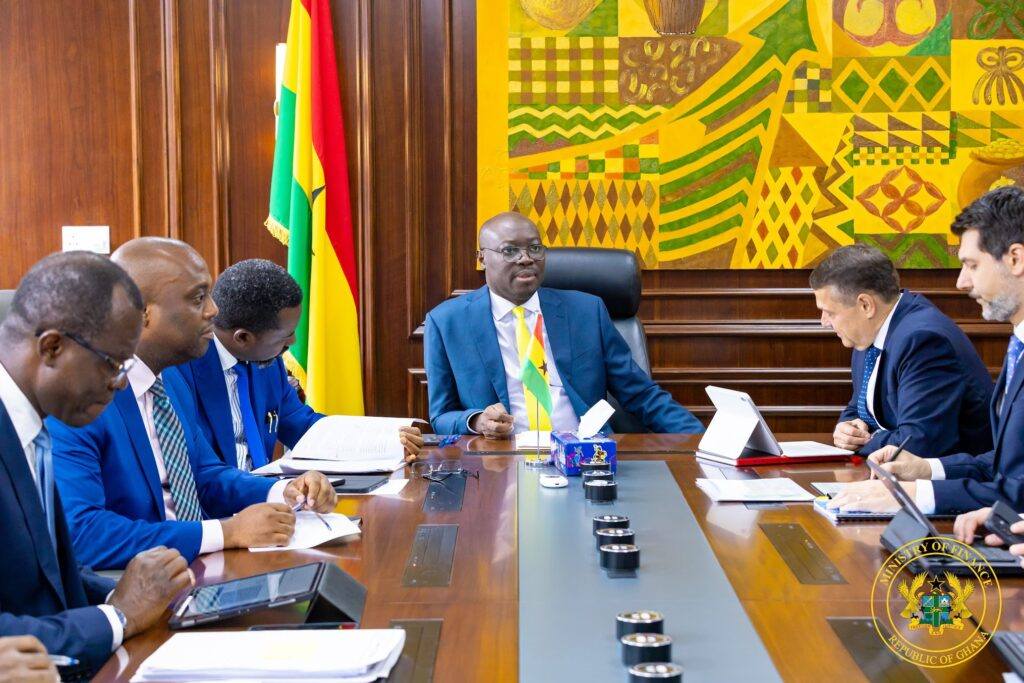
The logic of these two weeks is “verification.” The IMF will look at the books, talk to the central bank, and meet with civil society. If they find that the “discipline” is real, the final $360 million will be triggered. This money is the “graduation gift” for a country that has survived its most demanding economic test in a generation. Dr. Forson’s welcome of the team is the first step in a “significant milestone” that will be talked about for years to come.
Also Read: IMF Final Mission Arrives in Accra Today: What Ghana’s $360 Million Exit Means for You