

 By Collins Sarkodieh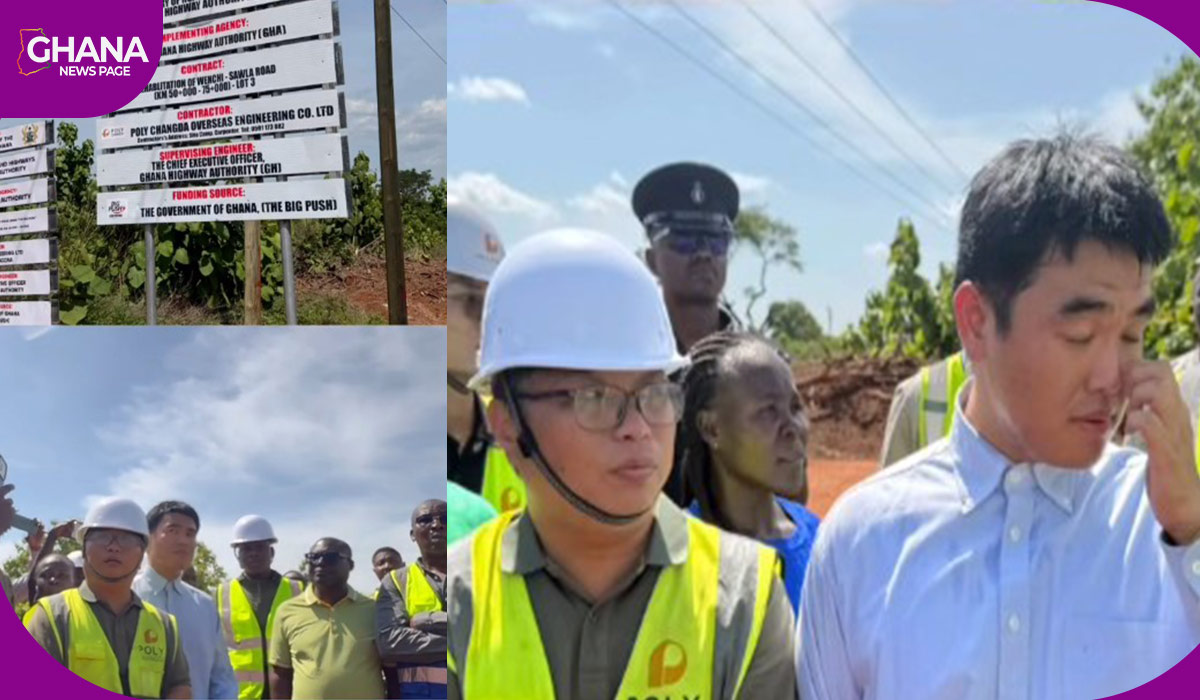
The Roads Minister recently delivered a stern rebuke to Chinese contractors working on the Bole-Bamboi road after discovering significant project delays and questionable excuses regarding equipment availability. During a high-profile site visit, the Minister reminded the contractors that they “begged” for the contract and asserted that local Ghanaian contractors are currently delivering better results and higher efficiency.
This confrontation highlights a growing tension in Ghana’s infrastructure sector regarding the performance of foreign firms compared to local capacity. When foreign contractors fail to meet deadlines or provide “shady” explanations for delays, it undermines national development goals and frustrates taxpayers who rely on these critical transit corridors. The Minister’s stance signals a shift toward stricter accountability and a “Ghana First” approach to road construction and maintenance.
Why did the Roads Minister scold the Chinese contractors on the Bole-Bamboi road?
The Minister’s frustration erupted when the contractors attempted to blame project delays on a sudden inability to find or purchase necessary construction tools. The Minister found these excuses unacceptable, given that the firm had previously vouched for its total capacity and technical expertise to win the lucrative contract.
Logic dictates that a multinational firm claiming “all the capacity” should not be fumbling for basic tools months into a project. The Minister’s “scolding” was a public demand for professionalism, reminding the firm that they were not forced into the project but actively campaigned for it. This interaction suggests that the government is no longer willing to accept the “shady job” narrative where foreign firms underperform once the ink on the contract is dry.
Furthermore, the optics of the visit showed a contractor visibly fumbling to justify a lack of progress while the local community continues to suffer from poor road conditions. The Minister’s comparison to local contractors serves as a wake-up call; if foreign firms cannot deliver with their supposedly superior resources, the state is increasingly prepared to look inward to empower Ghanaian engineers and firms.
Are local Ghanaian contractors actually outperforming foreign firms in 2026?
According to the Roads Minister, local contractors are currently proving to be more reliable and effective on various project sites across the country than some of their foreign counterparts. This shift is due to better local knowledge, a personal stake in national development, and a significant increase in the technical capacity of Ghanaian construction companies.
For years, the narrative was that only foreign firms had the equipment and “capacity” for major highways. However, recent project audits show that local firms often complete jobs faster because they don’t face the same logistical hurdles or “excuse-making” culture seen in this latest Bole-Bamboi incident. Local engineers are also more accountable to the communities they serve, as they use these roads themselves.
The Minister’s praise for local talent isn’t just patriotic rhetoric; it is backed by the reality of current project timelines. While some foreign contractors are “now looking for tools,” Ghanaian firms are mobilizing quickly and utilizing local supply chains to keep projects moving. This performance gap is leading to a major re-evaluation of how road contracts are awarded in the future.
What excuses did the Chinese contractors give for the Bole-Bamboi road delay?
The primary excuse offered by the Chinese contractor was an inability to source specific construction tools and machinery, claiming they were “not getting some” in the current market. This led to a visible “fumbling” moment when the Minister questioned how a firm with their global reputation could be stalled by a lack of basic equipment.
To many observers, these excuses feel like a strategic play to buy time or cut costs, rather than a genuine logistical failure. If a contractor claims they have the capacity to construct a major road like the Bole-Bamboi stretch, they are expected to have a secured supply chain for equipment before ground is even broken.
The Minister pointed out the irony of the situation: the very people who claimed to be experts were now acting as if they were unprepared for the job. This lack of seriousness suggests a potential “shady” approach where the contractor expects to find a way around regulations or timelines once the initial excitement of the contract award has faded.
Factual Insights into Ghana’s 2026 Road Infrastructure:
- Local Empowerment: Over 60% of ongoing feeder road projects in Ghana are now successfully managed by indigenous Ghanaian firms.
- Infrastructure Budget: The Ministry of Roads and Highways has increased its oversight budget by 15% in 2026 to ensure site visits are more frequent and rigorous.
- Performance Audits: Recent government data suggests that “delay penalties” have been issued to more foreign-led projects in the last 12 months than to local ones.
- Bole-Bamboi Significance: This road is a critical link for trade between the Northern and Savannah regions, making its delay a national economic concern.
- Equipment Requirements: Standard Ghanaian road contracts require firms to prove they have 100% of the “critical path” machinery available before the first payment is disbursed.
- Contractor Scrutiny: The “Road Minister scolding” incident has gone viral, leading to a public demand for a “Blacklist” of underperforming foreign contractors.
- Community Impact: Delays on the Bole-Bamboi road have been linked to a 20% increase in local transport costs for agricultural goods this year.
How does “shady” road construction affect the Ghanaian taxpayer?
When a contractor does a “shady job,” the road often begins to deteriorate within months of completion, leading to a cycle of constant repairs that drains the national treasury. Taxpayers essentially end up paying twice for the same road once for the initial construction and again for the inevitable “remedial” works.
The Minister’s intervention is an attempt to break this cycle. By catching the “excuses” early, the government can force the contractor to adhere to international quality standards before the final surface is laid. Shady construction often involves using sub-standard materials or skipping essential geological surveys, which the fumbling contractor might try to hide behind “tool shortage” excuses.
Beyond the financial cost, poor road construction leads to increased vehicle maintenance costs for drivers and higher risks of road accidents. A road that is built correctly the first time is an investment; a road built poorly is a liability that stays with the Ghanaian people long after the foreign contractor has left the country.
Also Read: China Jails Former Justice Minister for Life Over Bribery Case
What is the government’s plan to ensure the Bole-Bamboi road is finished?
The government is moving toward a “strict compliance” phase where contractors who fail to meet milestones face heavy fines or the total termination of their contracts. The Minister has made it clear that “begging” for a contract is not a license to play with the job or disrespect the Ghanaian people’s time.
The current strategy involves:
- Frequent Site Inspections: Unannounced visits to catch contractors off-guard and see the true state of progress.
- Local Partnerships: Encouraging foreign firms to subcontract to reliable local firms who actually have the tools and manpower ready.
- Withholding Payments: Ensuring that “delay excuses” result in a freeze of funds until the contractor proves they are back on schedule.
- Technical Re-evaluation: If the Chinese firm continues to fumble, the Ministry may look at re-assigning sections of the road to those “better doing” local contractors.
Why is it important for the Road Minister to visit sites personally?
Personal site visits by the Minister provide a level of accountability that cannot be achieved through paperwork or reports alone. When a contractor has to look the Minister in the eye and explain why they are “now looking for tools,” the reality of their failure becomes impossible to hide.
These visits also boost the morale of the local communities who see that the government is actively fighting for their interests. It sends a message to all contractors not just the ones on the Bole-Bamboi road—that the era of “doing your own thing” and finding a way around the rules is over.
The Minister’s ability to compare the fumbling foreign firm with the efficient local contractors creates a competitive environment. It forces foreign companies to either step up their game or step aside for Ghanaian businesses that are ready and willing to do the work with the seriousness it deserves.
The confrontation on the Bole-Bamboi road is a turning point for infrastructure management in Ghana. By publicly scolding contractors who “begged” for work but failed to deliver, the Roads Minister is setting a new standard for national projects. The focus is clearly shifting: if you can’t do the job without fumbling or giving shady excuses, there is a local Ghanaian contractor ready to take your place and do it better.
As the 2026 construction season continues, all eyes will be on the Bole-Bamboi stretch to see if the fumbling firm gets its act together. For the people of Ghana, the message is clear: the days of playing with national contracts are over, and local capacity is no longer just an alternative it is the gold standard.
Also Read: Chinese National Arrested in Ogun Over Alleged Rape of 23-Year-Old Woman