

 By Zobia Zulfqar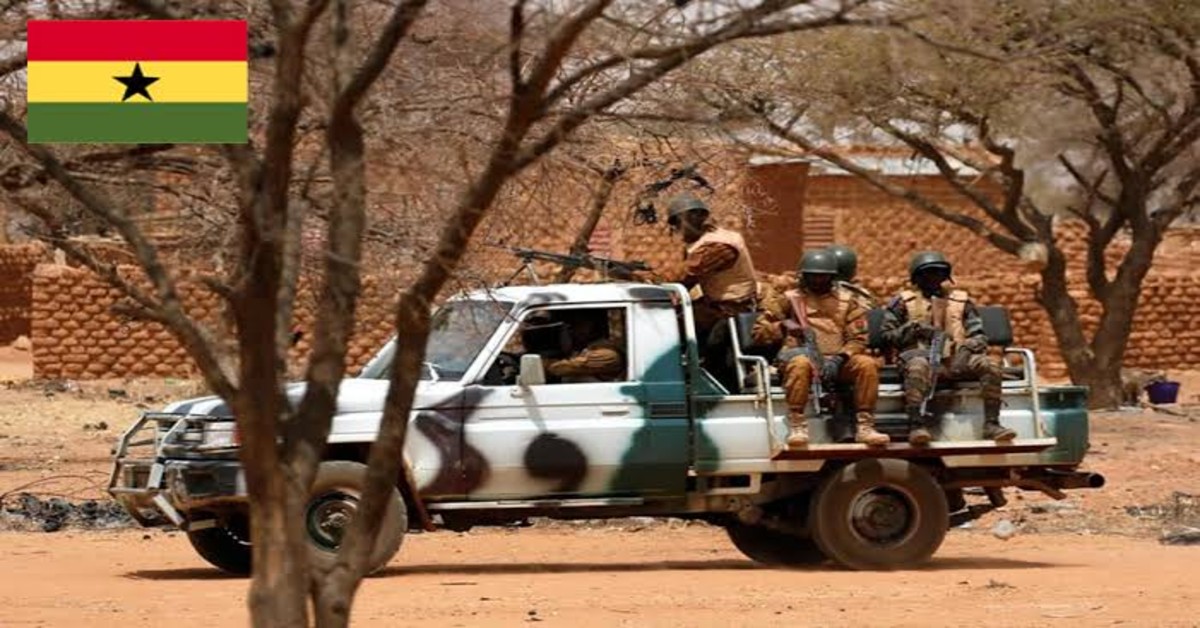
A new security analysis has raised concerns about growing threats along Ghana’s northern border with Burkina Faso, warning that the country’s limited presence in the area has allowed the Group for Support of Islam and Muslims (JNIM), an al-Qaeda-linked militant group, to expand its activities.
The report, written by Abdul Zanya Salifu and Steven Radil, argues that Ghana is facing what the authors describe as a “sovereignty gap.” According to the study, this gap reflects the difference between the government’s legal authority over its territory and its willingness or ability to fully enforce that authority in some border communities.
The analysis points to comments made in May 2024 by Ghana’s former Ambassador to Burkina Faso, Boniface Gambila, who acknowledged that JNIM operatives were able to cross into Ghana and return to Burkina Faso without major obstacles.
“Believe it or not, they are able to come into Ghana and go back. They move in and go back,” the former ambassador said.
The report also cited remarks from a senior Ghanaian security official interviewed in 2024, who suggested that authorities have been cautious about directly confronting the group because of fears that such action could trigger attacks.
According to the official, the possibility of retaliation is one reason security forces have avoided aggressively disrupting the group’s movements.
JNIM has been active for years across Mali, Burkina Faso and Niger, where it has carried out attacks against government forces and civilians. Security experts believe the group has also developed support networks in border communities that extend into northern Ghana.
The report argues that Ghana’s long border with Burkina Faso has become increasingly difficult to monitor because of limited infrastructure and security resources.
The Ghana-Burkina Faso border stretches approximately 602 kilometres, passing through remote areas where surveillance is challenging.
Security analyst Kwesi Aning, quoted in the report, said Ghana has made limited investment in border security infrastructure over several decades.
According to immigration officers stationed at the Hamile border post in the Upper West Region, controlling movement becomes especially difficult during the dry season.
Officials explained that many informal routes become accessible, allowing people to cross without passing through official checkpoints.
“Every route becomes a potential crossing,” one immigration officer reportedly said.
Another officer noted that many people cross the border without being detected because surveillance equipment and resources remain limited.
The report suggests that these conditions have allowed JNIM to establish logistical networks supporting its operations across the wider Sahel region.
According to the analysis, militants allegedly move across the border to transport supplies, seek medical treatment and maintain communication between communities on both sides of the frontier.
The report also claims that stolen cattle from Burkina Faso have been sold through markets in northern Ghana using intermediaries.
It further alleges that weapons have moved in both directions across the border. According to the authors, firearms from Burkina Faso have contributed to violence linked to the Bawku conflict, while commercial explosives from Ghana’s mining sector have reportedly been traced to militant-controlled areas in Burkina Faso and Mali.
The report argues that JNIM has avoided carrying out major attacks inside Ghana because maintaining access to cross-border trade and supply routes benefits the group.
Rather than provoking a strong military response, the authors suggest the militants have focused on preserving the networks that support their operations.
Researchers also cited findings from a 2026 study indicating that communities located closer to the Burkina Faso border have lower levels of trust in the military compared to people living farther south.
According to the study, many residents increasingly rely on traditional leaders and community defence groups to address local security concerns.
The report concludes that improving border security will require stronger investment in surveillance systems, infrastructure, law enforcement and cooperation with local communities.
The authors argue that reducing the security gap along Ghana’s northern frontier will be critical to preventing extremist groups from expanding their influence and protecting communities living near the border.
They also stress that strengthening state institutions in border areas will help improve public confidence while reducing opportunities for organised crime and militant networks to operate across national boundaries.
Also Read: Ghana Launches Diplomatic Protest Over Canada Visa Denial of Thomas Partey