

 By Zobia Zulfqar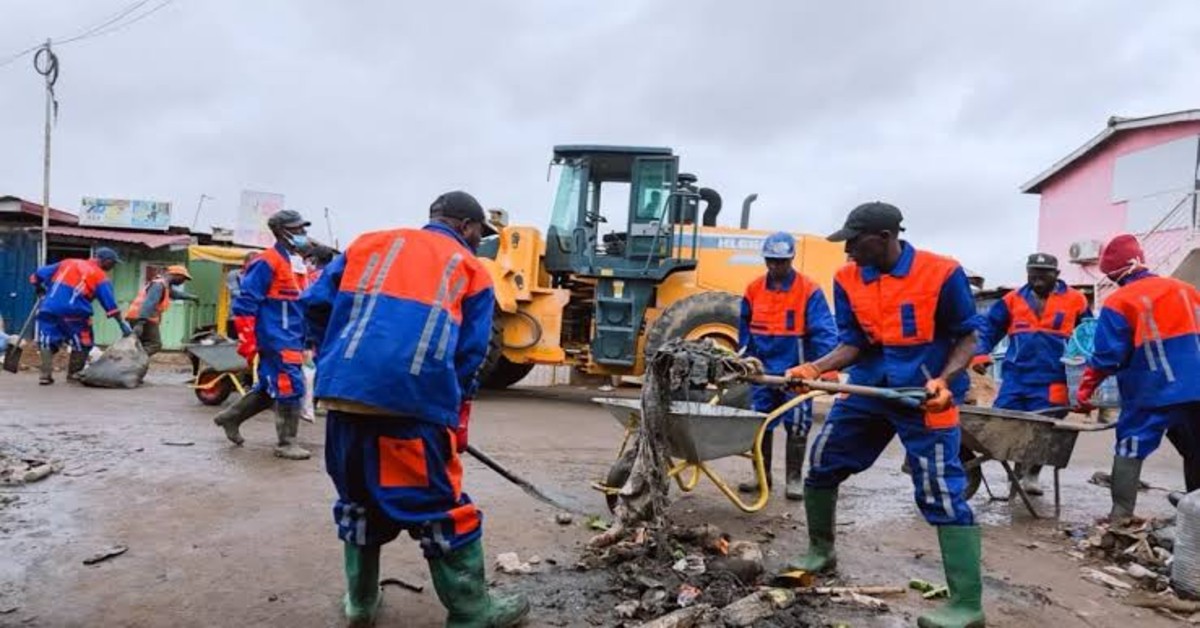
President John Dramani Mahama has directed the immediate activation of six waste transfer stations managed by Zoomlion Ghana Limited to improve waste collection and speed up refuse evacuation across the Greater Accra Region following the devastating floods that recently affected parts of the capital.
The President announced the decision during a clean-up exercise at Alajo in Accra on Saturday. He said the transfer stations, which were built about nine years ago, have remained unused despite their importance in supporting efficient waste management.
According to President Mahama, the failure to operate the facilities has made it difficult to remove waste quickly after community clean-up exercises. Waste collectors have often been forced to travel long distances to disposal sites instead of using nearby transfer stations.
“Unfortunately, they were not put into operation,” the President said.
“We have asked the contractor, Zoomlion, to open the transfer stations so that the tricycles and others can take the garbage to the transfer stations.”
The six waste transfer stations are located at Achimota, Teshie, Kpone, Ashaiman, Pantang and Adipa. They will serve as temporary collection centres where refuse can be gathered, compacted and prepared for transportation to final disposal facilities.
Officials say the stations will reduce travel time for waste collectors and improve the overall efficiency of refuse collection, especially after heavy rainfall and flooding.
The decision comes after the June 29 floods exposed weaknesses in waste management systems across parts of Greater Accra. During clean-up exercises, large amounts of rubbish removed from drains and gutters were often left along roadsides because of delays in transporting the waste to disposal sites.
When additional rainfall occurred, much of the waste was washed back into drains, blocking waterways again and reducing the impact of the clean-up efforts.
Government officials believe activating the transfer stations will help prevent that problem by allowing waste to be removed from communities much faster.
Under the new arrangement, waste collected by tricycles and smaller vehicles will be taken to the transfer stations, where it will be compacted before being transported by larger trucks to final disposal facilities.
The waste will eventually be delivered to facilities including the Accra Compost and Recycling Plant (ACARP) and the Accra Integrated Recycling and Compost Plant (IRECOP) for processing and disposal.
To support the expanded waste collection operation, Zoomlion Ghana has deployed significant resources across the region.
The company has assigned 150 haulage trucks, 30 compactors, road sweepers, more than 2,000 tricycle waste operators and over 1,000 sanitation workers to assist with refuse collection.
An additional 60 long-haul trailers were also deployed on the second day of the nationwide clean-up exercise to increase transportation capacity and speed up waste evacuation.
The nationwide clean-up campaign forms part of the government’s response to the recent floods, which caused extensive damage to homes, businesses and public infrastructure in several communities across Greater Accra.
Authorities have identified blocked drains, poor waste disposal practices and illegal dumping as some of the major factors contributing to flooding in the capital.
President Mahama has repeatedly stressed the need for stronger sanitation measures and greater public participation in keeping communities clean. He has also proposed introducing regular national clean-up exercises to improve environmental sanitation and reduce flood risks.
Environmental experts have welcomed the activation of the transfer stations, saying efficient waste collection plays an important role in preventing drains from becoming blocked during the rainy season.
They argue that combining improved waste infrastructure with stronger enforcement of sanitation regulations and public education could significantly reduce the frequency and impact of flooding in urban areas.
Government officials say the newly activated transfer stations will become a permanent part of Greater Accra’s waste management system and are expected to improve refuse collection long after the current flood recovery efforts are completed.