

 By Collins Sarkodieh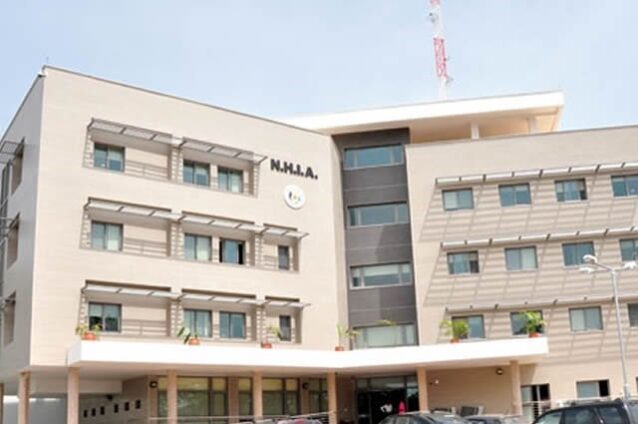
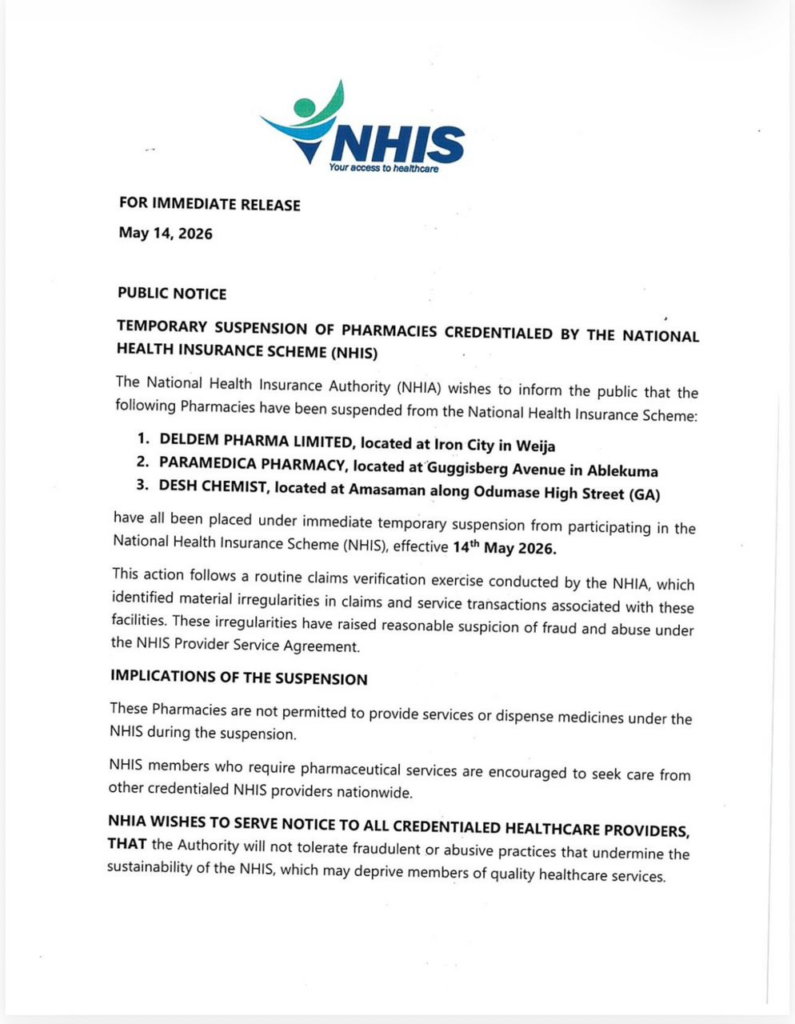
The National Health Insurance Authority (NHIA) has officially suspended three pharmacies from the National Health Insurance Scheme (NHIS) due to suspected fraudulent claims and irregular transactions. These facilities are now under immediate temporary suspension following a routine verification exercise that uncovered material irregularities in their service records. The move is part of a broader crackdown to ensure that public funds are used prudently to provide quality healthcare to all residents of Ghana.
The suspension, which took effect on May 14, 2026, means these pharmacies can no longer dispense medicines or provide any services to NHIS members until further notice. This decisive action by the NHIA aims to weed out abuse within the provider service agreement and protect the financial integrity of the scheme. By identifying “material irregularities,” the Authority is signaling that it has zero tolerance for practices that could bankrupt the national health system.
Members of the NHIS who usually frequent these facilities are now being redirected to other accredited providers nationwide. While the suspension is a blow to the affected businesses, the NHIA maintains that such measures are necessary to prevent the deprivation of quality services for honest members. It serves as a reminder that the provider agreement is a binding contract based on transparency and clinical honesty.
Which pharmacies were suspended by the NHIA on May 14?
The three pharmacies affected by the immediate temporary suspension are Deldem Pharma Limited, Paramedica Pharmacy, and Desh Chemist. These facilities were flagged during a routine claims verification exercise conducted by the National Health Insurance Authority. As of the suspension date, they are strictly prohibited from providing any NHIS-related services or dispensing medications to cardholders.
The NHIA’s internal investigations revealed significant discrepancies between the services these pharmacies claimed to have provided and the actual transactions on record. These findings raised a “reasonable suspicion of fraud and abuse,” prompting the Chief Executive, Dr. Victor Asare Bampoe, to sign off on the disciplinary action. This ensures that any further potential leakage of public funds through these outlets is halted immediately.
For the local communities served by these pharmacies, the news might come as a surprise, but the NHIA is encouraging patients to visit any other credentialed provider. The goal is to ensure that healthcare remains accessible without interruption, even as the Authority cleans up its provider network.
What are the legal consequences for defrauding the NHIS?
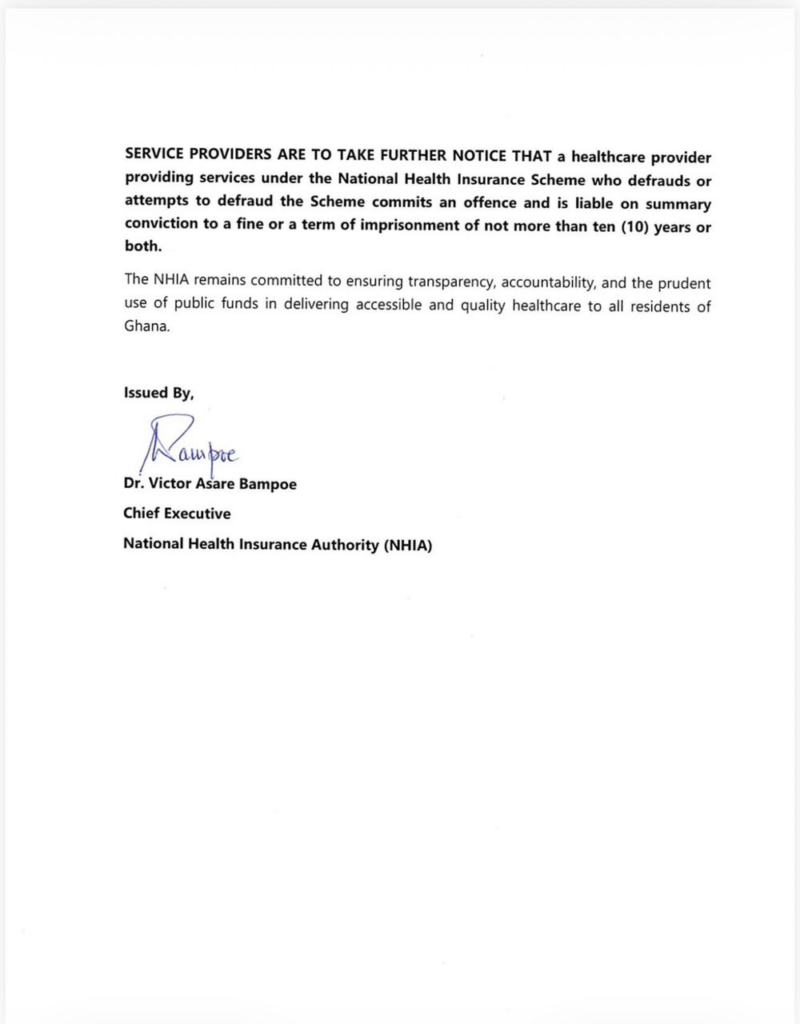
Healthcare providers found guilty of defrauding the NHIS face severe legal penalties, including heavy fines and a prison sentence of up to ten years. Under the National Health Insurance Scheme’s legal framework, any attempt to submit fraudulent claims is a criminal offense punishable upon summary conviction. The NHIA has reiterated that it will not hesitate to pursue the full extent of the law against offenders.
The law is designed to act as a deterrent against “padding” claims or charging the government for medicines that were never actually dispensed to patients. By mentioning the ten-year imprisonment term, the NHIA is highlighting the gravity of these crimes, which are essentially thefts from the collective health fund of the nation. Providers are reminded that their participation in the scheme is a privilege that requires strict adherence to ethical standards.
Beyond the personal criminal liability of the owners, the facilities themselves risk permanent expulsion from the NHIS. This would result in a massive loss of revenue and reputation, effectively ending their ability to serve the vast majority of insured Ghanaians. The NHIA’s current stance is a clear message: the sustainability of the scheme is non-negotiable.
How does the NHIA ensure transparency in its claims process?
The NHIA ensures transparency through routine claims verification exercises and the use of digital monitoring tools to spot irregular service transactions. These audits are designed to compare the medication dispensed to patients with the invoices submitted by pharmacies for reimbursement. When “material irregularities” appear, the Authority triggers an immediate probe into the provider’s history.
By utilizing data analytics, the NHIA can identify patterns of abuse that might go unnoticed during manual reviews. This technological approach is part of Dr. Victor Asare Bampoe’s commitment to accountability and the prudent use of public funds. These verification cycles are a cornerstone of the scheme’s ability to remain liquid and pay honest providers on time.
The suspension of the three pharmacies serves as evidence that the NHIA’s monitoring systems are working effectively. Rather than waiting for a major financial crisis, the Authority is taking proactive steps to remove suspicious actors from the system. This transparency protects the taxpayers and ensures that the NHIS continues to deliver on its promise of accessible healthcare.
Factual Insights into NHIS Fraud Prevention:
- Suspension Date: The temporary suspension for the three pharmacies officially commenced on May 14, 2026.
- Target Facilities: The specific pharmacies identified are Deldem Pharma Limited, Paramedica Pharmacy, and Desh Chemist.
- Legal Maximum: Convicted fraudsters face up to 10 years in prison or significant fines, or both.
- Authority Head: The official statement and notice were signed by NHIA Chief Executive, Dr. Victor Asare Bampoe.
- Verification Method: The fraud was detected via a “routine claims verification exercise”.
- Scheme Goal: The NHIA manages funds to ensure “accessible and quality healthcare to all residents of Ghana”.
Why is protecting the sustainability of the NHIS a priority?
Protecting the sustainability of the NHIS is a priority because fraudulent practices deprive legitimate members of the quality healthcare services they have paid for. When funds are diverted through fake claims, the system loses the ability to cover essential treatments for the poor and vulnerable. The NHIA views fraud as a direct threat to the national security of the country’s health infrastructure.
Financial leakage through “abusive practices” can lead to delays in payments to honest doctors and pharmacists, creating a ripple effect of dissatisfaction and service refusal. By acting decisively against suspected fraud, the NHIA maintains the trust of both the public and the service providers who operate in good faith. This ensures that the NHIS remains a reliable safety net for millions of Ghanaians.
Furthermore, the Authority’s commitment to “prudent use of public funds” is essential for attracting continued government and international support. A transparent system is much more likely to receive the funding necessary to expand its list of covered medications and services. In short, weeding out three suspicious pharmacies is a small price to pay for the long-term survival of the entire health scheme.
The suspension of Deldem Pharma Limited, Paramedica Pharmacy, and Desh Chemist marks a critical moment in the NHIA’s battle against healthcare fraud. By taking immediate action and issuing a public warning, Dr. Victor Asare Bampoe and his team are demonstrating that the Authority is watching closely. For the providers, it is a stark reminder that the law carries heavy penalties for those who try to game the system.
For the average NHIS cardholder, this news should be seen as a positive sign that their contributions are being guarded. While it may be inconvenient to find a new pharmacy for the time being, the move ensures that the scheme remains solvent and capable of providing life-saving care when it is truly needed. Accountability is the heartbeat of a functional healthcare system, and on May 14, that heartbeat proved to be very strong indeed.
Also Read: Why Ghana Rejected the $100 Million US Proposed Bilateral Health Agreement