

 By Collins Sarkodieh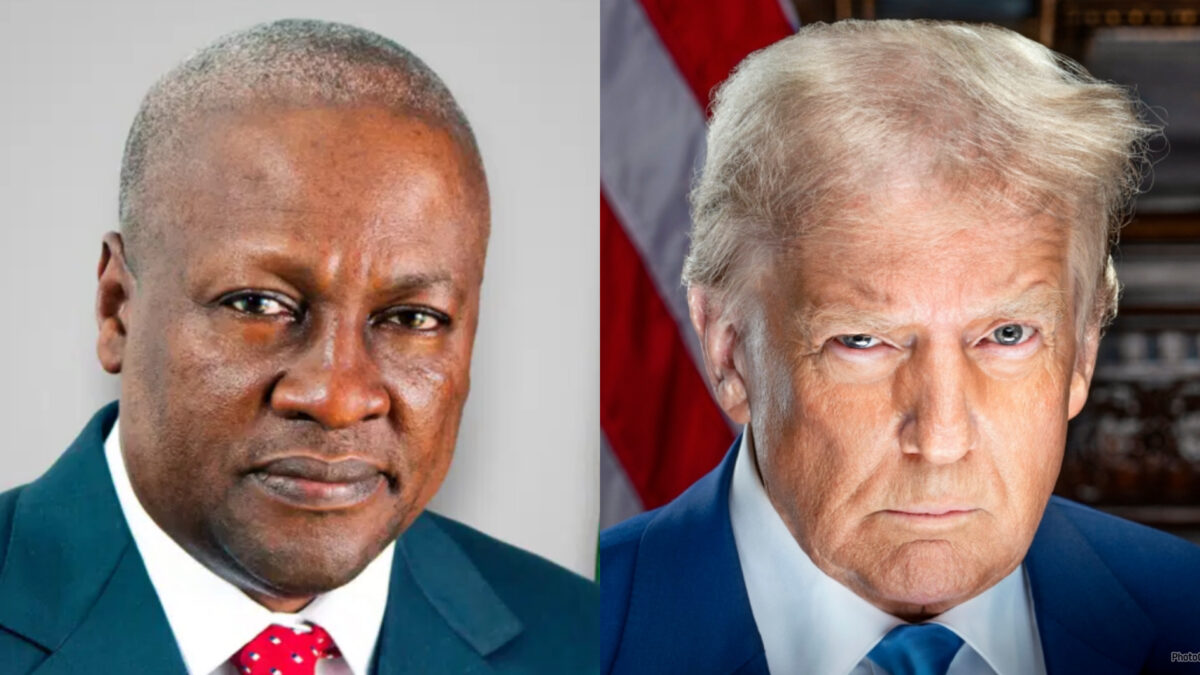
The Ghanaian government has officially declined a proposed bilateral health agreement with the United States valued at over $100 million. This decision stems from critical concerns regarding national data protection, citizen privacy, and the need for absolute domestic control over sensitive health information.
Under the leadership of President John Dramani Mahama, officials argued that while the $100 million in funding and technical assistance would have significantly bolstered digital health systems, the potential compromise of national sovereignty was too high a price. This move reflects a growing trend across the African continent where nations are no longer accepting large-scale financial aid if it requires handing over the “digital keys” to their citizens’ most private data. By prioritizing privacy over immediate liquidity, Ghana is setting a new precedent for how developing nations negotiate with global superpowers in the digital age.
What was the $100 million US-Ghana health agreement supposed to achieve?
The $100 million agreement was designed to provide Ghana with substantial financial backing to modernize its health sector through the development of advanced digital health systems and technical assistance. The primary goal was to streamline patient records and improve healthcare delivery efficiency across the country’s various regions.
While the funding sounded like a massive win for the Ministry of Health, the fine print often involves data-sharing protocols that would have given external entities significant access to Ghana’s health landscape. Logic dictates that a robust health system is great, but a system that you don’t fully own is a long-term liability. In the past, such substantial sums were often accepted with few questions asked. However, the current administration has shifted its stance, viewing these agreements through the lens of national security rather than just a balance sheet.
Why did President Mahama reject the proposal?
President John Dramani Mahama declined the proposal because the agreement lacked sufficient guarantees regarding the protection of Ghanaian citizens’ health data and the maintenance of national control over that information. The government maintains that international partnerships are essential but must never come at the expense of sovereign data rights.
Privacy isn’t just a luxury; it is a fundamental right that becomes incredibly sensitive when it involves medical history. Government officials argue that allowing foreign systems to manage and potentially store the health data of millions of Ghanaians could lead to unauthorized use or exploitation of sensitive information. It’s a bit like someone offering to build you a free house, but they keep a copy of every key and a camera in every room. President Mahama’s team essentially decided to keep the “old house” for now while they build their own secure digital foundation.
How does Ghana’s decision compare to other African nations?
Ghana is not alone in this cautious approach; several other African nations have recently rejected or slowed down similar multi-million-dollar health data partnerships. From Zimbabwe to South Africa, there is a clear and growing resistance to “data-linked” funding that comes with strings attached regarding citizen privacy.
- Zimbabwe: Rejected approximately $367 million in US-linked health funding due to similar conditionalities.
- Kenya: Faced legal challenges and resistance over digital health and data-linked agreements worth over $200 million.
- Nigeria: Has actively slowed down or reviewed multiple multi-million-dollar health data partnerships to ensure local compliance.
- South Africa: Has adjusted significant health data collaborations to better align with national privacy standards and sovereignty.
This comparison shows that Ghana is part of a larger “African Digital Awakening.” Countries are realizing that data is the “new oil,” and health data is perhaps the most refined version of that oil. Logic suggests that if everyone is suddenly offering you millions for your data systems, those systems must be incredibly valuable. Ghana’s $100 million rejection is a drop in the bucket compared to Zimbabwe’s $367 million stand, but the message remains the same: our privacy is not for sale.
What are the main risks associated with international health data agreements?
The main risks include the loss of jurisdictional control over data, the potential for data mining by foreign corporations, and the creation of “digital dependencies” where a nation cannot access its own systems without foreign permission. Furthermore, there are fears that sensitive health profiles could be used for biological research or pharmaceutical profiling without the explicit consent of the people involved.
When data is hosted on foreign servers or managed by external technical teams, it often falls under the laws of that foreign country rather than the home nation. This creates a “legal vacuum” where a Ghanaian citizen might have no recourse if their data is leaked abroad. Logic tells us that once data leaves your borders, you lose the ability to protect it effectively. By turning down the $100 million, Ghana is avoiding the trap of “digital colonialism,” where the infrastructure is built by others, but the local population has zero say in how it is operated or who benefits from the information gathered.
Factual Insights on Health Data and Global Aid:
- Market Value: The global healthcare data analytics market is projected to exceed $120 billion by 2030, explaining the high interest in African datasets.
- Data Privacy Laws: Ghana passed the Data Protection Act (Act 843) in 2012, which serves as the legal backbone for the government’s current rejection of the US deal.
- Sahelian Instability: Security experts note that digital health records in conflict-prone or neighboring regions can be weaponized if they fall into the wrong hands.
- US Aid History: The United States remains one of Ghana’s largest development partners, but the focus is shifting toward “Trade not Aid” and mutual respect for data laws.
- Kenya’s Precedent: Kenya’s High Court has previously ruled that digital ID systems must have robust data protection frameworks before implementation, a move Ghana is closely watching.
- Local Capacity: Ghana has been investing in its own “E-Health” initiatives to ensure that local engineers and developers build and maintain the national health database.
- Remittances vs. Aid: For many African countries, remittances from the diaspora now far exceed traditional foreign aid, giving governments more leverage to say “No” to unfavorable deals.
What is the future of Ghana’s digital health strategy?
The future of Ghana’s digital health strategy will likely focus on “Homegrown Innovation,” where local tech hubs and developers are tasked with building secure, sovereign systems that don’t rely on foreign-linked conditions. The government is expected to reallocate internal funds or seek partnerships that do not involve the same level of data surrender.
President Mahama’s administration has hinted that they are more interested in “technical cooperation” than “packaged solutions.” This means they want the knowledge to build the systems themselves rather than buying a pre-made system that they cannot control. Logic dictates that if you build the system, you own the code, and if you own the code, you own the data. This “Self-Reliance” model is much slower and more expensive in the short term, but it ensures that Ghana’s health future remains in Ghanaian hands. It is a long-game strategy that prioritizes the 2030s over the 2026 budget.
Why is health data considered so sensitive in 2026?
Health data is considered the most sensitive form of personal information because it contains unchangeable biological facts, genetic markers, and historical health records that can be used to predict future behaviors or vulnerabilities. In the wrong hands, this data can be used for insurance discrimination, targeted biological threats, or unauthorized commercial research.
Unlike a stolen credit card or a hacked social media password, you cannot “reset” your DNA or your medical history. Once that information is leaked or shared, it is gone forever. Logic suggests that the $100 million being offered was not just “charity”; it was a “buy-in” to a massive, untapped biological database. Ghana’s refusal to participate in this trade shows a high level of “digital maturity.” The government is essentially saying that the health of its citizens’ privacy is just as important as the health of their bodies.
How does this rejection affect Ghana-US relations?
While the rejection of a $100 million deal might seem like a diplomatic snub, it is actually a sign of a more “mature partnership” where Ghana is confident enough to negotiate on its own terms. Diplomatic relations are expected to remain strong, with cooperation continuing in areas like education, traditional trade, and regional security.
Partnerships work best when there is mutual respect for each other’s laws. The US government and its agencies are likely to return with a revised proposal that respects Ghana’s Data Protection Act. Logic tells us that if Ghana had just said “Yes” out of desperation, it would have been a “client-state” relationship. By saying “No,” Ghana is acting as an equal partner. This move will likely encourage other West African nations to also demand better terms in their digital agreements, potentially shifting the power balance between the “Global North” and the “Global South.”
What role did the “African Digital Awakening” play in this decision?
The “African Digital Awakening” refers to the collective realization among African leaders that their digital resources are valuable assets that must be protected. This movement has been fueled by several high-profile data scandals globally and a desire to avoid “dependency cycles” on foreign technology.
Ghana’s decision is a classic example of this awakening in action. When leaders look at the delays and legal battles in Kenya or the total rejection in Zimbabwe, they realize they have the power to set their own standards. The logic is that Africa should not be the “testing ground” for data harvesting. By taking a stand now, Ghana is ensuring that when the “24-Hour Economy” and “Digital Ghana” initiatives are fully realized, they will be built on a foundation of trust and local ownership. It’s about being the master of your own digital house.
What should Ghanaian citizens know about their data rights?
Citizens should know that their health data is legally protected under the Data Protection Act (Act 843) and that the government’s recent actions are aimed at upholding those protections. Every Ghanaian has the right to know how their data is being used, where it is stored, and who has access to it.
- Right to Access: You can request to see what information the government or private health providers have on you.
- Right to Correction: You have the right to fix any errors in your medical records.
- Right to Consent: In most cases, your data should not be shared with third parties without your knowledge.
- Right to Privacy: The state is mandated to keep your medical history confidential.
The $100 million rejection is a practical application of these rights. It shows that the “Data Protection Commission” of Ghana is not just a symbolic office but a functional guard against external overreach. Logic suggests that if the government is willing to walk away from $100 million to protect your privacy, you should take your own data security seriously as well. It’s a two-way street of accountability and awareness.
The decision to turn down $100 million in health funding is a bold and historic move for Ghana. It marks a shift from a “receiver” mindset to a “sovereign” mindset, where the long-term privacy of the citizen is valued higher than short-term infrastructure gains.
As the digital landscape continues to evolve, Ghana’s stand will likely be remembered as a turning point in African diplomacy. By choosing “Sovereignty over Subsidy,” the government is protecting the future of millions of Ghanaians. The message is clear: Ghana is open for business, and we are open for partnerships, but we are not open for exploitation. The $100 million may be gone, but Ghana’s control over its own digital destiny is now more secure than ever.
Also Read: You missed a golden opportunity” – Ghana’s Foreign Minister Ablakwa tells Trump