

 By Collins Sarkodieh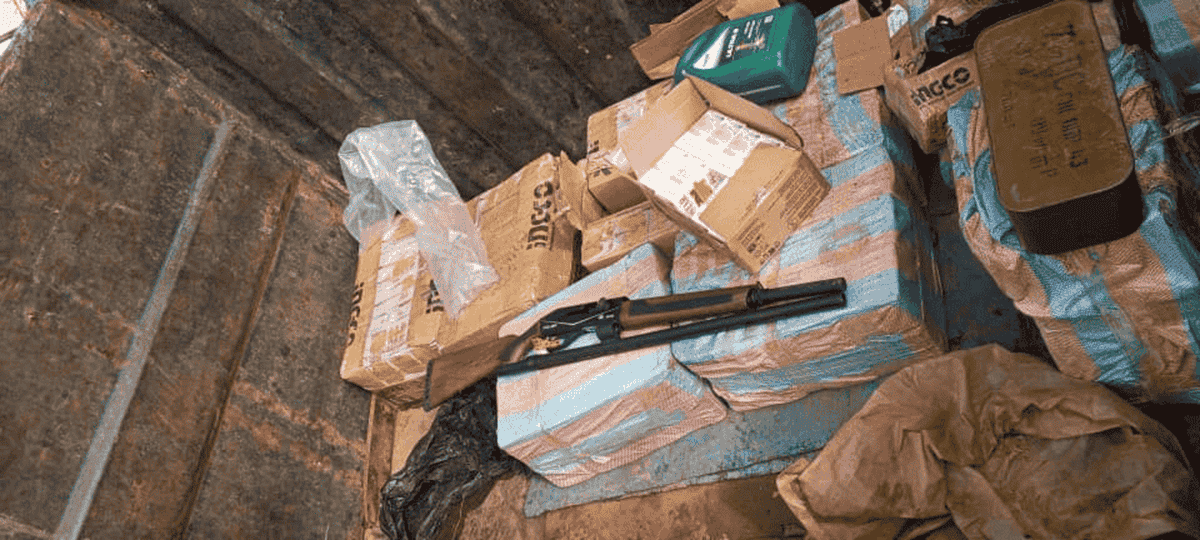
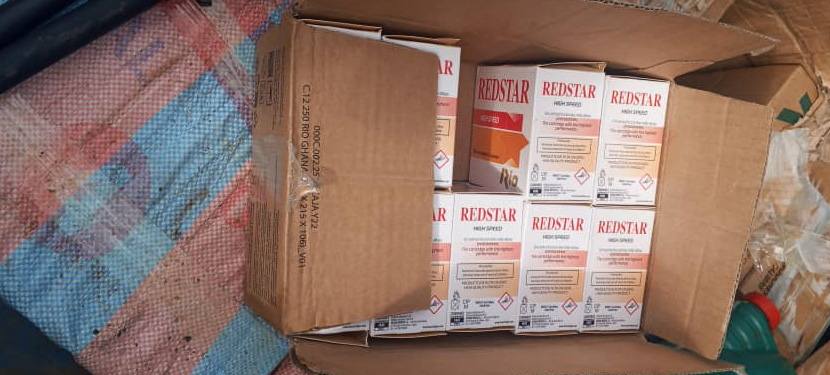
The Ghana Police Service has intercepted a massive consignment of over 11,000 rounds of ammunition at the Nkwanta–Breweniase barrier in the Oti Region. During a routine search of a cargo truck traveling from Accra to Damanko, officers discovered a stockpile of cartridges and AK-47 rounds, leading to the immediate arrest of the 26-year-old driver and his 20-year-old mate.
This significant breakthrough occurs along the Eastern Corridor, a strategic route that has seen intensified surveillance due to recurring security tensions in the Nkwanta South Municipality. The swift action of the officers stationed at the barrier prevented a potentially catastrophic influx of high-caliber ammunition into a sensitive district. By stopping the MAN Togo cargo truck (registration GW 9927–13), the police have effectively disrupted a major supply line for illegal weaponry, providing a much-needed boost to regional stability and public confidence in the security services.
How did the police intercept the 11,000 rounds of ammunition?
The interception took place during a routine security check at the Nkwanta–Breweniase barrier when alert police personnel stopped a cargo truck for inspection. Upon searching the vehicle, which was ostensibly transporting commercial goods from Accra’s Tema Station, officers found the hidden cache of live ammunition and a foreign-made firearm.
In the world of tactical security, routine checks are often the most effective tool for uncovering large-scale smuggling operations. The Eastern Corridor is a known transit route for goods moving toward the Nkwanta North District and beyond. Logic dictates that smugglers often hide illicit items within legitimate cargo to evade detection. However, the professionalism and “high-alert” status of the officers at this specific checkpoint ensured that the GW 9927–13 truck did not pass through unnoticed. This success highlights the importance of the GFA (General Field Activity) guidelines followed by the Ghana Police Service in high-risk zones.
Who are the suspects arrested in the Nkwanta ammunition seizure?
The police have arrested two individuals: the driver of the truck, 26-year-old Kende Richard, and his mate, 20-year-old Latif Adam. Both suspects are currently in custody at the Nkwanta South Command, where they are assisting investigators in tracing the origin and final destination of the illegal consignment.
Age in criminal profiling can often reveal the “operational tier” of a smuggling ring. At 26 and 20, these young men were likely acting as transporters rather than the masterminds of the operation. Logic suggests that the police are now using “forensic digital profiling” and questioning techniques to determine who hired them at Tema Station. The goal is to move up the food chain to identify the financiers who can afford 11,000 rounds of ammunition. For now, the suspects face significant charges related to the illegal possession and transportation of explosives and firearms.
What types of ammunition were recovered at the Nkwanta barrier?
The recovered cache is a mix of hunting cartridges and high-velocity military-grade rounds, totaling more than 11,000 items. Specifically, the police seized 7,000 AA cartridges, 3,000 BB cartridges, and 1,124 rounds of ammunition designed for AK-47 assault rifles, alongside a foreign-made firearm.
The diversity of this haul is particularly alarming to security analysts. AA and BB cartridges are typically used in shotguns for hunting or local security, but 1,124 rounds of AK-47 ammunition are purely military-grade and intended for rapid-fire combat. Logic tells us that you don’t need over a thousand AK-47 rounds for “self-defense” or “farming.” This specific portion of the seizure suggests a high-stakes encounter was being planned or fueled. The foreign-made firearm found with the rounds further complicates the case, as it points to an international smuggling link that the Nkwanta South Command is now investigating.
Why is the Nkwanta–Breweniase barrier a critical security point?
The Nkwanta–Breweniase barrier is located along the Eastern Corridor, a vital artery connecting the southern ports of Ghana to the northern districts and neighboring countries. Due to recurring ethnic tensions and localized conflicts in Nkwanta, this barrier serves as a “choke point” to prevent the movement of weapons that could exacerbate violence.
Security in the Oti Region has been a priority for the Ministry of Interior throughout 2025 and early 2026. The Nkwanta Municipality has experienced periods of instability that required the imposition of curfews in the past. Therefore, every truck moving toward Damanko is a potential risk. Logic suggests that if 11,000 rounds had reached their destination, the “power balance” in local disputes could have shifted violently. The barrier isn’t just a place for checking licenses; it’s a frontline defense against the militarization of local grievances.
Factual Insights on Ghana’s Internal Security and Small Arms 2026:
- Seizure Volume: The 11,000-round haul is one of the largest single-point ammunition interceptions in the Oti Region over the last five years.
- AK-47 Lethality: A standard AK-47 magazine holds 30 rounds; the 1,124 intercepted rounds could fully load approximately 37 magazines.
- The Eastern Corridor: This 965-kilometer route is increasingly being monitored with high-tech scanners to supplement manual police checks.
- Legal Penalty: Under Ghana’s Criminal Code, the illegal possession of explosives and military-grade ammunition can lead to decades of imprisonment.
- Small Arms Commission: Data indicates there are thousands of unregistered small arms in circulation within the West African sub-region, making such interceptions vital.
- Public Cooperation: The Ghana Police Service has seen a 15% increase in “community-led tips” following the launch of their new whistleblowing app.
- Nkwanta Demographics: The Nkwanta South Municipality is a melting pot of various ethnic groups, making social stability a delicate but essential goal for the state.
What is the intended destination of the intercepted ammunition?
The cargo truck was traveling toward Damanko in the Nkwanta North District, a town located near the border and significant transit routes. While the suspects were headed there, the police are investigating whether Damanko was the final stop or merely a “reloading point” for further distribution into conflict zones.
Damanko’s proximity to various “hotspots” makes it a suspicious destination for such a large quantity of military-grade rounds. Logic dictates that the source (Accra/Tema) and the destination (Damanko) represent the two poles of a sophisticated smuggling “bridge.” The police are currently analyzing the manifest of the MAN Togo truck to see if other “legitimate” stops were planned along the way. By tracing the route, investigators hope to map out the “safe houses” used by these networks to move illegal hardware across the Oti and Northern regions.
How does this seizure affect the safety of the Nkwanta Municipality?
This seizure directly improves the safety of the Nkwanta Municipality by removing the “fuel” that drives armed conflict and criminal activities like highway robbery. Without ammunition, the high-powered weapons already in the hands of criminals or local militias become significantly less dangerous.
The “logic of deterrence” is at play here. When the police successfully intercept 11,000 rounds, it sends a clear message to other smugglers that the “routes are hot.” This increases the “risk premium” for criminals, often forcing them to abandon their plans. For the residents of Nkwanta South, this interception is a tangible sign that the “increased vigilance” promised by authorities is more than just political talk. It’s about ensuring that a father can go to his farm or a trader can travel to the market without fearing an AK-47-wielding attacker.
What are the next steps in the police investigation?
The next steps involve a ballistic analysis of the foreign-made firearm and a “trace-back” of the ammunition batch numbers to determine their country of origin. The Nkwanta South Command is also coordinating with the National Intelligence Bureau (NIB) to check for links between Kende Richard, Latif Adam, and known organized crime syndicates.
A single bullet can tell a long story. Every round of ammunition has a “headstamp” that indicates the factory and year of production. By analyzing the 1,124 AK-47 rounds, the police can determine if they were stolen from a state armory (either in Ghana or a neighboring country) or smuggled in from international black markets. Logic tells us that 11,000 rounds don’t just appear out of thin air; there is a paper trail or a digital one that leads back to a supplier. The arrest of the two suspects is just the beginning of a much larger “intelligence jigsaw puzzle.”
Also Read: Tema MoMo Robbery Turns Deadly as Police Neutralise Armed Suspects
How has the public reacted to the Nkwanta barrier success?
The public reaction has been overwhelmingly positive, with community leaders and local residents commending the officers at the Nkwanta–Breweniase barrier for their alertness and integrity. This successful operation has helped bridge the “trust gap” between the police and the local population in the Oti Region.
Public commendation is a rare but powerful currency for law enforcement. In a region where security concerns are high, seeing the police “do their job” with such precision builds a sense of collective security. Logic suggests that a happy public is more likely to provide the “intelligence tips” needed for future successes. The mixed tone of “slight humor” (jokes about the smugglers’ bad luck) and “logic” (the necessity of checkpoints) dominates the local conversation in Nkwanta markets today. The professionalism of the officers has set a high standard for other barriers along the Eastern Corridor.
What does this mean for the “24-Hour Economy” in the Oti Region?
For a “24-Hour Economy” to thrive in the Oti Region, the movement of goods must be secure and free from the threat of armed violence. This police interception is a prerequisite for economic growth, as it ensures that nighttime transportation and trade are protected from the influence of illegal arms.
A 24-hour economy requires 24-hour security. You cannot have traders moving between Accra and Damanko at 2:00 AM if they are at risk of being caught in the crossfire of smuggled AK-47s. Logic dictates that the “Nkwanta barrier interception” is a vital contribution to national productivity. By cleaning up the transport routes, the police are making it safer for legitimate businesses to operate through the night. It is a reminder that the “cost of security” is an investment in the “wealth of the nation.”
As the investigation into Kende Richard and Latif Adam continues, the focus must remain on dismantling the wider network that supplied these rounds. The 1,124 AK-47 rounds, in particular, serve as a reminder of the “High-Stakes” nature of internal security. For the people of Nkwanta, the message is clear: your safety is being guarded by men and women who do not sleep. While the suspects sit in their cells, the rest of the nation can sleep a little more soundly knowing that 11,000 potential tragedies were stopped at a single barrier.
Source – myjoyonline