

 By Collins Sarkodieh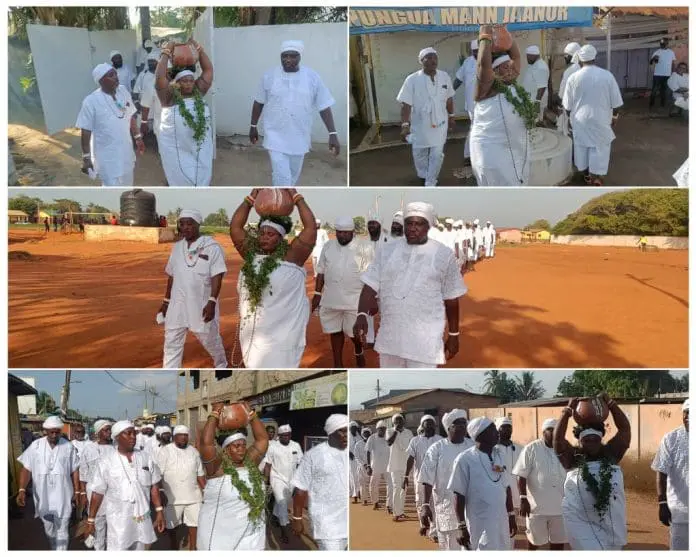
The 2026 Nungua Kplejoo Homowo celebrations reached a vital spiritual milestone on Sunday, May 3, 2026, as traditional leaders performed the second “Dudɔ Mli Nu Woo Kusum”. This sacred rite involves the filling of traditional pots with holy water to be used for essential festival ceremonies and offerings to the deities.
Led by Wor-Dukun Yoonaa Yoomo Ayemoede, a dedicated team dressed in all-white attire and walking barefoot journeyed to a sacred site at dawn. Moving in a single file, the procession returned to the ritual grounds amid the powerful singing and chanting of traditional Ga songs.
What is the significance of the Dudɔ Mli Nu Woo Kusum rite?
The Dudɔ Mli Nu Woo Kusum ensures that all sacred pots are replenished with holy water required for the duration of the Kplejoo Homowo festival. This water is considered spiritually pure and is a fundamental element in the preparation for the arrival of the deities.
According to Tɛtsɛ Nii Kofi Bortey Frankwa II, the Nungua Mankralo Shoɔnɔtalɔ and Chairman of the Planning Committee, the water serves three primary purposes:
- Specialized Prayers: It is used during the various prayer sessions conducted throughout the festival period.
- Divine Meals: The water is used to prepare the meals offered specifically to the deities.
- Libation Rites: It is essential for brewing “nmaada,” the traditional drink used for pouring libations.
Tɛtsɛ Frankwa II further explained that custom dictates all pots, even those in private homes, should be filled during these events to ensure the deities are properly fed when they visit the community.
Why is a virgin required to carry the sacred pot?
Tradition strictly mandates that only a virgin, currently Wor-Dukun Yoomo Ayemoede, holds the sole right to carry the pot of holy water. This requirement ensures the spiritual purity and sanctity of the water as it is transported from the sacred site to the community.
The rite is a delicate balance of spiritual discipline and physical endurance. The participants must remain barefoot and keep their hair covered with white scarves as they journey to the site and back. This outward display of humility and purity reflects the deep reverence the people of Nungua hold for their ancestral customs.
How are traditional and political leaders being called to action?
Tɛtsɛ Frankwa II issued a stern warning to traditional office holders who have been absent from these foundational rites, stressing that their roles extend far beyond attending funerals or social gatherings. He noted that those who fail to attend the final filling rite next week may find themselves without seats at the festival’s climax.
The Planning Committee Chairman also directed a strong message toward local political leaders:
- Physical Presence: He noted that the Member of Parliament and the Municipal Chief Executive have yet to be seen at the traditional rites.
- Active Involvement: He urged them not to wait until the festival’s peak to donate items like maize and palm oil, but to show their physical support now.
- Cultural Respect: The call emphasizes that the physical presence of leaders validates the importance of the community’s cultural heritage.
Why is the next generation’s involvement crucial?
The Nungua leadership is placing a heavy emphasis on cultural transmission, urging the youth to get involved in the Kplejoo Homowo activities. Tɛtsɛ Frankwa II highlighted that because current leaders will not be around forever, the next generation must learn these customs firsthand to ensure they are preserved.
The Sunday morning procession saw a blend of various traditional groups, including Asafoiatsemei, Asafoianyemei, priests, and priestesses. By participating in these early rites, younger members of the community are able to observe and learn the intricate details of the Ga-Dangme culture.
Key Participants and Traditional Authorities
The success of the second filling rite was made possible through the collaboration of several high-ranking traditional leaders of the Ga-Dangme State:
- Wor-Lumor Nuumo Borketey Laweh Tsuru: Gborbu Wulomo Shitse and Overlord of the Ga-Dangme State.
- King Professor Odaifio Welentsi III: Nungua Mantse and President of the Greater Accra Regional House of Chiefs.
- Tɛtsɛ Nii Kofi Bortey Frankwa II: Nungua Mankralo Shoɔnɔtalɔ and Oyibi Gɔŋteŋ Maŋtsɛ.
- Wor-Dukun Yoonaa Yoomo Ayemoede: The sacred pot bearer and lead priestess for the rite.
As Nungua moves toward the climax of the 2026 Kplejoo Homowo, these rites serve as a spiritual foundation, ensuring the peace and prosperity of the state through the proper veneration of the ancestors and deities.
Also Read: Accra Silence: Understanding the 2026 Ban on Drumming and Noise Making