

 By Collins Sarkodieh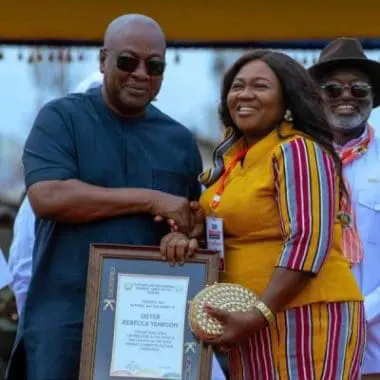
Organized labor used the 2026 May Day celebrations to present a comprehensive set of demands to President John Dramani Mahama’s administration. During the national parade in Koforidua on May 1, workers warned that positive macroeconomic indicators have not translated into relief for the average Ghanaian. Addressing thousands of representatives from 32 affiliate unions, Trades Union Congress (TUC) Secretary-General Joshua Ansah highlighted that low wages, insufficient pensions, and a lack of quality jobs remain the primary struggles for the workforce.
What is the Current State of Employment and Wages in Ghana?
The TUC expressed deep concern over the national employment crisis, particularly the lack of security for those in the informal sector. While the Secretary-General acknowledged the government’s renewed engagement with labor, he emphasized that the country has reached a critical point regarding youth joblessness.
Key statistics and wage concerns raised during the address include:
- Unemployment Rates: Official figures place overall unemployment at 13%, while youth unemployment has reached a staggering 34%.
- Informal Sector Vulnerability: Approximately 80% of employed Ghanaians work in the informal sector, where they lack significant legal protections.
- Job Desperation: Over 500,000 young people recently applied for a very limited number of security service roles, highlighting the lack of available opportunities.
- The Minimum Wage Gap: The current daily minimum wage of GH¢21.78 and monthly public sector minimums of about $75 are insufficient to cover basic needs like food, rent, and healthcare.
- Policy Shift: The TUC is advocating for a transition from a “minimum wage floor” to an income policy based on a “living wage”.
Why is the TUC Calling for Pension and Credit Market Reform?
Pension inequality was a major focal point of the Secretary-General’s speech, characterized by a massive gap between the highest and lowest earners. Ansah described a system where some retirees receive only GH¢400 a month while others collect over GH¢200,000 as “unacceptable” and in need of urgent stakeholder consultation.
In addition to pension reform, the TUC pressed for changes in the financial sector to stimulate local growth. The union argued that lending rates remain excessively high compared to inflation. To encourage private sector investment, they suggested the government implement a cap on the spread between lending and deposit rates.
Also Read: How is President Mahama implementing the 24-hour economy in Asesewa?
How Does the TUC Propose Scaling Up Local Job Creation?
The TUC argued that Ghana’s reliance on exporting raw materials since the mid-1980s has failed to produce quality jobs at scale. Contrasting Ghana’s trajectory with manufacturing-led growth in countries like China, the union urged a shift toward agro-processing and domestic manufacturing.
The union also issued warnings regarding current economic initiatives:
- Import Dependence: Heavy reliance on imports is viewed as “effectively exporting” Ghanaian jobs to other nations.
- The 24-Hour Economy: The TUC cautioned that the 24-hour economy program must focus on building local capacity rather than becoming a channel for selling more imported goods.
- Professional Shortages: Despite acute staff shortages in schools and clinics, trained nurses and teachers are still protesting for employment, prompting a call for faster hiring.
- Agricultural Support: The government was urged to intervene for cocoa farmers struggling with low producer prices and delays in clearing stockpiled cocoa.
What Environmental and Labor Rights Issues Were Highlighted?
While commending the government for revoking L.I. 2462 to stop mining in forest reserves, the TUC warned that the battle against illegal mining is far from over. Without a total halt to the practice, the union predicts Ghana will face a severe water crisis within a few years due to the destruction of forests and rivers.
Regarding labor rights, the Secretary-General raised concerns about the “politicization” of public sector appointments and the erosion of job security. He specifically pointed to the conversion of permanent roles into fixed-term contracts and the misuse of private employment agencies as growing threats to the Ghanaian worker.
The national event in Koforidua was notable for the absence of the Ghana Federation of Labour (GFL) and the Forum for Public Sector Associations and Unions. These groups boycotted the ceremony to protest the TUC’s exclusive control over the national May Day platform.
Also Read: Accountability in Action: President Mahama Pledges Prosecution for Auditor-General Indictments