

 By Collins Sarkodieh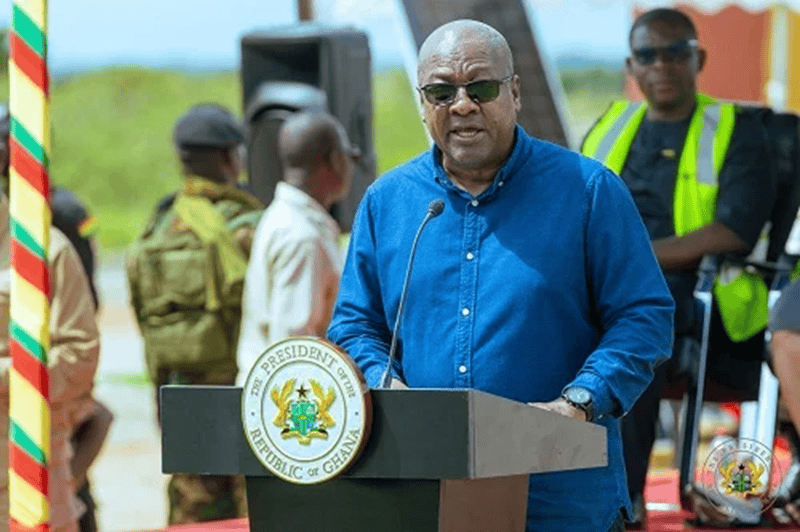
President John Mahama has declared that the government will officially begin prosecuting individuals indicted in the Auditor-General’s reports starting this year. This announcement, made during the 2026 May Day celebrations at Jackson Park in Koforidua on Friday, May 1, 2026, marks a decisive escalation in the national fight against corruption. The President emphasized that public office holders must be held to higher standards of transparency, asserting that accountability is the cornerstone of his administration’s governance agenda.
The President’s address focused on the need for public officials to remain answerable to the citizens they serve. By moving beyond mere reporting to active legal consequences, the government aims to instill a new level of discipline in the management of public resources. This shift represents a transition from identifying mismanagement to actively punishing it, signaling a “zero-tolerance” approach to the misuse of state funds.
How will the new prosecution process work for indicted officials?
The government is activating a direct legal pipeline to prosecute those named in the Auditor-General’s reports using newly created judicial infrastructure. President Mahama credited the Chief Justice and the judiciary for establishing additional High Courts specifically designed to handle these cases efficiently. These courts will ensure that indictments do not simply sit in a report but result in timely legal proceedings.
This new prosecutorial drive will function alongside the Auditor-General’s existing powers of disallowance and surcharge. While surcharges focus on recovering lost funds, the new court proceedings will focus on criminal accountability and punishment. By utilizing a dedicated court system, the administration hopes to avoid the long delays often associated with standard criminal trials, providing a swifter response to financial misconduct.
What new laws are being introduced to govern public officer conduct?
President Mahama revealed that a Public Officers Code of Conduct Bill is scheduled to be presented to Parliament during its next session. This proposed legislation is designed to clearly define the standards of behavior expected from public officials, offering a rigorous framework for ethical service. A primary focus of the bill will be providing clear guidelines on how to identify and manage potential conflicts of interest.
In addition to the Code of Conduct, the President announced plans for a new asset declaration enforcement regime. This regime aims to make asset declarations more meaningful and enforceable, ensuring that officials are transparent about their financial standings both before and after their time in office. Together, these legal reforms are intended to close the loopholes that have previously allowed corruption to go unchecked.
Factual Insights into the 2026 Anti-Corruption Reforms:
- Announcement Date: Friday, May 1, 2026 (May Day).
- Location: Jackson Park, Koforidua.
- Key Action: Activation of prosecutions for those named in Auditor-General’s reports.
- Judicial Support: New additional High Courts have been set up specifically for these cases.
- Legislative Plans: Introduction of the Public Officers Code of Conduct Bill.
- Asset Transparency: Implementation of a new, stricter asset declaration enforcement regime.
- Existing Tools: Prosecution will complement existing disallowance and surcharge powers.
Why is this year seen as a turning point for public accountability?
For years, the Auditor-General’s reports have identified significant financial leakages without always resulting in criminal trials; this year, that cycle is set to break. President Mahama expressed confidence that these reforms will finally reinforce discipline and restore public trust in state institutions. By holding officials personally and legally responsible for their actions, the administration hopes to create a deterrent against future mismanagement.
The President’s strategy relies on the synergy between the executive branch’s will to prosecute and the judiciary’s capacity to hear cases. With the specialized High Courts now in place, the technical excuses for delayed justice are being removed. This humanized approach to governance treating public funds as the people’s money aims to ensure that every cedi is accounted for and that those who fail in their duty face the full weight of the law.
Also Read: The “Enterprise” of Governance: Why Stephen Amoah Claims NPP and NDC Cannot Transform Ghana