

 By Collins Sarkodieh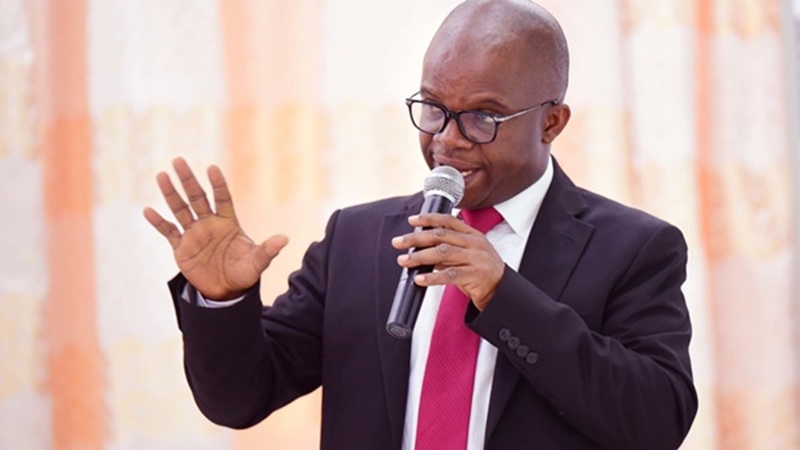
Hon. Stephen Amoah, the Member of Parliament for Nhyiaeso and former Deputy Finance Minister, has sparked national debate by asserting that Ghana’s two major political parties, the NPP and the NDC, are incapable of delivering true development. In a candid interview, he described modern politics as a profit-driven “enterprise” rather than a vehicle for national transformation.
This revelation is particularly striking coming from a high-ranking member of the ruling New Patriotic Party (NPP). Amoah’s critique suggests that the political structure in Ghana is designed to maintain the status quo rather than solve systemic issues like poverty and homelessness. By questioning whether politicians actually “know the number of street children,” he implied that the hardship of the masses is well-documented by leadership, yet largely ignored because the current political business model does not incentivize long-term poverty alleviation.
What did Stephen Amoah mean by calling politics an “enterprise”?
Hon. Stephen Amoah characterized politics as an enterprise to highlight how the focus has shifted from public service to personal and partisan financial gain. He suggested that the competition between the NPP and NDC has become more about winning power for resource control than implementing the structural changes required for a developed nation.
In an enterprise, the primary goal is “return on investment,” and Amoah implies that political actors treat elections as capital ventures. This mindset leads to short-term populist projects that win votes instead of the “boring” but essential long-term industrial policies needed for economic independence. When politics becomes a business, the needs of the most vulnerable such as those in the informal sector or street children become secondary to maintaining the party machinery and satisfying stakeholders who funded the campaign.
Can the NPP or NDC truly transform Ghana into a developed nation?
According to Stephen Amoah’s observations, both the NPP and the NDC lack the internal capacity to transition Ghana into a fully developed state under the current political culture. He argued that the cyclical nature of four-year election terms encourages “survival politics” over the deep, painful reforms necessary for industrialization and sustainable growth.
Logic dictates that transformation requires a national consensus that spans decades, not just a single term. However, the winner-takes-all system in Ghana means that whenever a party loses power, its successor often abandons ongoing projects to start their own, leading to wasted resources. Amoah’s skepticism is rooted in the fact that neither party has successfully broken the “Guggisberg model” of exporting raw materials, which keeps the country vulnerable to global price fluctuations and dependent on external debt.
Why do politicians seem to ignore the plight of street children?
Stephen Amoah suggested that politicians are fully aware of the number of street children and the extent of citizen suffering but fail to act because helping the poor does not offer immediate political “dividends.” He argued that leadership knows the data, but the lack of action stems from a lack of genuine empathy or a political system that prioritizes visible, “shiny” infrastructure over social welfare.
Street children represent the most visible failure of a nation’s social safety net. By asking the host if they think politicians are “unaware,” Amoah was being rhetorical to prove a point about negligence. In a data-driven world, government agencies like the Ghana Statistical Service provide clear figures on poverty and vulnerability. The failure to act is therefore not a lack of information, but a lack of political will. This creates a cycle where the poor are only remembered during election cycles when their votes are needed to sustain the “political enterprise.”
What are the structural barriers to Ghana’s development?
The primary barriers to Ghana’s development, as implied by Amoah’s critique, include the excessive monetization of politics, a lack of institutional continuity, and an over-reliance on primary commodity exports. When party loyalty is rewarded more than technical expertise, the civil service becomes weakened, and long-term planning becomes impossible.
- Political Monetization: The high cost of running for office means politicians must “recoup” costs, which diverts public funds.
- Lack of Continuity: Projects are often abandoned for political reasons, leaving the country with “uncompleted” infrastructure.
- Commodity Trap: Ghana remains an exporter of gold, cocoa, and oil, while importing finished goods, leading to a perennial trade deficit.
Solving these issues requires a “Resetting of the Mindset” that goes beyond partisan slogans. Without a constitutional or cultural shift that forces parties to stick to a long-term national development plan, Ghana may remain in a “middle-income trap” indefinitely.
Factual Insights on Ghana’s Political and Economic Landscape:
- Political Duopoly: Since 1992, the NPP and NDC have shared 100% of the presidential power, a period known as the Fourth Republic.
- Debt-to-GDP: Ghana’s debt-to-GDP ratio has historically fluctuated, reaching critical levels that necessitated IMF interventions in 2015 and 2023.
- Poverty Data: According to the World Bank, while poverty rates in Ghana have dropped over decades, regional disparities remain high, particularly in the northern sectors.
- Unemployment: Youth unemployment remains a significant challenge, with thousands of graduates entering a market that lacks enough formal private-sector jobs.
- Infrastructure Waste: A 2020 report suggested that Ghana loses billions of dollars annually due to abandoned government projects from previous administrations.
- Social Protection: Programs like LEAP (Livelihood Empowerment Against Poverty) exist but often face funding delays or inadequate coverage for the urban poor.
- Global Ranking: Ghana often ranks as one of the most stable democracies in Africa, yet its economic transformation has not matched its political stability.
Is Stephen Amoah’s critique a sign of internal party frustration?
Amoah’s comments are seen as a rare moment of “brutal honesty” that reflects growing frustration among some technocrats within the political class. As a former Deputy Finance Minister, he has seen the “books” and understands that the math of current Ghanaian politics does not add up to a developed-nation status without a radical departure from the norm.
Critics of Amoah might argue that he is part of the system he is criticizing, but his willingness to speak out suggests a “cracking of the wall” of partisan silence. It reflects a sentiment among the youth and the middle class who are tired of the “Red vs. Blue” binary. When a sitting MP admits the system is broken, it validates the frustrations of the ordinary Ghanaian who feels that no matter who they vote for, their basic standard of living remains stagnant.
Also Read: Why NPP And NDC Can Not Eradicate Galamsey In Ghana
What would “True Transformation” look like for Ghana?
True transformation would involve moving Ghana from a “consumption-based economy” to a “production-based economy” where the rule of law is supreme over political affiliation. It would require a non-partisan National Development Plan that is legally binding, ensuring that no party can abandon a project simply because it was started by a rival.
Transformation also means tackling the “street children” crisis by investing in vocational training and social housing. Logic suggests that if the “enterprise” of politics is replaced by the “duty” of governance, resources would be allocated based on the greatest need rather than the greatest political swing-area. For Ghana to reach “developed” status, it must achieve a consistent GDP growth rate of at least 8-10% for two decades, driven by manufacturing and technology rather than just raw resource extraction.
How does the “Winning Language” of politicians contribute to the problem?
The “Winning Language” used during campaigns is often filled with lofty promises that are economically unfeasible, leading to a “cycle of disappointment.” Politicians use these promises to win the “enterprise” battle, but once in office, the reality of fiscal constraints and global economic pressures forces them to backtrack.
Stephen Amoah’s interview highlights that this language is often a facade. By promising “free” things without explaining the tax implications or the production source, parties win the short-term election but lose the long-term trust of the people. To fix this, Ghanaians must demand “Specific, Measurable, Achievable, Realistic, and Timely” (SMART) goals from their leaders, rather than general slogans that sound good on a campaign trail but fail in the boardroom.
Can civil society or third parties break the NPP-NDC duopoly?
While third parties have struggled to gain traction in Ghana’s “First-Past-The-Post” system, civil society organizations (CSOs) and professional bodies are becoming more vocal in demanding accountability. The logic is that if the two main parties are “incapable,” then the pressure must come from outside the partisan structure to force them to change.
Third-party movements often lack the “enterprise” funding that the NPP and NDC command, making it hard for them to compete. However, the rise of “independent” candidates and movements suggests that a “Third Way” might eventually emerge if the frustration level stays high. For now, the most realistic path to transformation is for the Ghanaian public to force the NPP and NDC to adopt a “National Charter” that prioritizes development over the “enterprise” of staying in power.
Also Read: Prof. Frimpong-Boateng Faces Expulsion Over Blunt Criticism of Bawumia and NPP Party Leadership
Hon. Stephen Amoah’s shocking revelation is a “wake-up call” for every Ghanaian voter. It isn’t just about which party is in power; it’s about the very nature of the power they hold. If politics is an enterprise, then the citizens are merely the “customers” who are being overcharged for a product that doesn’t work.
The fundamental question of “Who can transform Ghana?” remains unanswered. Perhaps the answer doesn’t lie within a party office, but in a collective national demand for a government that cares more about the children on the street than the “enterprise” in the office. It’s time to move past the proverbs and start the real work of building a nation that works for everyone, not just the “one and two.”
Do you believe that Ghana should adopt a legally binding 30-year National Development Plan that every party must follow, or would such a plan stifle the democratic right of a new government to implement its own unique vision and mandate?