

 By Collins Sarkodieh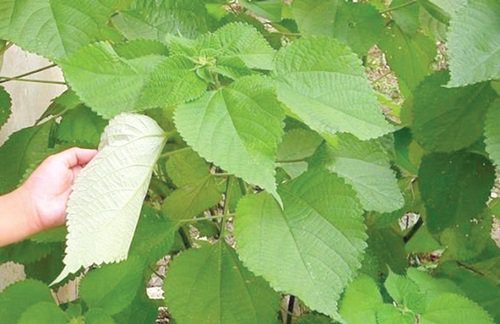
Ghana became famous because of cocoa, and that is an undeniable economic truth. For decades, cocoa has fed our national economy, built our global reputation, and sustained millions of rural farmers. However, let’s be brutally honest about our economic history. Cocoa also exposed our biggest structural weakness: we produce, while others profit. We grow it, they process it. We export raw beans, they sell finished chocolate products. We celebrate export volume, while they control global market value.
Now, history is about to repeat itself with a different commodity. There is a high-value industrial crop quietly sitting in the shadows, ignored by policymakers, misunderstood by farmers, and completely invisible to most local businessmen. That crop is ramie. If Ghana does not wake up to this emerging agricultural shift, ramie will become the next cocoa, but we may not even be at the center of its wealth distribution.
Ramie is not just another casual crop; it is a potent industrial weapon. It yields a natural plant fiber that is significantly stronger than cotton and vastly more durable than linen. As global manufacturing demands shift toward sustainable materials, ramie is becoming highly sought after in international textile and industrial markets. While cocoa feeds mouths, ramie feeds factories, and that is the fundamental difference between economic survival and true industrial power.
What is the ramie plant and why is it considered an industrial weapon?
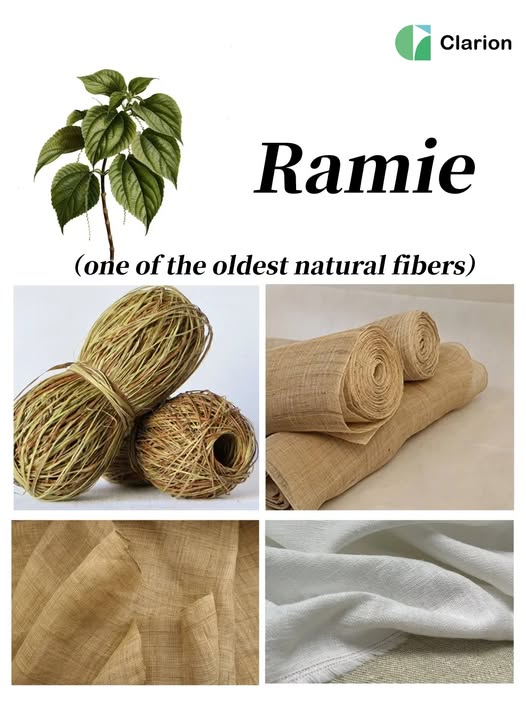
The ramie plant (Boehmeria nivea) is a hardy perennial herbaceous plant belonging to the nettle family. It produces an incredibly versatile natural bast fiber that resides within the inner bark of the plant stalks. For centuries, traditional Asian economies have utilized ramie, but modern industrial engineering has recently unlocked its potential as an eco-friendly alternative to synthetics and resource-heavy crops like cotton.
What makes ramie an industrial weapon is its extraordinary structural profile. The tensile strength of ramie fiber is up to eight times greater than that of cotton and roughly four times stronger than flax. Additionally, it boasts a natural resistance to bacteria, mildew, and insect rot, making it an exceptional component for heavy-duty textiles, industrial canvasses, ropes, automotive parts, and sustainable packaging.
Unlike cotton, which requires immense volumes of chemical pesticides and water to cultivate, ramie grows rapidly and can be harvested up to six times a year in favorable tropical climates. It acts as an elite carbon sink, absorbing greenhouse gases far more efficiently than standard crops. In a global economy increasingly regulated by strict environmental, social, and governance (ESG) criteria, ramie fits perfectly into the future of green industrial manufacturing.
Why has China successfully dominated the global ramie value chain?
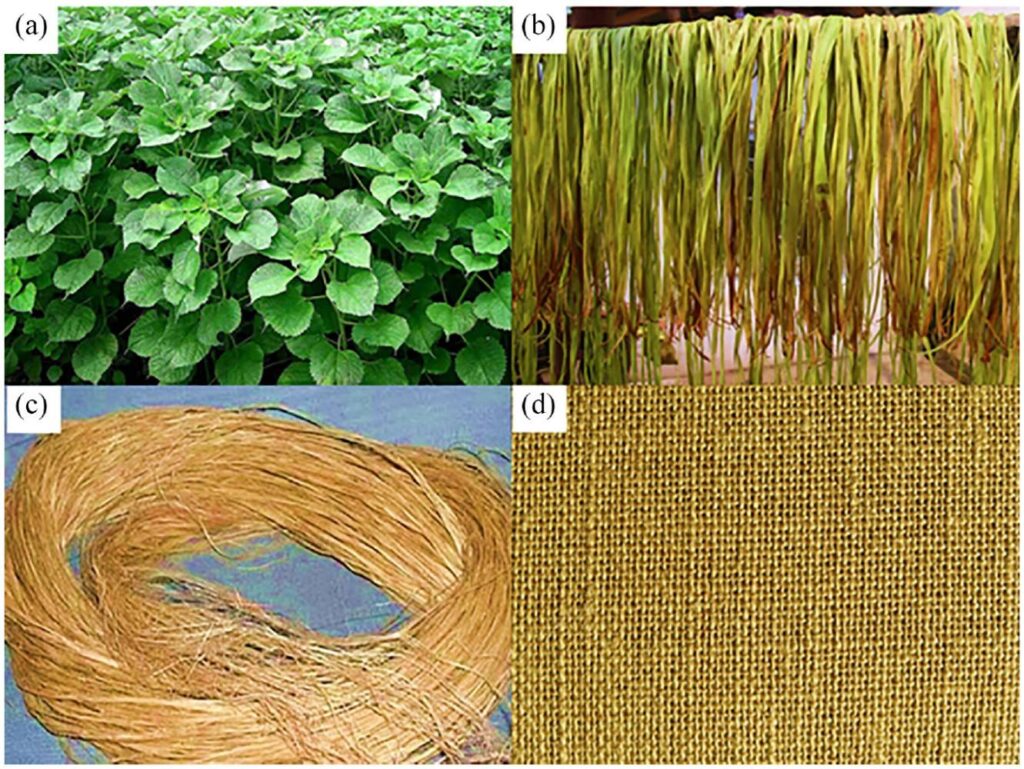
China dominates the global ramie market because its leaders do not view cultivation as casual farming; they treat it as an integrated, highly advanced industrial system. China accounts for over 90 percent of global ramie production and processing. They do not merely plant seeds and export raw stalks; they control the decortication, degumming, spinning, weaving, and distribution phases of the fiber value chain.
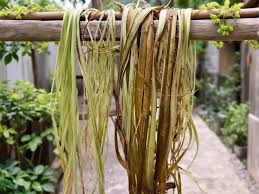
The Chinese model focuses heavily on localized processing infrastructure. Raw ramie fiber contains a sticky, natural resin or gum that must be chemically or biologically removed before the fibers can be spun into high-grade textiles. China invested heavily in chemical engineering and automated processing plants right next to their farming clusters. This ensures that raw materials move instantly from the soil into state-of-the-art factories, turning agriculture into high-value manufacturing.
By controlling every single tier of the value chain, Chinese conglomerates dictate global pricing, quality standards, and export quotas. They have successfully moved up the value ladder, selling finished, premium fabrics to European fashion houses and automotive companies. While developing nations continue to fight over the low margins of raw crop production, China reaps the massive financial rewards of industrial refinement and systemic control.
How does Ghana’s approach to cocoa mirror our potential failure with ramie?
Ghana’s approach to cocoa mirrors a potential failure with ramie because our business culture remains stuck in a primitive “produce and export raw” mindset. For over a century, Ghana has vied for the spot of top global cocoa producer alongside Côte d’Ivoire. Yet, according to global market data, the international chocolate industry is valued at over $130 billion annually, while the producing nations jointly take home less than 10 percent of that wealth.
If ramie is introduced widely into Ghana today without structural changes, the exact same pattern will emerge. Enthusiastic local farmers will rush to clear lands, secure seeds, and celebrate their initial crop yields. Local news stations will showcase pictures of vast hectares of green ramie fields. Then, exporters will pack the raw, unrefined fiber into shipping containers bound for Asia or Europe, clapping for themselves over short-term foreign exchange gains.
Within a decade, foreign multinationals will build the necessary degumming and spinning facilities outside our borders, branding the finished products and controlling global distribution channels. Ghana will find itself trapped in the same historical loop: sweating in the sun to produce raw materials while losing billions of dollars in processing value. This persistent pattern occurs because our local market values short-term deals over long-term system construction.
What structural elements are missing from Ghana’s agricultural business mindset?
What Ghana lacks is not fertile land, affordable labor, or a stable political environment; what we lack is strategic, long-term system thinking. The average Ghanaian trader behaves like a middleman who focuses entirely on the margin between buying low and selling fast. Similarly, many local businessmen prioritize quick real estate flips or import ventures rather than investing capital into industrial equipment that takes years to mature.
Furthermore, our public policy framework is heavily decentralized around short-term electoral cycles rather than multi-decade industrial plans. Policymakers are often quick to launch subsidized farming inputs to win immediate rural votes, but they rarely commit the capital needed to build heavy processing infrastructure. When an elite opportunity like ramie emerges, it is treated like a casual farming project rather than a cross-sector industrial revolution.
To transition from a nation of farmers to a nation of industrial strategists, our business community must learn how to model value chains accurately. Wealth does not belong to the person who plants the crop; it belongs to the entity that designs, structures, and dominates the processing ecosystem. Until we shift our societal focus toward engineering automated factories and securing global patents, we will remain passive participants in the global economy.
What does a fully integrated Ghanaian ramie ecosystem look like?
A fully integrated Ghanaian ramie ecosystem moves completely away from traditional peasant farming and embraces large-scale, mechanized commercial cultivation. It requires the deliberate establishment of dedicated industrial parks equipped with high-capacity decortication and chemical degumming plants situated directly within the cultivation zones. This setup ensures that the raw stalks are processed immediately, keeping value creation inside Ghana.
This idealized blueprint integrates smoothly with the Ghana National Chamber of Commerce and local financial institutions to fund advanced spinning and weaving mills. Instead of exporting raw fibers, Ghana could produce high-strength textiles and biodegradable packaging materials ready for direct export across the continent via the African Continental Free Trade Area (AfCFTA) framework. This structural setup turns a simple plant into a multi-billion cedi economic engine.
- Mechanized Farming: Utilizing modern tractors and automated harvesters to maximize biomass yields per acre.
- On-Site Degumming: Building chemical and biological processing units to refine raw fiber into spinning-grade yarn.
- AfCFTA Integration: Leveraging zero-tariff continental trade routes to supply industrial textiles to manufacturing hubs in Nigeria, South Africa, and Kenya.
Factual Insights into the Global Natural Fiber Market:
- Tensile Strength: Material science tests confirm that ramie fiber possesses a tensile strength of approximately 7 times greater than silk and 8 times greater than cotton.
- Market Value: Financial reports from Statista estimate the global sustainable textile market will cross $120 billion by 2030, driven by crackdowns on synthetic plastics.
- Production Speed: Ramie is highly productive, allowing for 4 to 6 harvests per year under optimal tropical conditions, far outpacing cotton or hemp.
- Historical Precedent: Producing nations in West Africa retain less than 8% of the total value generated across the global cocoa-to-chocolate supply chain.
- Environmental Impact: Cultivating ramie requires up to 60% less water than commercial cotton production, making it highly resilient to climate shifts.
Why will foreign investors dominate Ghana’s ramie market if we remain passive?
Foreign investors will naturally dominate Ghana’s ramie market because they possess the patience, capital, and system-oriented mindset that local capital currently lacks. A foreign conglomerate will arrive in Accra, secure long-term agricultural leases on thousands of acres of land, and import custom-built processing machinery. They will construct the factories, train a small local workforce to do the manual labor, and export the highly refined finished goods.
Local commentators will initially praise these moves, celebrating the arrival of “Foreign Direct Investment” (FDI) on television. However, the true ownership, intellectual property rights, and massive profit margins will flow directly back to corporate headquarters in Shanghai, New York, or Frankfurt. Ghana will be left with minimal tax revenues, low-wage labor positions, and depleted soils the exact structural reality of our current cocoa sector.
This outcome is predictable because international financiers understand how to out-think unstructured markets. They don’t look for quick, isolated deals; they look to capture entire supply networks. If Ghanaian institutional investors, such as SSNIT and local private equity funds, continue to ignore industrial agriculture, we will watch outsiders build a goldmine on our own land while we stand on the sidelines as spectators.
The emergence of ramie as a global industrial powerhouse is a clear test of whether Ghana has learned anything from its economic past. We can no longer blame external exploitation for our developmental challenges when we repeatedly choose to export our wealth in its rawest form. The land is available, the global green market is growing exponentially, and the timing is immaculate.
The choice before us is stark but simple. We can treat ramie like cocoa, rush to plant it blindly, and allow foreign systems to capture the real wealth. Or, we can apply discipline, pool our national capital, and build an indigenous industrial ecosystem that controls the commodity from seed to shelf. Africa is not being out-resourced; it is being out-thought. It is time for Ghana to change its mindset, build systems, and finally step into global economic leadership.
Also Read: Ending the Offshore Era: COCOBOD’s New Plan to Self-Fund Ghana’s Cocoa