

 By Collins Sarkodieh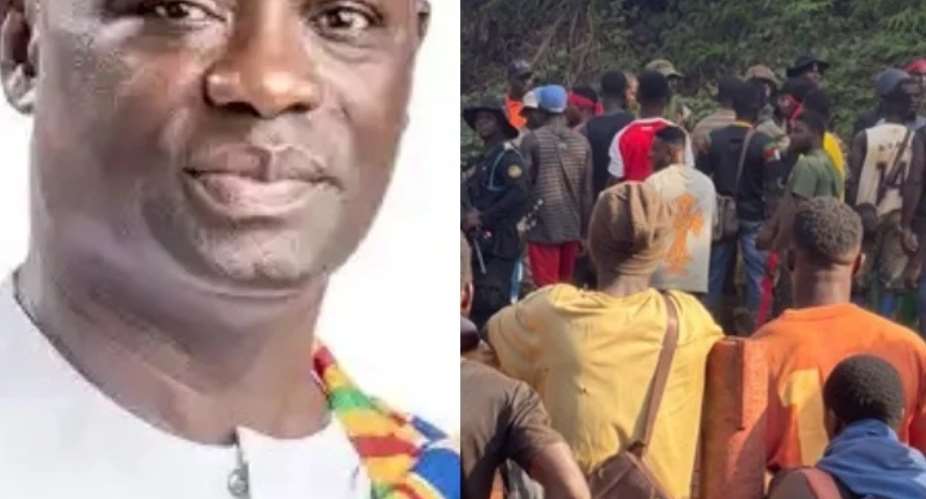
Residents across Salma, Akamko, and Bamiako in Ghana’s Western Region have launched a massive formal protest against Adamus Resources Limited, alleging systematic marginalization and the unfair prioritization of foreign nationals in local mining concessions. The community is warning of a potential “deadly conflict” if the Minister of Lands and Natural Resources, Emmanuel Armah-Kofi Buah, does not intervene to address the exclusion of indigenous youth from small-scale mining opportunities.
The unrest reached a boiling point last weekend when demonstrators stormed the company’s concession, resulting in security outposts being set ablaze and major roads being blocked with burning tires. While a joint police and military task force was deployed to restore order, the underlying tension remains high due to a perceived “double standard” in how mining laws are enforced. Residents argue that while they are chased off the land, foreign entities are permitted to engage in alluvial mining under the guise of “support services,” creating a volatile environment of economic desperation.
Why is the indigenous youth in the Western Region protesting Adamus Resources?
The primary driver of the protest is the systematic exclusion of local youth from small-scale mining opportunities within their own ancestral lands. Community members allege that while they are denied legal permits and access to land for livelihoods, Adamus Resources Limited is leasing portions of its concession to foreign entities for alluvial mining.
This perceived favoritism toward foreign nationals has created a deep sense of injustice among the youth of Salma and Bamiako. For many of these young men and women, small-scale mining is the only viable source of income in a region with limited industrial alternatives. When they see foreign contractors operating on the same land they are forbidden from touching, the frustration inevitably transitions from verbal appeals to physical confrontation and civil disobedience.
What caused the violent escalation at the Adamus Resources concession?
The violence escalated last weekend after repeated appeals for land allocation for community mining went ignored, leading frustrated residents to forcibly enter the mining firm’s concession area. The protest turned destructive as demonstrators set fire to security outposts and used burning tires to block key transport routes, effectively paralyzing economic activity in the district.
Security forces, including a joint deployment of the police and military, moved in to disperse the crowds, but the crackdown has been met with accusations of excessive force. Residents claim that the heavy-handed response from authorities has only deepened the rift between the community and the state. Instead of quelling the unrest, the presence of armed personnel has intensified the “us versus them” narrative, with locals viewing the military as protectors of corporate and foreign interests rather than the citizenry.
How did the arrest of five foreign nationals fuel the Western Region unrest?
The swift release of five foreign nationals arrested for alleged illegal mining has been described by community leaders as a “miscarriage of justice” and a clear example of a “double standard.” Protesters argue that if a local youth were caught in similar circumstances, they would face immediate and harsh prosecution, whereas the foreigners were granted bail almost instantly.
Adamus Resources claimed that these individuals were merely providing “support services,” but the local community remains unconvinced. The perception that the law is applied differently based on nationality has undermined the credibility of the judicial and regulatory bodies in the region. This specific incident has become a rallying cry for the protesters, who insist that “there is one law for the foreigner and another for the indigenous Ghanaian.”
What is the role of the Minister of Lands and Natural Resources in this crisis?
The community is calling on Minister Emmanuel Armah-Kofi Buah to conduct an urgent investigation into the concession leasing practices of Adamus Resources Limited. They believe only a high-level government intervention can ensure that the principles of local content and economic fairness are upheld in the Western Region.
The Minister’s role is critical because he oversees the Minerals Commission and the enforcement of the Minerals and Mining Act. The protesters want a transparent review of the “support service” contracts mentioned by the mining firm to determine if they are a cover for illegal alluvial mining. Without a direct statement and action plan from the Ministry, the residents warn that the “fragile peace” currently being held by the military will likely collapse back into chaos.
Why is alluvial mining by foreign entities a major point of contention?
Alluvial mining is a sensitive issue because it often has significant environmental impacts on local water bodies and is technically restricted in ways that are supposed to prioritize local interests. Protesters claim that by leasing land to foreign entities for this type of mining, Adamus Resources is directly violating the spirit of the laws meant to protect local economic participation.
Local leaders argue that alluvial mining is relatively accessible for small-scale operators, making it the perfect sector for indigenous youth empowerment. When this opportunity is handed to foreign firms instead, it creates a “displacement effect” where the locals are left with the environmental damage but none of the financial rewards. This imbalance is at the heart of the “marginalization” claims being voiced by the people of Akamko and Bamiako.
Also Read:NCCE Chair Urges Local Assemblies: Team Up With Ghanaians Abroad to Develop Your Communities
Is there a “miscarriage of justice” in the Western Region’s mining sector?
Community leaders and legal observers in the region are increasingly vocal about what they see as a bias in the enforcement of mining regulations. The “miscarriage of justice” refers to the perceived immunity of large-scale mining firms and their foreign partners compared to the aggressive policing of local “galamsey” operators.
The protesters point out that while the state has launched multiple “operations” to stop illegal mining by locals, the activities of large firms on their concessions often go unmonitored. They are demanding a “level playing field” where the rules for land use, environmental protection, and labor are applied equally to everyone, regardless of the size of the company or the nationality of the workers. This demand for equality is the cornerstone of the formal protest submitted to the authorities.
What are the potential consequences of leaving this conflict unresolved?
If the grievances of the Salma and Akamko residents are not addressed, the region faces the risk of prolonged violent conflict that could lead to further loss of life and the total shutdown of mining operations. The “warning” issued by community leaders is not just rhetoric; it is based on the escalating nature of the confrontations seen over the past week.
A total breakdown in communication between the mining firm and the host communities would be disastrous for Ghana’s gold production targets and the country’s reputation for stability. Furthermore, if the youth feel they have no legal path to a livelihood, they may resort to more radical forms of protest or illegal mining activities that are even harder for the state to control. The situation is a “powder keg” where a single spark of perceived injustice could trigger a much larger explosion of social unrest.
How can Adamus Resources Limited restore trust with the local community?
To restore trust, Adamus Resources must engage in transparent community mapping and allocate specific portions of its concession for “Community Mining Schemes” as sanctioned by the government. This would provide a legal and regulated pathway for the indigenous youth to participate in the mining economy.
Trust is currently at an all-time low because of the “support services” controversy. The company needs to be more transparent about its partnerships and demonstrate a clear commitment to “Local Content” by hiring more youth from the immediate electoral areas. By transitioning from a “security-first” approach to a “community-first” approach, the firm could potentially turn its critics into partners, ensuring a more stable and profitable environment for everyone involved.
Why does the Western Region remain the epicenter of Ghana’s mining tension?
The Western Region is home to some of the richest gold deposits in the world, yet many of its residents live in relative poverty, leading to a “resource curse” sentiment among the locals. This geographic reality means that the stakes for land access are higher here than anywhere else in Ghana.
The history of mining in the region is plagued by stories of displacement and environmental degradation. As global gold prices fluctuate and the cost of living in Ghana rises, the pressure on these resources increases. The current protest against Adamus Resources is a symptom of a much larger struggle for economic sovereignty that has been brewing in the Western Region for decades. Solving the Salma and Akamko crisis requires looking beyond the individual company and addressing the broader systemic inequalities in the mining sector.
Also Read: Political Party Launched in Ghana to Challenge NDC and NPP in 2028 Elections