

 By Collins Sarkodieh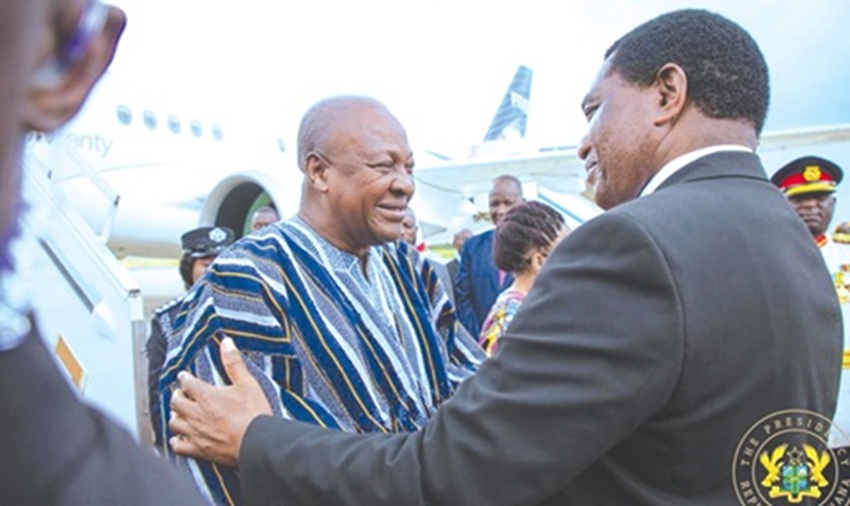
Ghana’s Cabinet has officially approved three separate visa waiver agreements with the Maldives, Zambia, and Antigua and Barbuda, signaling a major boost for the nation’s diplomatic reach.
Announced today by Foreign Affairs Minister Samuel Okudzeto Ablakwa, these agreements will allow holders of ordinary, service, and diplomatic passports to travel between these nations without a visa for up to 30 days.
While the agreements have cleared the Cabinet hurdle, they now move to Parliament for final ratification before becoming legally binding. This development is part of a broader strategy by the Ghanaian government to increase the “power” of the Ghanaian passport, making international travel, business, and tourism more accessible for citizens. Once ratified, these deals will bring the total number of new visa waiver arrangements concluded since early 2025 to fifteen, showcasing an aggressive push for global mobility.
How will the visa waiver agreement with the Maldives work?
The agreement with the Maldives allows Ghanaian citizens to enter the island nation for up to 30 days without needing to apply for a visa in advance. This deal specifically covers all passport categories, meaning both government officials and ordinary tourists can benefit from the exemption once the legal formalities in Parliament are completed.
This agreement is actually the culmination of a diplomatic process that began in March 2023. While the Maldives Ministry of Foreign Affairs indicated its readiness to implement the pact years ago, Ghana’s recent Cabinet approval marks the formal activation of the deal from the Ghanaian side. For travelers, this opens up a world-class luxury tourism destination without the administrative hurdles of embassy appointments or paperwork.
What is the significance of the visa waiver deal with Zambia?
The visa-free arrangement with Zambia follows a successful three-day state visit to Lusaka by President John Dramani Mahama in February 2026. During this visit, a Memorandum of Understanding (MoU) was signed to eliminate visa requirements for all passport holders, facilitating easier trade and cultural exchange between the two African nations.
Zambia is a key partner in the Southern African Development Community (SADC), and this waiver is expected to strengthen South-South cooperation. Beyond tourism, the move is a tactical win for Ghanaian entrepreneurs looking to explore the copper belt and agricultural sectors in Zambia. By removing travel barriers, both nations are essentially betting on increased intra-African trade as a driver for economic recovery.
Why is the Antigua and Barbuda agreement a win for Caribbean relations?
The agreement with Antigua and Barbuda was finalized on the sidelines of the 80th Session of the United Nations General Assembly in New York in September 2025. This deal allows for 30 days of visa-free stay, fostering closer ties between Ghana and the Caribbean Diaspora in alignment with the “Beyond the Return” initiative.
Antigua and Barbuda is a significant hub in the Caribbean, and this waiver simplifies the “Bridge to Africa” concept that many Caribbean nations have been championing. For Ghanaians, it provides a gateway to the West Indies, while for Antigua, it encourages investment and ancestral tourism from West Africa. This agreement is a testament to Ghana’s growing influence in the “Global South” diplomatic circles.
What are the next legal steps before Ghanaians can travel visa-free?
Cabinet approval is the executive “green light,” but the agreements must be laid before Parliament for a formal review and ratification process to take full legal effect. Once Parliament grants approval, the Foreign Affairs Ministry will exchange diplomatic notes with the respective countries to announce the official start date for the waiver.
Minister Ablakwa has indicated that this process is expected to happen “in due course,” meaning travelers should wait for the final official commencement date before booking flights. Traveling before the official implementation could still result in being asked for a visa at the point of entry. It is a standard procedural delay intended to ensure that immigration systems at all airports are updated to recognize the new exemptions.
How does this impact the global ranking of the Ghanaian passport?
Every new visa waiver agreement directly improves Ghana’s standing on the Henley Passport Index and similar global mobility trackers. By adding the Maldives, Zambia, and Antigua and Barbuda, the Ghanaian passport becomes more “versatile,” allowing citizens to access more countries either visa-free or with a visa-on-arrival.
Minister Ablakwa noted that the government’s goal is to “add greater value to the Ghanaian Passport” through consistent negotiation. A stronger passport is not just about vacations; it is a signal of a country’s stability, security, and diplomatic health. As Ghana continues to sign these deals, it reduces the “travel friction” that often prevents Ghanaian students, experts, and businesspeople from competing effectively on the international stage.
Why is the government tightening security in the passport acquisition process?
As the Ghanaian passport gains more visa-free access, it becomes a more valuable and targeted document for identity theft or fraudulent acquisition. To protect the integrity of the waivers, Minister Ablakwa confirmed that steps are being taken to tighten security protocols during the application and issuance stages.
By enhancing biometric security and background checks, the government ensures that partner nations remain confident in the “quality” of Ghanaian travelers. If a passport is seen as easily forged or obtained by non-citizens, foreign governments are likely to revoke visa-free privileges. Security upgrades are therefore a defensive measure to ensure that the 30-day “freedom of movement” remains a permanent benefit for genuine Ghanaian citizens.
How many visa waiver arrangements has Ghana concluded recently?
Since the return of President Mahama to office, Ghana has concluded a total of 15 visa waiver arrangements as of February 2026. The three latest agreements with the Maldives, Zambia, and Antigua and Barbuda are the newest additions to this growing list of diplomatic successes.
This rapid expansion of travel agreements reflects a foreign policy focused on “Economic Diplomacy.” The government is prioritizing countries that offer either high-value tourism potential or strategic trade partnerships. By hitting the 15-agreement milestone in just over a year, the Foreign Affairs Ministry is demonstrating an unprecedented level of activity in international relations.
Also Read: Ghana Opens Its Arms to Africa: Free Visas for Every African Citizen Starting May 25!
What does a “30-day visa-free stay” actually mean for travelers?
A 30-day visa-free stay means that a traveler can enter the country for tourism or short-term business meetings without a visa, but they must leave before the 30th day. It is not a permit to work, study, or reside permanently in those countries.
Travelers will still need to meet standard entry requirements, such as having a valid passport with at least six months of validity, proof of accommodation, and a return ticket. If a Ghanaian citizen wishes to stay longer than 30 days in the Maldives, Zambia, or Antigua, they would still need to apply for the appropriate long-term visa or residence permit through the respective embassies.
Is this part of a larger trend of “Visa Openness” in Africa?
Yes, Ghana’s move is aligned with the African Union’s “Agenda 2063,” which promotes the free movement of people across the continent to spur economic growth. The deal with Zambia specifically contributes to the “Visa Openness Index” for Africa, where countries are encouraged to drop barriers for fellow Africans.
The more African countries open their borders to each other, the more successful the African Continental Free Trade Area (AfCFTA) will become. Ghana, being the host of the AfCFTA Secretariat, is leading by example. By securing these waivers, Ghana is showing that it is ready to move beyond rhetoric and take the practical steps needed to integrate the continent and its allies in the Caribbean and Asia.
What should Ghanaians do while waiting for Parliament’s ratification?
Citizens are advised to keep an eye on official government bulletins and the Foreign Affairs Ministry’s social media pages for the “Go-Live” announcement. While the news is exciting, the actual travel benefits only start after the legal “Exchange of Notes” following Parliamentary approval.
In the meantime, it is a good time for frequent travelers to ensure their passports are in good condition and have enough blank pages for entry stamps. The Minister’s announcement is a promise of future ease, but for today, the standard visa rules still apply. Patience is key as the diplomatic wheels turn to finish what has been a very successful season for Ghana’s international relations.
Also Read: Reform UK Sparks Outcry with Visa Ban Proposal Over Slavery Reparations