

 By Ghana News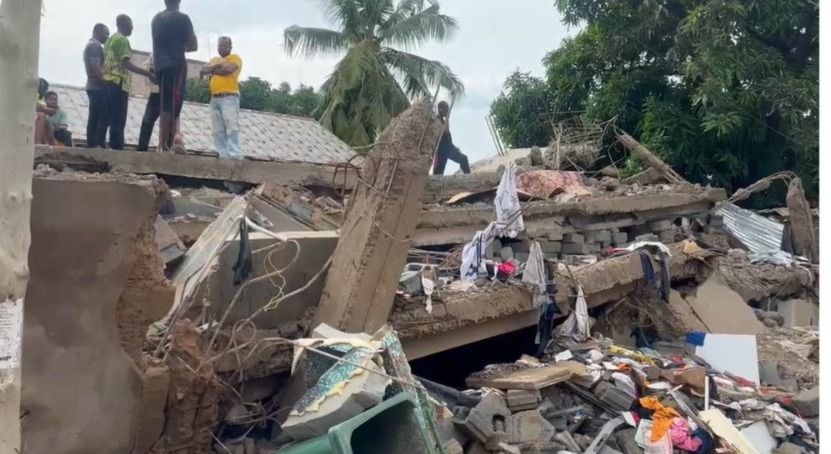
A series of tragic structural failures across urban centers has exposed a critical safety crisis within the national real estate market. Joint preliminary investigations into recent building collapses in Adenta, Avenor, and Newtown have revealed a highly disturbing trend of structural negligence.
Independent probes conducted by the Ghana Institution of Engineering, the Institution of Engineering and Technology, and the Local Government Service Engineers Association have linked these disasters directly to weak foundations, substandard building materials, and unapproved construction.
The data paints a grim picture for urban safety, with six lives already lost and numerous injuries recorded due to building collapses. Joshua Allotey, Chairman of the Structural Subdivision of the GhIE, warns that developers are consistently bypassing essential engineering designs, professional supervision, and valid municipal permits.
In Adenta, investigators found foundations that lacked adequate depth, while builders in Avenor shockingly laid shallow foundations in a high-water-table area using poor-quality materials. Furthermore, many developers routinely ignore official stop-work orders and add unauthorized vertical floors to structures never designed to hold them. Contrary to popular public belief, the rainy season is not the culprit here.
The blame lies squarely on institutional weaknesses, weak enforcement, and unregulated block production in the informal sector. To solve this, the GhIE is demanding strict compliance measures, stage-by-stage site inspections, and a mandatory national directive forcing owners of buildings two stories and above to submit certified structural assessments within a six to twelve-month window.
Blaming the clouds for a building falling down is a hilarious logical error when the foundation was built like a sandcastle. Shifting from residential spaces to crowded churches or schools without reinforcing the structure is an absolute recipe for disaster.
If Ghana wants to permanently protect human lives, state assemblies must stop treating stop-work orders as optional suggestions. Developers must start prioritizing licensed engineers over cheap, uncertified shortcuts, ensuring that the cities we build today do not become the safety hazards of tomorrow.
Also Read: Accra Launches Multi-Agency Audit of Multi-Storey Buildings to Prevent Future Collapses – GARCC
Source: More on Local News