

 By Collins Sarkodieh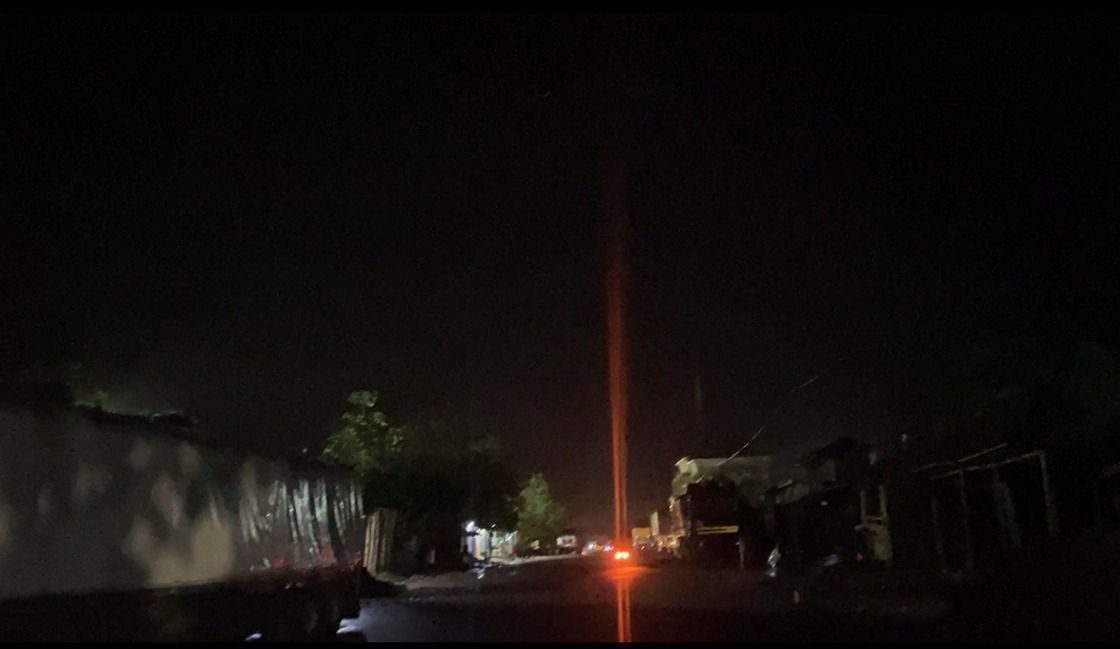
Elubo, a critical border town in Ghana’s Western Region, faces a persistent infrastructure challenge that threatens its safety and economic vitality. For years, the town has operated largely without functional street lighting, leaving its streets in total darkness once the sun sets.
This is not merely an inconvenience for local vendors like Asantewaa, who work in small “islands of light” to serve travelers. The absence of adequate lighting at this strategic entry point between Ghana and Ivory Coast creates a significant security vulnerability that demands immediate government attention.
Effective border management relies on three pillars: visibility, presence, and control. When an area remains unlit, it cripples the capacity of security agencies to monitor movement, identify individuals, or respond effectively to illicit activities.
- Weakened Surveillance: Security personnel and surveillance systems struggle to detect movement in the dark, creating blind spots for illegal border crossings.
- Reduced Camera Efficacy: Standard CCTV cameras often fail to capture clear footage in low-light conditions, rendering them ineffective at identifying faces or vehicle license plates.
- Operational Constraints: Police and border patrol officers move more cautiously in unlit areas, which slows down response times and reduces the frequency of patrols in vulnerable sections.
- Increased Smuggling: Reports indicate a rise in smuggling and illegal crossings through unauthorized routes during the night when visibility is at its lowest.
- Deterrence Failure: Bright lighting acts as a psychological deterrent; without it, criminals are more likely to believe they can act without being seen or held accountable.
The neglect of infrastructure in Elubo has led to a sharp decline in night-time commercial activity and a growing sense of abandonment among the town’s 23,952 residents. Many locals compare their dark streets to the illuminated border town of Noe in Côte d’Ivoire, fueling a perception that the government has neglected their welfare.
- Economic Disruption: Vendors must operate with extreme caution, and business conversations become brief and limited due to the inherent risks of working in darkness.
- Erosion of Trust: When the state fails to provide basic services like streetlights in strategic areas, public trust in government authority begins to decline.
- Symbolic Neglect: Border towns represent the state’s presence; prolonged infrastructure failure can signal that the government is either incapable or uninterested in protecting its frontier communities.
Addressing this issue requires shifting the perspective on street lighting from a simple utility to a key component of national security planning. A coordinated effort between the Jomoro Municipal Assembly, the Ministry of Energy, and national security agencies is essential to restore order.
- Short-term Action: The local Assembly should prioritize installing streetlights in high-risk zones, such as the border post, market areas, and primary transit roads.
- Enhanced Patrols: The Ghana Police Service, specifically the Border Patrol Unit, must increase night-time visibility to deter criminal activity until permanent lighting is restored.
- Long-term Investment: The Ministry of Energy and the Electricity Company of Ghana (ECG) need to invest in resilient, sustainable power infrastructure for all border communities.
- Integrated Planning: Urban planning in border districts must officially integrate street lighting as a standard requirement for national security and economic development.
Elubo serves as a stark reminder that infrastructure deficits can act as “threat multipliers.” By ignoring the darkness in this strategic border town, the state risks creating an environment where smuggling, trafficking, and illicit cross-border movements can thrive unchecked.
Also Read: Witness Confirms High Value 2018 Fund Transfers to National Security Account in Adu-Boahene Trial
Source: ghananewspage.com