

 By Emmanuel Bamfo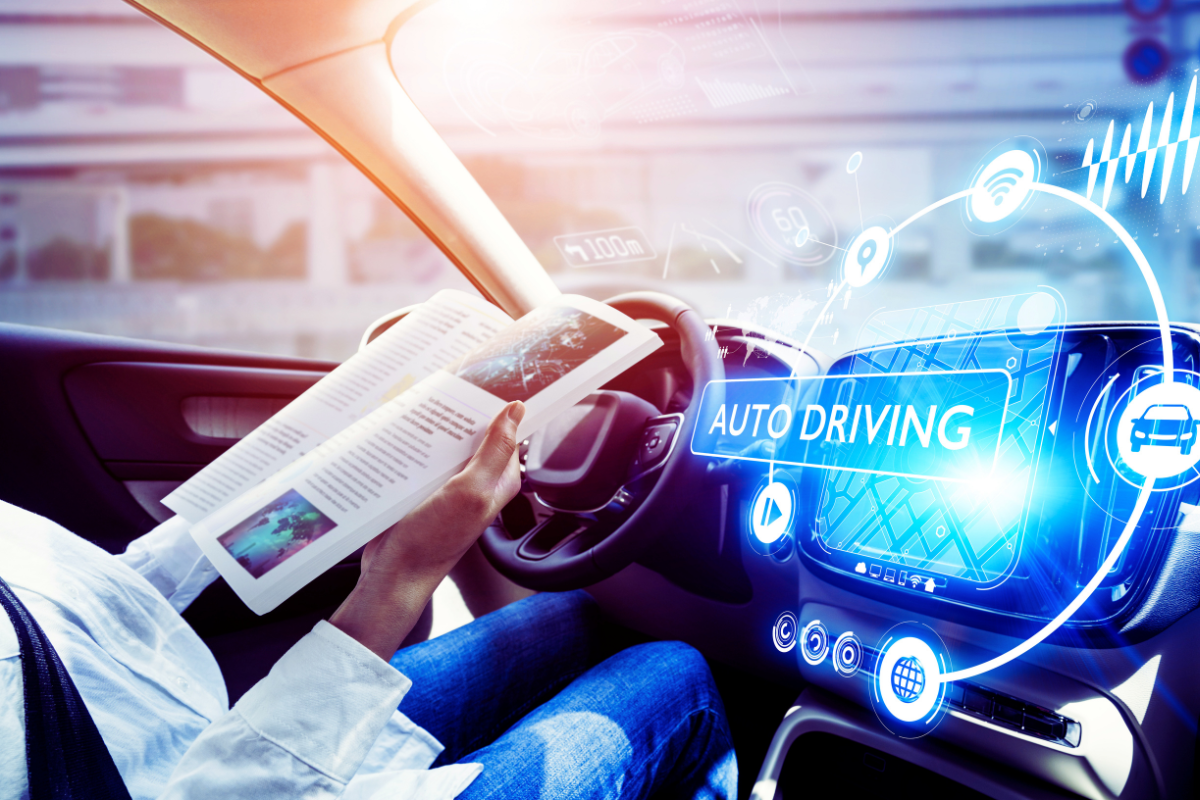
The dream of fully autonomous transportation is transitioning into a commercial reality because global artificial intelligence processing power and advanced camera networks have finally reached a critical inflection point. Vehicles are no longer just following pre-programmed maps or basic GPS lines to find their way around heavy urban traffic. Modern vehicles use deep neural networks to actively think, learn, and react to chaotic road obstacles in real time just like a highly experienced human driver.
Chale, for many years, when people talked about self-driving cars, it sounded like a wild science fiction movie that would never happen in our lifetime. We used to think autonomous vehicles were only meant for elite tech laboratories or special closed testing tracks in Silicon Valley. However, the global autonomous vehicle market has exploded with massive intensity over the last few months. Precedence Research published official data showing that the global autonomous vehicle market value reached an impressive 273.75 billion dollars.
Precedence Research
This massive financial injection means that major automobile manufacturers are no longer just playing with abstract computer code or basic parking sensors. They are embedding high-performance computing platforms directly into the factory assembly lines of everyday consumer models. The technology has shifted from simple driver assistance features into highly complex automated driving systems that can safely navigate through unpredictable environments.
Precedence Research+ 1
The rapid expansion of this technology is also heavily driven by a global emergency to reduce traffic accidents and improve urban transit efficiency. The Association for Safe International Road Travel notes that more than one million people lose their lives in road accidents each year across the globe. By removing human error, tiredness, and drunk driving from the equation, autonomous systems aim to cut these tragic numbers down significantly. This massive safety promise is why search engines and digital discovery feeds are constantly buzzing with the latest autonomous breakthroughs.
Precedence Research
How Is Mercedes Benz Shattering Crucial Legal Boundaries With Level Three Autonomy?
Mercedes-Benz has successfully captured the global spotlight by becoming the first automotive brand to secure official regulatory approval for a certified Level Three conditional automated driving system. Their pioneering technology allows drivers to legally completely remove their eyes from the highway and hand full operational responsibility over to the vehicle under specific traffic conditions. This legal shift marks the first time in history that a machine assumes total liability for the driving task.
Cyprus Car Importer
The system is famously known as Drive Pilot, and it represents a massive leap forward from the traditional Level Two setups we are used to seeing. In a standard Level Two vehicle, you can take your hands off the wheel for a few seconds, but your eyes must remain strictly glued to the road ahead. If the system makes a mistake and you crash, the law blames you entirely for negligence. With Drive Pilot, the manufacturer boldly takes the legal blame if the system fails while operating within its approved design domain.
Adrian Flux
According to automotive industry updates, the German luxury brand is currently deploying this cutting-edge feature on its flagship S-Class and EQS luxury sedan models. The system currently operates on pre-mapped highways at speeds up to 40 miles per hour, which is ideal for navigating heavy highway traffic jams. While the car drives itself smoothly through the congestion, the human occupant can legally read text messages, browse the internet, or reply to corporate emails.
Adrian Flux
To achieve this level of legal credibility, the vehicle utilizes a highly redundant sensor network that includes advanced LiDAR technology, long-range radar, and moisture sensors. The inclusion of LiDAR ensures that the car can measure distances with absolute precision even during terrible weather conditions like heavy rain or dense morning fog. This level of extreme engineering perfectionism is exactly why the brand is winning the trust of conservative transport regulators across the globe.
Cyprus Car Importer
Can Tesla Vision Only Architecture Truly Outsmart Expensive Laser Radar Systems?
Tesla continues to aggressively reject the expensive radar and LiDAR sensors used by its competitors, choosing instead to rely entirely on an ultra-cheap vision-only camera setup powered by advanced end-to-end artificial intelligence. Their latest Full Self-Driving suite uses a dense network of external cameras to feed raw visual data directly into a massive neural network that mimics human spatial awareness. This bold strategy focuses entirely on teaching a computer how to see and navigate the world exactly the way humans do.
Chale, this vision-only approach has sparked one of the biggest and most entertaining intellectual battles in modern engineering history. Most traditional car brands argue that relying only on cameras is highly dangerous because a camera can easily get blinded by bright sunlight or covered by thick mud. They believe that a car needs expensive lasers to build a reliable three-dimensional map of its surroundings. Yet, the American electric vehicle giant continues to prove its critics wrong by releasing highly stable software updates.
The current version of their software is capable of handling complex urban street navigation, reacting to traffic lights, avoiding unpredictable pedestrians, and managing tight roundabouts without human intervention. The underlying logic is that since the entire human road infrastructure was built for biological eyes, a machine should only need digital eyes to navigate it safely. By removing expensive sensors, the company keeps its production costs incredibly low, making autonomous features accessible to ordinary middle-class buyers.
Furthermore, the company utilizes a massive fleet of millions of customer vehicles driving on real roads daily to collect billions of miles of real-world driving data. This massive data advantage allows their engineering teams to train their artificial intelligence models on rare road scenarios that competitors can never simulate in a lab. Every single time a human driver takes over control from the system, that specific data point is sent back to the cloud to make the software smarter for everyone else.
Why Are Robotaxis Scaling Faster Than Personal Automated Luxury Vehicles?
The commercial ride-hailing industry is expanding autonomous technology at a much faster rate than personal luxury cars because fleet operators can easily offset the high cost of expensive sensor hardware through continuous daily operational revenue. A private buyer will struggle to pay an extra twenty thousand dollars just for high-end self-driving features that sit idle in a garage most of the day. Robotaxi fleets operate twenty-four hours a day, turning tech investments into immediate profit margins.
The absolute leader in this commercial space is Alphabet’s Waymo, which has established a dominant presence across major urban markets like San Francisco, Phoenix, and Los Angeles. According to recent industrial data presented at the 2026 Consumer Electronics Show, the Waymo One fleet has logged over 100 million miles of fully autonomous driving without a human safety driver. They are currently expanding their commercial footprint into cold-weather climates like Denver and Indianapolis to prove their software can handle ice and snow.
Adrian Flux+ 1
To scale even faster, Waymo has entered a major partnership with Chinese automaker Geely to build a purpose-built robotaxi called the Ojai van, which is scheduled to enter full commercial service later this year. This futuristic vehicle completely eliminates traditional driver-focused interior elements to maximize passenger comfort and legroom. The machine operates autonomously using thirteen cameras, six radar units, and four separate LiDAR sensors to create an unbreakable safety shield around the passengers.
Global X ETFs
At the same time, UK-based autonomous software startup Wayve is shaking up the European market by partnering with Uber to launch massive public trials in London. Wayve uses a unique embodied artificial intelligence model that learns driving etiquette directly from observing human behavior rather than following strict rule-based code. This allows their vehicles to navigate tight, chaotic European streets and unpredictable roundabouts with a natural smoothness that surprises traditional engineers.
Adrian Flux
How Do Advanced Artificial Intelligence Chips Process Roads Faster Than Human Eyes?
Modern autonomous vehicles process complex road data at lightning speeds by utilizing specialized high-performance computing processors packed with dedicated neural processing units that handle trillions of operations per second. These specialized automotive chips are engineered to execute advanced sensor fusion, which blends data from cameras, radar, and ultrasonic sensors into a unified digital environment within milliseconds. This rapid data processing allows the vehicle to detect hazards and activate emergency braking much faster than biological human reflexes.
To understand the immense scale of this processing power, we must look at the recent hardware breakthroughs coming out of major technology hubs. For instance, global tech giants have rolled out specialized automotive platforms like the NVIDIA Alpamayo architecture, which features open-source vision language models. This incredible computing setup allows a vehicle to not only see an object but to fundamentally understand what that object is likely to do next based on contextual clues.
Global X ETFs
In the highly competitive Asian market, companies like NIO have unveiled their own custom-built Turing AI chips designed specifically for autonomous driving. These high-tech chips feature a forty-core processor architecture paired with dual neural processing units and massive high-speed RAM to manage intensive computation. This immense computing muscle ensures that the car can predict the trajectory of dozens of surrounding vehicles and pedestrians simultaneously without experiencing a single millisecond of lag.
Research and Markets
Chale, your human brain needs about three hundred milliseconds just to blink an eye when you see danger on the road. These modern automotive processors can analyze the entire environment, calculate multiple escape routes, and apply the brakes in a tiny fraction of that time. This extreme processing advantage is the primary reason why tech enthusiasts and safety advocates believe that autonomous driving will eventually become vastly superior to human piloting.
Will Developing Road Networks Block The Entry Of Fully Autonomous Vehicles?
The absence of highly standardized lane markings, predictable traffic signals, and structured pedestrian walkways presents a massive technical roadblock that will delay the rollout of autonomous vehicles in developing transport markets. Most current self-driving models are trained on highly predictable western highways where every line is clearly painted and every driver follows strict legal rules. Introducing these sensitive vehicles into chaotic tropical traffic environments requires a total redesign of their core navigation algorithms.
If you bring a highly sophisticated Level Three autonomous car onto a busy road in Accra, the system will likely experience an immediate digital panic attack. The car will have to navigate around deep potholes, avoid aggressive commercial trotro buses cutting into lanes, and interpret informal hand signals from local traffic wardens. A vehicle that depends heavily on reading perfect white lane lines will struggle to function when those lines are completely covered by red dust or worn away by heavy seasonal rains.
However, forward-thinking tech companies realize that they cannot build a truly global autonomous future if their cars can only drive in perfect suburban neighborhoods. Engineering teams are starting to shift away from rigid rule-based programming toward adaptive machine learning models that thrive on chaos. These next-generation systems are being trained to read the general flow of traffic and predict human movement based on local cultural behavior rather than textbook traffic laws.
Until these adaptive models mature, developing nations can begin preparing their infrastructure by deploying smart traffic management systems and digital road signs. Investing in connected vehicle-to-everything communication networks allows the infrastructure to broadcast real-time hazard data directly to approaching vehicles. This blend of local infrastructural updates and smarter artificial intelligence models will eventually open the door for autonomous mobility worldwide.
Why Is Trust Still The Ultimate Financial Barrier For Autonomous Car Makers?
The primary factor slowing down the universal adoption of self-driving cars is not the lack of advanced computer software, but the deep psychological fear and financial skepticism felt by ordinary everyday drivers. Consumers are highly hesitant to spend their hard-earned money on complex technology that requires them to completely surrender control of their personal safety to an invisible digital brain. Overcoming this deep-seated emotional resistance requires automotive brands to maintain absolute transparency regarding system errors and safety performance.
Shayaike Hassan
Automotive market reports indicate that sensor integration and high-end software development add a significant financial premium to the manufacturing cost of autonomous vehicles. These extra expenses restrict large-scale commercialization and delay mass-market adoption because the average buyer cannot justify the massive price jump. Manufacturers must prove that their self-driving packages deliver undeniable long-term value through reduced insurance premiums and lower crash repair costs.
Chale, it is one thing to trust a computer to play your favorite highlife song on the car radio, but it is a completely different level of trust to let that same computer drive your entire family through a high-speed highway intersection. Every single time a self-driving test vehicle gets into a minor accident, it becomes a massive global news headline that triggers intense public fear. People easily forgive human drivers for making mistakes, but they expect robotic systems to exhibit absolute perfection every single second of the journey.
Ultimately, the winner of the great autonomous race will be the brand that successfully balances advanced technical competence with transparent human empathy. Car manufacturers must design intuitive user interfaces that clearly communicate exactly what the car is seeing and planning to do next to keep passengers completely at ease. As the technology continues to mature through rigorous field testing and smarter regulations, the steering wheel will slowly transform from a mandatory safety tool into an optional luxury accessory.
To get a clearer view of how these complex autonomous technologies are being integrated into mass production models and to listen to industry veterans debate the future of public transportation infrastructure, you can explore this detailed technical briefing on the Global Autonomous Driving Inflection Point and Market Trends. This coverage provides an in-depth analysis of the real-world safety data, corporate partnerships, and software milestones shaping the next decade of personal mobility.
Also Read: exciting new cars coming in 2026 evs suvs