

 By Zobia Zulfqar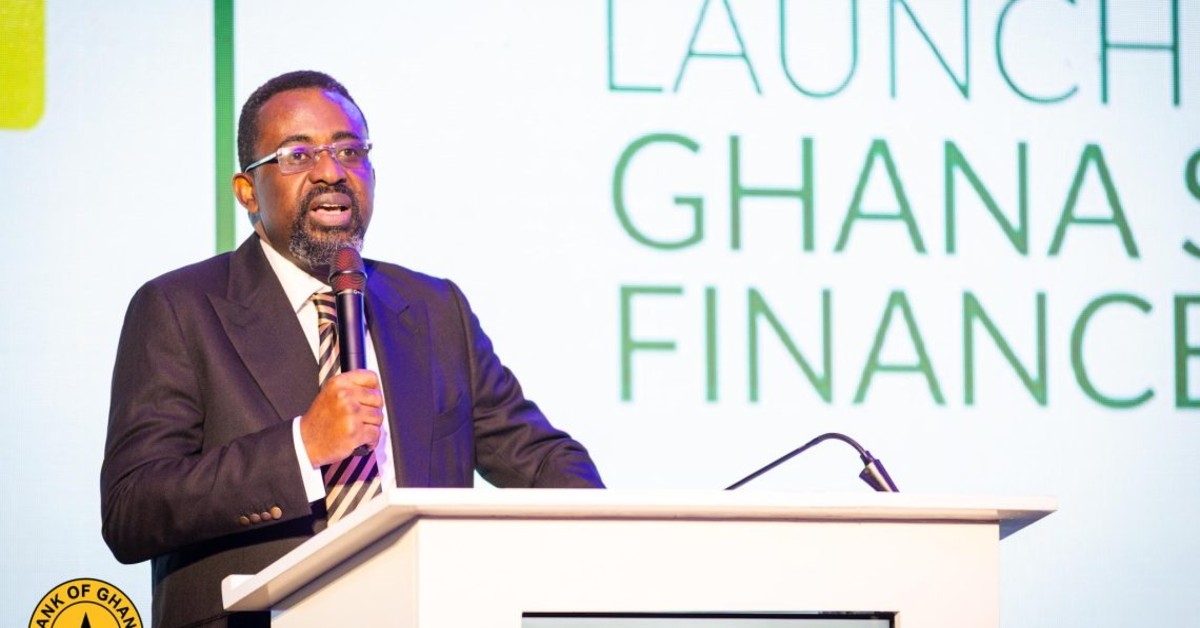
Bank of Ghana Governor Dr. Johnson Pandit Asiama has called for stronger collaboration among Ghana’s financial regulators, saying sustainability and climate-related risks can no longer be effectively managed through separate regulatory systems.
Speaking at the launch of the Ghana Sustainable Finance Roadmap in Accra on June 30, Dr. Asiama said the country’s financial sector faces increasingly interconnected environmental, social and governance (ESG) challenges that require a coordinated national response.
According to the Governor, Ghana’s financial system is built on distinct regulatory institutions responsible for banking, insurance, pensions and capital markets. While each regulator plays an important role, he said emerging sustainability risks now cut across every segment of the financial sector, making closer cooperation essential.
He explained that financial stability can no longer depend on individual institutions working independently because climate change, environmental risks and sustainability challenges affect the entire financial ecosystem.
“Together, these pillars form an interconnected system whose strength depends on coordination, collaboration and a shared sense of responsibility,” Dr. Asiama said.
He stressed that risks associated with climate change are not confined to a single financial institution or sector but spread across markets, businesses and investment portfolios.
“The risk that moves across the whole system cannot be managed by any one institution sitting alone,” he noted.
Dr. Asiama said Ghana must therefore move beyond fragmented supervision and adopt a more integrated approach that encourages regulators to work together with shared priorities, common objectives and coordinated implementation strategies.
According to him, achieving a resilient and sustainable financial system requires long-term cooperation among all institutions responsible for overseeing the country’s financial markets.
The newly launched Ghana Sustainable Finance Roadmap is intended to provide that unified framework by bringing together the Bank of Ghana, the Securities and Exchange Commission, the National Insurance Commission and the National Pensions Regulatory Authority.
The roadmap seeks to harmonise environmental, social and governance standards while promoting consistent supervisory practices across the financial sector.
Dr. Asiama explained that the framework is designed to improve regulatory coordination as sustainability risks become increasingly interconnected across financial institutions and markets.
He said the roadmap will support the integration of ESG principles into financial regulation while creating common supervisory tools, aligned implementation mechanisms and shared policy objectives for all participating institutions.
According to the Governor, the initiative represents the next phase of Ghana’s sustainable finance journey, building on reforms introduced over the past several years.
These include the launch of Ghana’s Sustainable Banking Principles in 2019, which encouraged banks to incorporate environmental and social considerations into their operations and lending decisions.
The country also introduced climate-related financial risk guidelines in 2024 to help financial institutions identify, assess and manage climate risks more effectively.
While acknowledging that these reforms have strengthened the sector’s preparedness, Dr. Asiama said greater collaboration is now needed to ensure consistent implementation across all parts of the financial system.
He noted that sustainable finance has become increasingly important as investors, businesses and regulators around the world place greater emphasis on responsible investment, climate resilience and long-term economic sustainability.
The Governor expressed confidence that the Ghana Sustainable Finance Roadmap will improve regulatory coherence, strengthen financial stability and position Ghana as a leader in sustainable finance within the region.
The initiative has also received support from international development partners, including the International Finance Corporation (IFC), which has worked with Ghanaian regulators on sustainable finance reforms.
Officials believe the roadmap will serve as a blueprint for advancing ESG integration, strengthening climate-risk oversight and supporting sustainable investment across Ghana’s financial sector in the years ahead.
Also Read: Ghana Launches Diplomatic Protest Over Canada Visa Denial of Thomas Partey