

 By Zobia Zulfqar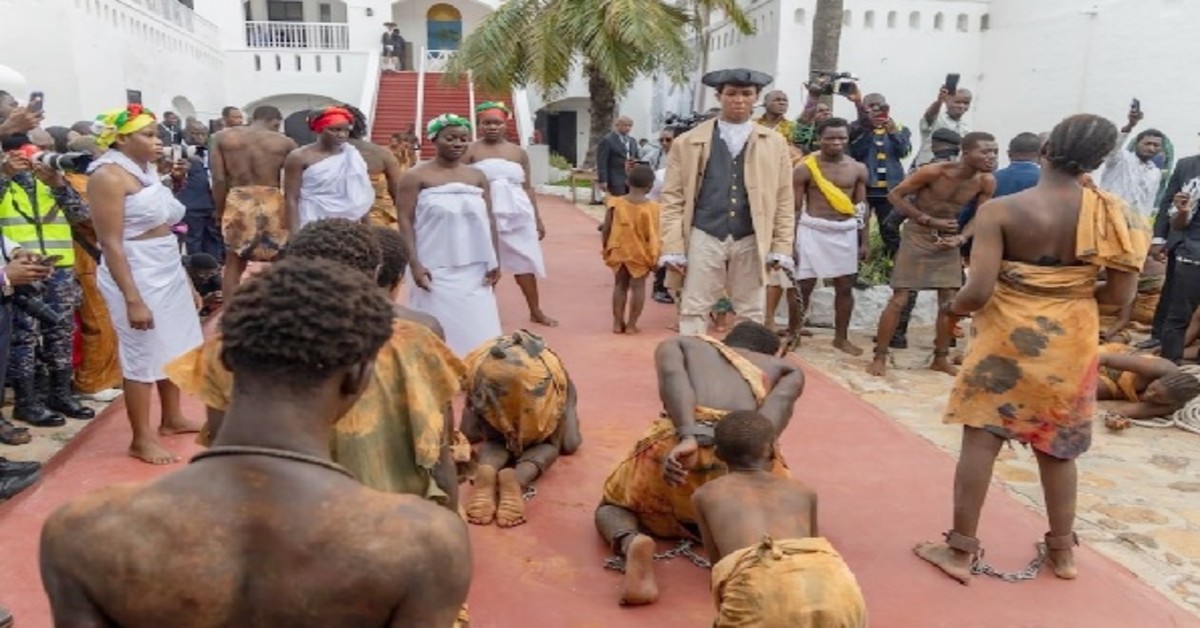
The performance Echoes Through the Door of No Return transformed the historic Christiansborg Castle in Accra into a powerful stage for remembering the horrors of the transatlantic slave trade, blending history, theatre, and calls for reparatory justice.
Curated and directed by Dr. Abdul Karim Hakib, the production was staged shortly after Ghana hosted the Consultative Conference on Reparatory Justice. The timing coincided with the United Nations’ landmark resolution recognizing the transatlantic slave trade and the trafficking of enslaved Africans as among the gravest crimes against humanity.
Rather than presenting slavery as a conventional historical lesson, the production immersed audiences in an emotional and thought-provoking experience through movement, music, ritual, and storytelling. The performance encouraged visitors to reflect not only on the suffering of the past but also on the continuing global conversation about justice, remembrance, and healing.
Christiansborg Castle, one of Ghana’s most significant slave forts, played a central role in the production. Its centuries-old walls, courtyards, and underground dungeons became more than just a backdrop. They served as living witnesses to history, allowing audiences to experience the story within the very spaces where countless enslaved Africans were once imprisoned before being forced onto ships.
The performance traced the painful journey of enslaved Africans from their capture in the hinterlands through the long marches to the coast, their confinement in dark and overcrowded dungeons, and finally their passage through the infamous Door of No Return. By using the castle’s authentic setting, the production created a deeply moving atmosphere that blurred the line between history and the present day.
The immersive nature of the performance allowed spectators to engage with the emotional weight of the events in a way that traditional exhibitions or lectures often cannot. Every scene reinforced the human cost of slavery while honouring the resilience of those who endured unimaginable suffering.
The production also reflected Ghana’s growing role in promoting dialogue on reparatory justice and preserving the memory of the transatlantic slave trade. By combining historical accuracy with artistic expression, Echoes Through the Door of No Return highlighted the importance of remembering the past while encouraging conversations about accountability, reconciliation, and the enduring impact of slavery on generations of Africans and the global African diaspora.
The performance demonstrated how theatre can become a powerful tool for education and reflection, ensuring that the stories of those who passed through the Door of No Return continue to resonate with audiences today.