

 By Collins Sarkodieh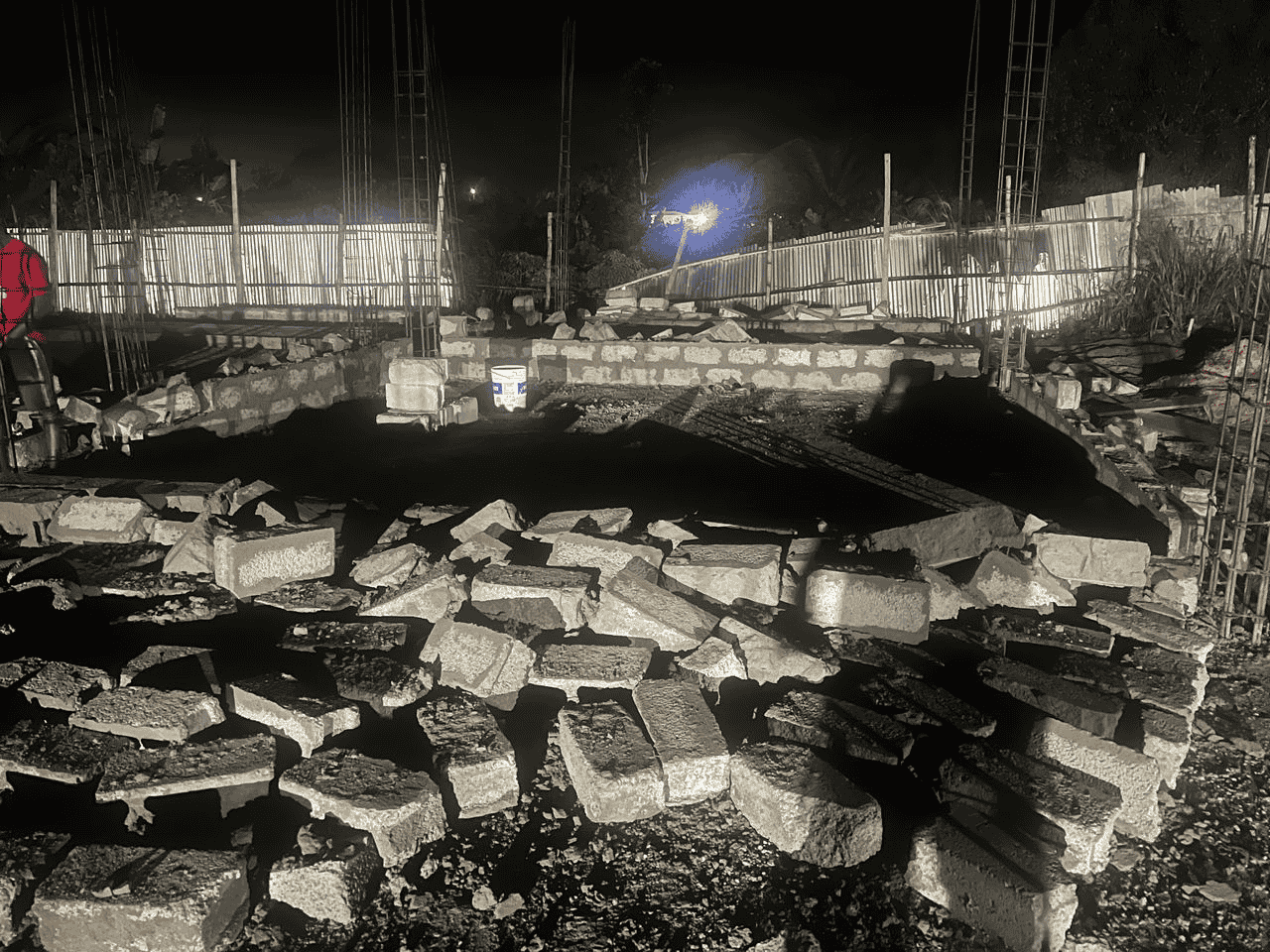
Armed assailants destroyed a GH¢1 million National Democratic Congress (NDC) office complex at Awiaso Junction in the Ellembelle District on May 7, 2026. This violent act follows a prolonged land ownership dispute between the political party and the Awiaso royal family, resulting in significant property damage.
The attack involved men reportedly armed with guns and machetes who dismantled parts of the nearly completed facility. While land disputes are not uncommon in the Western Region, the escalation to armed vandalism has sparked concerns over local security and political stability. District officials have condemned the move, noting that legal channels were bypassed in favor of vigilante action.
As the police investigate the incident, the clash between the Awiaso royal family and the NDC highlights the complexities of land tenure in Ghana. With GH¢1 million in investment now in ruins, the question remains: who truly has the authority to settle this dispute, and what happens next for the Ellembelle constituents?
Why was the GH¢1 million NDC office complex demolished?
The demolition was sparked by a dispute over the ownership of the land at Awiaso Junction, which the Awiaso royal family claims was sold improperly. Although the Member of Parliament for Ellembelle, Emmanuel Armah-Kofi Buah, purchased the land in 2017, the death of the selling chief led to a challenge of the original transaction.
Following the death of Nana Boadi, the royal family asserted that the sale was invalid. The matter moved from traditional courts to Alternative Dispute Resolution (ADR), where the NDC allegedly agreed to re-purchase the land and provide community support. However, negotiations broke down over additional demands that fell outside the party’s legal jurisdiction.
The situation turned violent when the family allegedly demanded that the MP facilitate the gazetting of King Kaku Aka III as the Overlord of Nzema land. Since an MP has no legal power over the Chieftaincy Ministry or the gazetting process, the stalemate led to the dawn attack by armed men who took the law into their own hands.
Who has the legal authority to order a demolition in Ghana?
In Ghana, only a court of competent jurisdiction or the District Security Council (DISEC) holds the legal authority to order the demolition of a permanent structure. Joseph Armah Agyekum, the DCE for Ellembelle, clarified that the armed assailants acted completely outside the law by destroying the NDC complex.
Even in cases of land litigation, property cannot be destroyed by a claimant without a specific court order or a safety directive from the District Assembly. This legal safeguard is meant to prevent the exact type of chaos witnessed at Awiaso Junction, where machete-wielding men dictated property rights through force.
By bypassing DISEC and the courts, the perpetrators have shifted the narrative from a civil land dispute to a criminal matter. The NDC Constituency Chairman, Alex Mahama, has already signaled that the party will pursue full prosecution for the vandalism, citing that this is the second time the site has been targeted.
What were the terms of the Alternative Dispute Resolution (ADR)?
The NDC had previously agreed to a set of concessions to appease the Awiaso royal family, including paying for the land a second time and supporting local development. The party committed to employing local youth during construction and contributing financial support toward the building of a new palace for the community.
ADR is a common tool in Ghana used to settle land disputes without the long delays of the formal court system. It relies on mutual agreement and compromise. In this instance, the NDC felt they had met all reasonable demands to ensure the GH¢1 million investment remained secure.
The breakdown occurred when the demands shifted from financial compensation to political and traditional influence. The DCE noted that the request to influence the gazetting of an “Overlord” was the breaking point, as it sought to involve the MP in a traditional leadership struggle that is legally reserved for the National House of Chiefs.
Also Read: The “Enterprise” of Governance: Why Stephen Amoah Claims NPP and NDC Cannot Transform Ghana
Factual Insights into Ellembelle and Land Disputes:
- Investment Loss: The demolished NDC office complex in Ellembelle was valued at approximately GH¢1 million before the attack.
- Land Tenure Period: The land dispute traces back to a 2017 purchase, showing that land litigation in Ghana can persist for nearly a decade.
- Legal Framework: Under the Land Act, 2020 (Act 1036), all land transactions must be properly recorded to avoid the “death of the grantor” complications seen in this case.
- Demolition Law: Section 91 of the Local Governance Act specifies the rigorous process required before a District Assembly can authorize the removal of a structure.
- ADR Success Rates: Statista and legal blogs note that over 60% of land disputes in Ghana are referred to ADR to reduce the burden on the high courts.
- Gazetting Process: The gazetting of a chief is an administrative act by the National House of Chiefs, not a political favor that can be granted by an MP.
- Security Risk: Ellembelle is a key district in the Western Region’s oil and gas enclave, making any armed instability a matter of national economic concern.
What happens to the Ellembelle NDC office project now?
The project is currently at a standstill as the police and DISEC attempt to secure the site and prevent further violence. While the NDC leadership is determined to rebuild, the immediate focus is on the criminal prosecution of the armed men involved in the May 7 demolition.
For the constituents of Ellembelle, the destruction represents a loss of community infrastructure and a rise in political tension. The MP, Emmanuel Armah-Kofi Buah, has urged followers to remain calm and allow the law to take its course, despite the provocative nature of the machete and gun-led attack.
The case will likely return to the courtroom, as the ADR process has clearly been violated by the recent violence. Until a final judicial ruling on the 2017 sale is reinforced by state security, the ruins at Awiaso Junction will remain a symbol of the fragile balance between traditional land claims and modern legal ownership.
Balancing Tradition and Law in Ellembelle
The demolition of the NDC office complex is a stark reminder that land disputes in Ghana require more than just money to solve; they require a deep respect for the rule of law. When armed men bypass the courts, the entire community loses. The GH¢1 million loss is significant, but the threat to the peace of Ellembelle is much more costly.
As the authorities work to catch those responsible, the story serves as a cautionary tale for all organizations purchasing land in traditional areas. Ensuring that every “i” is dotted and every “t” is crossed in the land registry is the only way to protect an investment from the machetes of those who refuse to wait for a judge.
Also Read: NDC Revives “Setting the Records Straight” to Combat Political Misinformation