

 By Zobia Zulfqar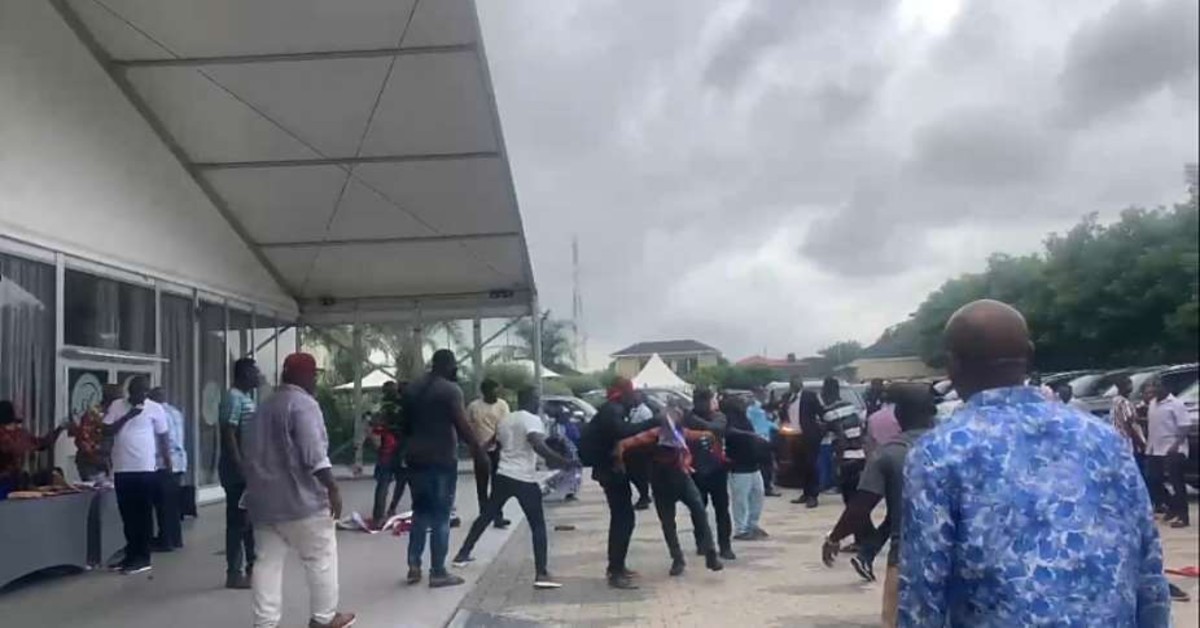
A National Executive Committee (NEC) meeting of the New Patriotic Party (NPP) descended into chaos on Thursday, June 25, after rival groups of party supporters clashed outside the venue, exposing growing internal divisions within the opposition party.
The incident occurred at the Alisa Hotel in Accra, where senior party officials had gathered for the high-level meeting. Tensions flared when a section of supporters staged a protest chanting “Ken Must Go,” a slogan widely interpreted as a call for former Assin Central Member of Parliament and former presidential aspirant Kennedy Agyapong to step away from the party’s frontline politics.
Eyewitnesses said the atmosphere became increasingly tense as rival groups exchanged heated words before the confrontation turned physical. Videos circulating on social media showed supporters pushing and shoving each other while security personnel attempted to restore calm.
The protest quickly drew the attention of party leaders arriving for the meeting, with several supporters wearing red headbands gathering outside the entrance to voice their dissatisfaction. The demonstrators maintained their chants as senior executives entered the venue, creating a charged atmosphere before the meeting even began.
The situation escalated further after the meeting when some protesters reportedly confronted Minority Leader Alexander Afenyo-Markin. According to eyewitness accounts, the group attempted to block his vehicle from leaving the hotel premises, forcing security personnel to intervene.
The confrontation soon developed into a scuffle as rival supporters physically engaged one another around the Minority Leader’s vehicle. Security officers and party officials worked to separate the groups and prevent the violence from escalating further.
Although the clashes were eventually brought under control, the incident highlighted growing tensions within the NPP as the party continues internal discussions over its future direction following the 2024 general elections.
The “Ken Must Go” chants have added another layer to ongoing debates among party members regarding leadership, internal reforms, and preparations for future elections. While some supporters believe changes are necessary to reposition the party, others continue to back Kennedy Agyapong, one of the NPP’s most influential political figures and a former presidential hopeful.
Political observers say the public display of disagreement reflects broader frustrations among sections of the party’s grassroots supporters. Internal disagreements that were previously confined to party meetings are increasingly becoming visible in public, raising concerns about unity within the party.
Neither Kennedy Agyapong nor Alexander Afenyo-Markin publicly addressed the incident immediately after the meeting. Likewise, the party leadership did not issue an official statement regarding the clashes at the venue.
The NEC meeting itself was expected to discuss key organizational matters, including party restructuring, preparations for future political activities, and strategies aimed at strengthening the NPP ahead of upcoming electoral contests. However, the violence outside the meeting venue overshadowed much of the day’s proceedings.
Security personnel remained at the hotel until the meeting concluded to ensure party executives could leave safely. No serious injuries were immediately reported, and there were no official confirmations of arrests in connection with the incident.
Political analysts believe the latest confrontation serves as a reminder of the challenges facing the NPP as it seeks to maintain internal cohesion while managing differing opinions among its members. They argue that party leaders will need to engage supporters and address concerns through dialogue to prevent similar incidents in the future.
As Ghana’s political landscape continues to evolve, observers say maintaining discipline and unity within political parties remains essential to preserving public confidence in the country’s democratic institutions.
The events at the NEC meeting have sparked widespread discussion across social media and among political commentators, many calling on party leaders to promote peaceful engagement and resolve internal disputes through established party structures rather than public confrontations.