

 By Emmanuel Bamfo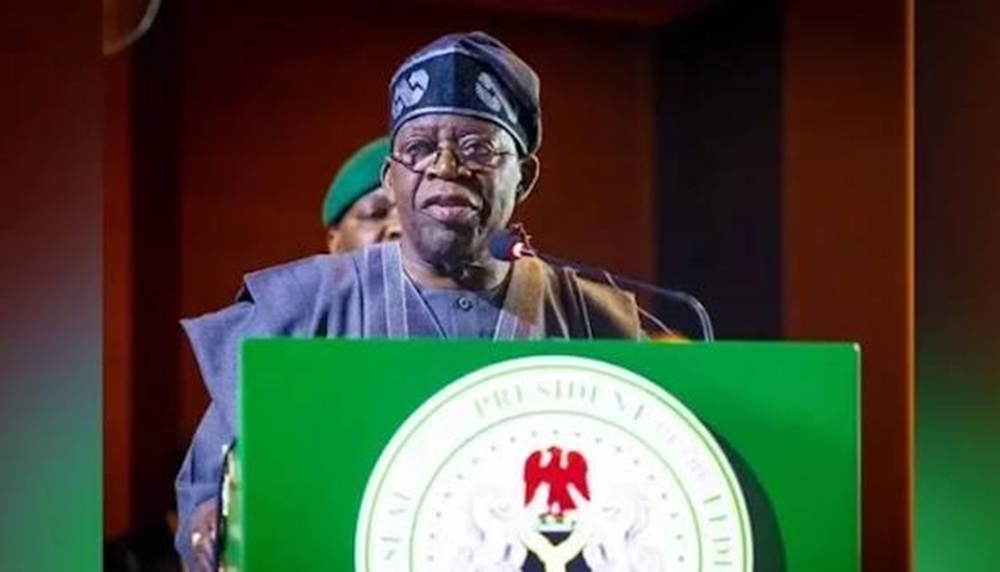
President Bola Ahmed Tinubu addressed the nation to mark the third anniversary of his administration, focusing directly on economic survival, structural reforms, and the heavy sacrifices made by ordinary citizens. The government insists these hard choices prevented total national bankruptcy, even as everyday families across West Africa continue to feel the sharp edge of rising living costs.
President Tinubu declared that bold interventions stopped an imminent fiscal breakdown. The removal of long-standing fuel subsidies and foreign exchange distortions were framed as non-negotiable emergency measures to keep the country afloat. Before these policy changes, the financial drain on public coffers had reached unsustainable levels. At the peak of the fuel subsidy era, Nigeria was burning through as much as ₦18.4 billion every single day, with total fuel subsidy payments exceeding ₦4 trillion in 2022 alone. Simultaneously, multiple exchange-rate windows created arbitrage opportunities that stripped the national economy of vital capital. Official reports indicate that currency racketeering and speculative practices drained more than ₦8 trillion over a three-year period. By eliminating those systems, the government redirected funds toward state revenues, healthcare, basic education, and public infrastructure. While these measures halted the fiscal hemorrhage, they also triggered immediate price shocks across consumer markets.
The administration acknowledges that structural adjustment policies placed immediate pressure on household budgets. Removing subsidies led directly to higher fuel prices, elevated transport costs, and sharp food inflation. The President directly thanked citizens for enduring these severe economic adjustments, emphasizing that without these interventions, worsening poverty and currency devaluation would have completely destroyed purchasing power. For traders in Ghana and neighbouring ECOWAS countries, these domestic policy shifts created ripple effects as border commerce and cross-border fuel supply chains adjusted rapidly to the end of subsidized Nigerian petrol.
Capital markets have responded with significant upward movement following structural market reforms, reflecting restored institutional investor interest and clearer foreign exchange repatriation pathways. The Nigerian Exchange (NGX) All-Share Index rose from 53,000 points at the start of the administration in 2023 to 250,000 points by mid-2026. Total market capitalisation grew from ₦30 trillion to ₦160 trillion during the same timeframe. When public finances stabilize, provincial and local governments receive larger statutory allocations to invest in local projects. However, financial analysts note that stock market gains do not instantly reduce market prices for ordinary shoppers. The administration asserts that market growth serves as an early indicator before broader employment gains reach the public.
The presidential address outlined aggressive capital expenditure targeting transport corridors and energy networks. Infrastructure investments aim to reduce logistics bottlenecks that keep food and goods expensive. Highway construction spans over 2,700 kilometres along five major national corridors, including landmark projects like the Lagos-Calabar Coastal Highway and the Sokoto-Badagry Super Highway. Modernization of the national rail network is active, targeting freight movement between industrial hubs, agricultural zones, and commercial ports. In the energy sector, government focus has shifted to clearing legacy debt obligations and expanding power grid capacity, which remains essential for manufacturing enterprises that currently rely on private diesel generators. For foreign investors and regional trade partners across West Africa, improved transit routes mean safer movement of goods and lower logistics risks over time.
Major policy updates in the energy domain have reversed previous capital flight, as institutional reforms restore international corporate interest in upstream and midstream gas assets. A major milestone highlighted in the address is the $5 billion Nigeria Liquefied Natural Gas (NLNG) Train 7 project, which is nearing final completion to boost national gas production capacity, domestic supply, and export earnings. International oil companies that had previously paused operations are committing fresh capital back into deepwater offshore development, stabilizing revenue generation for national budget funding. To ease domestic transit costs, the government is expanding compressed natural gas (CNG) conversion initiatives for commercial buses, trucks, and taxis to drop transport expenses below previous petrol-dependent baselines.
Youth unemployment and rising food costs remain primary socio-economic challenges, prompting a response centered on agricultural corridors, vocational funding, and digital skill expansion. Target interventions in agriculture provide smallholder farmers with improved seeds, fertilizers, modern irrigation, and direct market access to cut post-harvest losses and stabilize local food prices. To support young citizens, new funding streams target technical enterprise, software development, creative arts, and student loan access through the Nigerian Education Loan Fund, which has disbursed over ₦282 billion to more than 1.5 million beneficiaries. National security operations have also been intensified along major farming belts to clear security threats so displaced farmers can return and boost total food production.
As the largest economy in West Africa, economic trends in Nigeria directly influence regional stability, regional banking systems, and trade volume. When Nigerian fiscal health improves, regional trade under the African Continental Free Trade Area (AfCFTA) gains momentum. Stronger production capacity inside Nigeria creates reliable export markets for goods manufactured in Ghana, Côte d’Ivoire, and Togo. Furthermore, ending artificial exchange rates simplifies cross-border remittances and formal banking transactions across the sub-region. Transparent currency markets encourage cross-border commerce without currency losses, offering a more sustainable path for regional integration.
Also Read: man seeks divorce alleges frequent beating by wife