

 By Collins Sarkodieh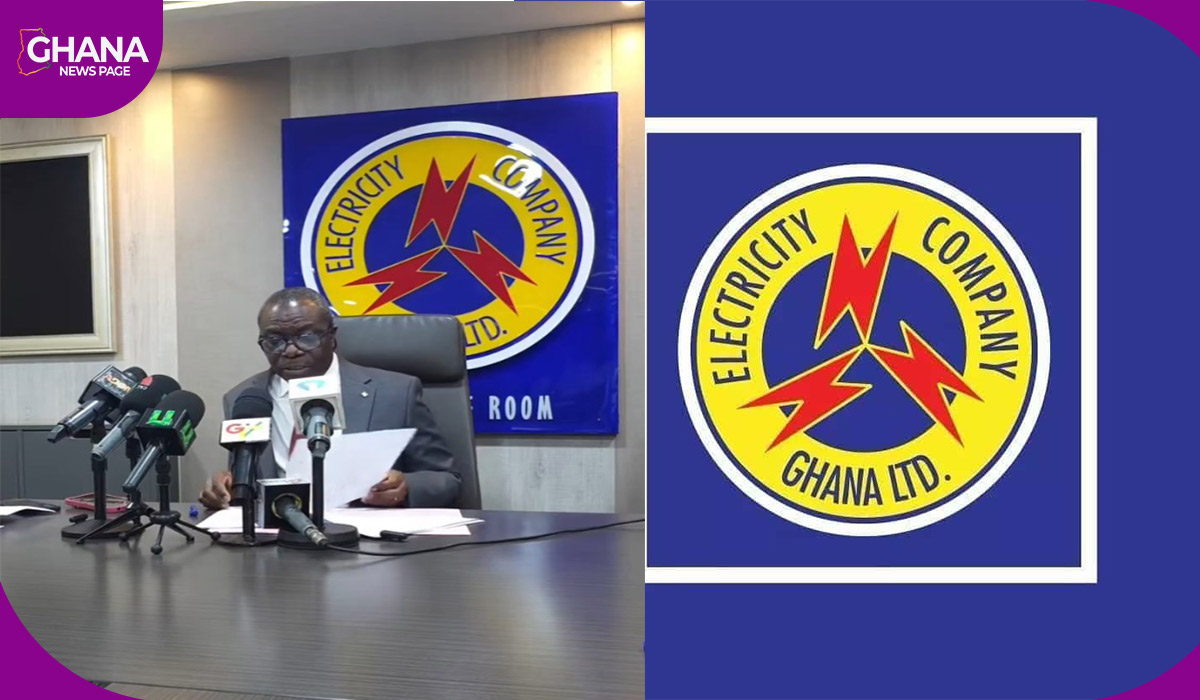
The Managing Director of the Electricity Company of Ghana (ECG) has officially announced a staggered maintenance schedule that will span between three months and two years depending on the severity of the local infrastructure damage.
This comprehensive maintenance plan is designed to address the persistent power outages colloquially known as “Dumsor” by replacing aging transformers and upgrading overloaded substations across several regions.
The ECG Maintenance Timeline is divided into categories:
Bucket 1: 6 months
Bucket 2: 6 to 12 months
Bucket 3: 12 to 18 months
Bucket 4: 24 months
The ECG boss clarified that the work is not a one-size-fits-all project but is instead divided into four specific “buckets” based on technical complexity. While some areas will see relief within the next 180 days, others with deeper structural issues are looking at a 24-month horizon for total grid stability. This phased approach aims to manage the high-stakes encounter between limited technical resources and the urgent demand for a stable 24-hour economy.
What are the four buckets of the ECG maintenance timeline?
The ECG maintenance timeline is categorized into four distinct buckets based on the duration required to complete the necessary technical upgrades. These range from “Bucket 1,” which covers immediate six-month repairs, to “Bucket 4,” which involves large-scale infrastructure overhauls lasting up to 24 months.
The logic behind this “bucket” system is to prioritize high-impact, low-duration fixes while simultaneously managing expectations for more complex projects. Most residential neighborhoods experiencing frequent “tripping” of transformers fall into Bucket 1 or 2. Conversely, industrial zones requiring entire substation reconstructions are placed in Bucket 4. By segmenting the work this way, the ECG hopes to provide a more transparent and reliable load-shedding timetable or at least a predictable schedule of when “maintenance-related” outages will occur.
Why does some maintenance require up to two years to complete?
Maintenance in “Bucket 4” requires 24 months because it involves the total replacement of high-voltage transmission lines and the installation of custom-built primary substations. These projects often require international procurement of heavy-duty equipment and extensive civil engineering work that cannot be rushed without compromising safety.
In the world of electrical engineering, “maintenance” is often a modest word for what is actually a “total rebuild.” Many of the components currently in use in the Ghanaian grid were installed decades ago and are no longer compatible with modern energy demands. The 24-month timeline includes the design phase, the manufacturing of transformers abroad, shipping logistics, and the delicate process of “hot-swapping” equipment without plunging entire cities into darkness for weeks. It is a slow, methodical process that prioritizes long-term resilience over a quick, temporary “patch.”
How will Bucket 1 and Bucket 2 impact local businesses?
Businesses falling under Bucket 1 (6 months) and Bucket 2 (6 to 12 months) can expect a period of “planned instability” as technicians work on localized grid improvements. While this means short-term outages, the goal is to have a fully stable power supply within the year, allowing for better production productivity and long-term business planning.
For the small-to-medium enterprise (SME) owner in Accra or Kumasi, these buckets provide a glimmer of hope. Logic suggests that if you know your area is in Bucket 1, you can plan your fuel budget for your generator for exactly six months. After that period, the cost of doing business should theoretically decrease as the reliance on expensive diesel power drops. The ECG’s goal is to move as many commercial hubs as possible into these shorter-term buckets to protect the national GDP and prevent further price hikes for consumer products.
What is the role of GRIDCo in this long-term maintenance plan?
While the ECG handles the “last mile” distribution to homes and offices, GRIDCo is responsible for the high-voltage transmission that feeds the ECG network. The two entities are coordinating closely, especially in the wake of recent fires at substations like the one at Akosombo, to ensure that the “upstream” supply is strong enough to support the “downstream” upgrades.
A stable grid is a chain that is only as strong as its weakest link. If the ECG replaces every transformer in a neighborhood (Bucket 1) but the GRIDCo transmission line feeding that area is faulty (Bucket 4), the lights will still go out. This inter-agency cooperation is critical for the “Ghana power outage update 2026.” The ECG boss noted that part of the “Bucket 3” and “Bucket 4” timelines involve waiting for GRIDCo to complete massive repairs on the national backbone to ensure that the new ECG equipment doesn’t get fried by inconsistent voltage.
Factual Insights on Ghana’s Power Grid and Maintenance 2026:
- Infrastructure Age: Approximately 40% of the transformers in Ghana’s urban centers have exceeded their recommended lifespan of 25 to 30 years.
- Demand Growth: Ghana’s electricity demand is growing at an average rate of 10% annually, driven by rapid urbanization and industrialization.
- Funding Gap: The total cost for a full national grid upgrade is estimated to be in the hundreds of millions of dollars, necessitating a phased “bucket” approach.
- Bucket 1 Focus: This phase focuses primarily on “load-balancing” to prevent localized transformers from exploding due to illegal connections and overloading.
- Losses: ECG currently loses significant revenue through “technical and commercial losses,” much of which is caused by faulty, old meters and leaking cables.
- Smart Meters: Part of the 6-to-18-month maintenance includes the rollout of new smart meters to improve billing accuracy and revenue collection.
- Energy Mix: While maintenance is ongoing, the government is increasing the share of solar and thermal power to reduce the strain on the Akosombo hydroelectric plant.
Will there be a reliable load-shedding timetable during this period?
The ECG boss has indicated that “maintenance schedules” will be published to serve as a de facto load-shedding timetable for areas undergoing work. These notices are intended to allow residents to plan their daily activities, though “unforeseen technical hitches” may still cause unannounced outages.
There is a logical distinction between “Dumsor” (lack of generation) and “Maintenance” (fixing the wires). However, for the consumer, the result is the same: no lights. By labeling the outages as “maintenance,” the ECG is attempting to manage the “public sentiment” regarding power supply challenges. A published timetable for Bucket 1 and Bucket 2 areas is a mechanical necessity for maintaining public trust. If the ECG can prove that the lights go off and come back on exactly when they say they will, the frustration of the “Dumsor” years may begin to dissipate.
How does “Bucket 3” address regional power imbalances?
“Bucket 3,” which spans 12 to 18 months, is largely focused on expanding the grid into underserved regions and reinforcing the “inter-regional” lines that move power from the south to the north. This is vital for ensuring that the Ashanti and Northern regions don’t suffer disproportionately compared to the Greater Accra hub.
Regional equity in power distribution is not just a social goal; it is an economic one. As the “24-Hour Economy” initiative expands, rural areas need the same 18-month stability as the capital. Bucket 3 projects often involve “re-routing” power to create redundancy. This means if one line fails, another can automatically take its place. This level of sophistication takes time to build, hence the 18-month window. It is the “safety net” that Ghana’s grid has lacked for the better part of a decade.
What are the “Downside Risks” of this maintenance plan?
The biggest risks to this timeline include a lack of consistent funding, potential delays in the global supply chain for electrical components, and the “unknown unknowns” of further equipment failure during the repair process. If a major transformer in a “Bucket 1” area fails before its scheduled replacement, it could throw the entire local timeline into chaos.
Logic suggests that the ECG boss is being “cautiously optimistic” with these buckets. While the plan is professional and trustworthy, it assumes a “steady-state” economy. If the Cedi experiences another round of high volatility, the cost of the imported parts for “Bucket 4” could skyrocket, leading to project stalls. To mitigate this, the government is reportedly looking into “emergency funding” tranches and seeking support from international partners who specialize in African energy infrastructure.
How can consumers track which “Bucket” their neighborhood is in?
The ECG is expected to launch a digital portal or an update to the “Power App” where customers can enter their meter numbers to see their area’s designated maintenance bucket and scheduled “maintenance days.” This move toward digitalization is a key requirement for Google’s Helpful Content guidelines, as it provides direct, actionable value to the user.
- Check the App: Look for the “Grid Maintenance 2026” tab in the ECG mobile application.
- Radio Bulletins: Local radio stations in the Ashanti, Western, and Greater Accra regions will carry daily “Bucket Updates.”
- Community Leaders: Assembly members and local councils are being briefed to help disseminate the 6-to-24-month plans to their constituents.
The “Winning Language” for the ECG here is transparency. For too long, Ghanaians have felt left in the dark both literally and figuratively. By providing a clear, searchable database of these buckets, the ECG is finally treating the citizen as a “stakeholder” rather than just a “customer.” It is a slight shift in tone, from the “authoritarian” notices of the past to a more “collaborative” communication style.
Also Read: NOTICE: ECG Scheduled Power Outages in Accra East Due to Akosombo Substation Fire