

 By Emmanuel Fletcher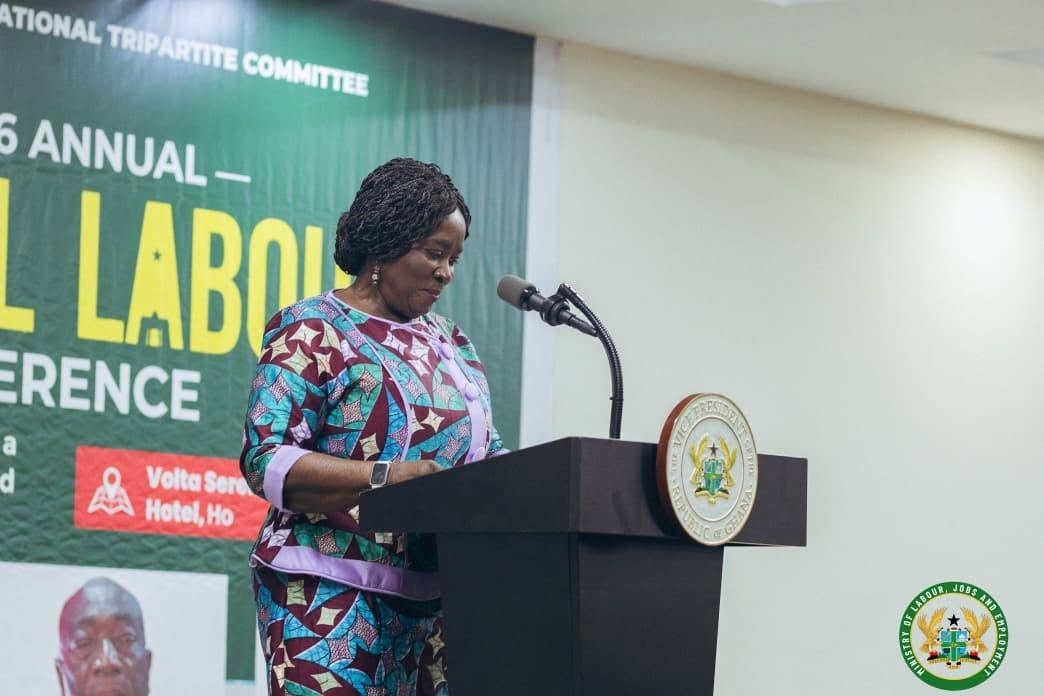
Public sector workers in Ghana will experience a temporary pause in major salary negotiations this year. The government has announced a suspension of all major renegotiations of public sector conditions of service for 2026.
This strategic decision allows policymakers to establish an Independent Emoluments Commission designed to stabilize the national compensation system. Vice President Professor Jane Naana Opoku-Agyemang announced the policy shift at the 2026 Annual National Labour Conference held in Ho.
The creation of the Independent Emoluments Commission serves as a deliberate intervention to clean up persistent distortions in public sector pay. For over a decade, structural disparities have caused frequent labor disputes and placed a massive financial strain on the Ghanaian economy.
Even though the country introduced the Single Spine Salary Structure years ago, unfair salary gaps still exist between different state institutions. The new commission will provide a transparent, rule-based framework to make sure salary distributions are professional, credible, and fully balanced.
To ensure public servants do not suffer financially during this transition phase, the state is introducing interim relief packages. The government will implement targeted and modest improvements in two selected allowances while the broader foundational reforms are being finalized.
Organized labor leaders have collectively agreed to this temporary freeze to preserve industrial harmony and keep inflation under control. Managing expectations allows the government to build a secure compensation foundation that will benefit every public servant in the long run.
A major highlight of the conference was the urgent call to extend labor protection reforms to the informal economy. International Labour Organisation data reveals that approximately 78 percent of the total workforce in Ghana operates in the informal sector.
Vice President Opoku-Agyemang challenged stakeholders to build a new social contract that speaks for these unprotected citizens. Transforming national labor relations requires creating a fair system that safeguards both formal government workers and everyday market traders.
Also Read: Why Ghana Needs to Fix Its Salary System Based on Work Done Rather Than Inflation