

 By Zobia Zulfqar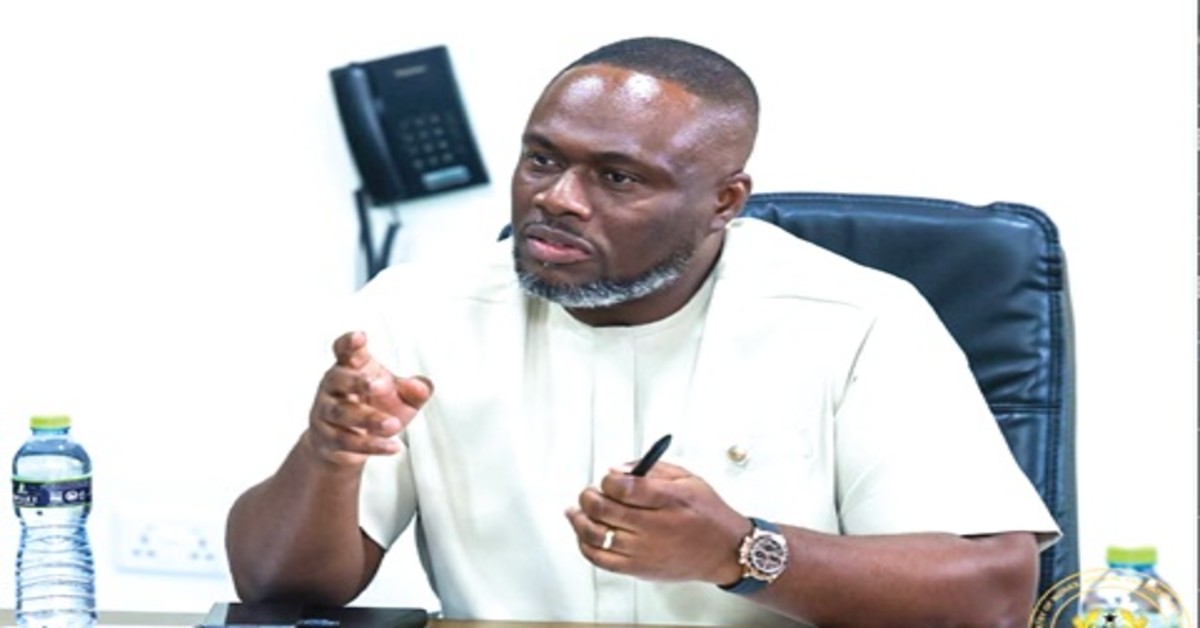
The government has terminated the contract for the reconstruction of the Odaw River drainage system after the contractor failed to meet expected performance standards, the Minister for Works, Housing and Water Resources, Kenneth Gilbert Adjei, has informed Parliament.
The Odaw River drainage project forms part of the Greater Accra Resilient and Integrated Development (GARID) Project, a World Bank-supported initiative aimed at reducing flooding and improving climate resilience across the Greater Accra Region.
Addressing Parliament last Friday, Mr Adjei explained that the contract was cancelled after persistent poor performance by the contractor delayed progress on one of Accra’s key flood mitigation projects.
The project, which began in July 2024, involved the construction of a 1.5-kilometre box culvert extending from Nima Paloma to the Odaw River. It was originally scheduled to be completed within 18 months.
However, according to the minister, the contractor failed to deliver the work as expected, leaving the government with no option but to terminate the agreement.
“Due to poor performance, the contract for that work has been terminated,” Mr Adjei told lawmakers.
The minister explained that although the contract has been cancelled, some sections of the project had reached critical stages that could not be abandoned because doing so would increase the risk of flooding and environmental damage.
To prevent further delays, the Ministry of Works, Housing and Water Resources sought approval from the World Bank to complete the most urgent portions of the project while preparations continue to procure a new contractor.
According to Mr Adjei, the World Bank approved the ministry’s request to proceed with the completion of the critical works as the project is repackaged for a fresh procurement process.
He said the emergency works include demolishing the outfall wall of the Odaw drainage channel to prevent sediment accumulation and improve the free flow of stormwater.
The ministry is also working to complete downstream drainage sections that connect directly to the Odaw channel while reconstructing upstream sections that had already been stripped and demolished before the contract was terminated.
Mr Adjei stressed that completing these sections is necessary to prevent further deterioration of the project and reduce the likelihood of severe flooding during the rainy season.
He disclosed the information while responding to a parliamentary question from the Member of Parliament for Klottey Korle, Dr Zanetor Agyeman-Rawlings, who sought an update on the timeline for completing the reconstruction of the Odaw River drainage system.
The GARID Project was launched to strengthen flood resilience in vulnerable communities across Greater Accra through improved drainage infrastructure, solid waste management and climate adaptation measures.
The Odaw River drainage system is regarded as one of the project’s most important components because the river serves as the main drainage channel for large sections of Accra that regularly experience flooding during heavy rains.
Recurring floods in the capital have caused significant damage to homes, businesses and public infrastructure over the years, leading to renewed calls for the timely completion of flood control projects.
Recent heavy rainfall in Accra has once again highlighted the urgency of improving the city’s drainage network, with several communities experiencing severe flooding that displaced residents and disrupted economic activities.
Government says repackaging the Odaw River project will allow a new contractor to complete the remaining works while ensuring better project supervision and value for money.
Officials believe the continuation of the critical works will minimise the immediate flood risk as procurement processes for the remaining sections move forward.
The ministry has assured Parliament that it remains committed to completing the project despite the setback, noting that the reconstruction of the Odaw River drainage system remains a priority under the GARID programme.
Once completed, the upgraded drainage infrastructure is expected to improve stormwater management, reduce flooding in surrounding communities and strengthen Accra’s resilience against increasingly intense rainfall linked to climate change.