

 By Zobia Zulfqar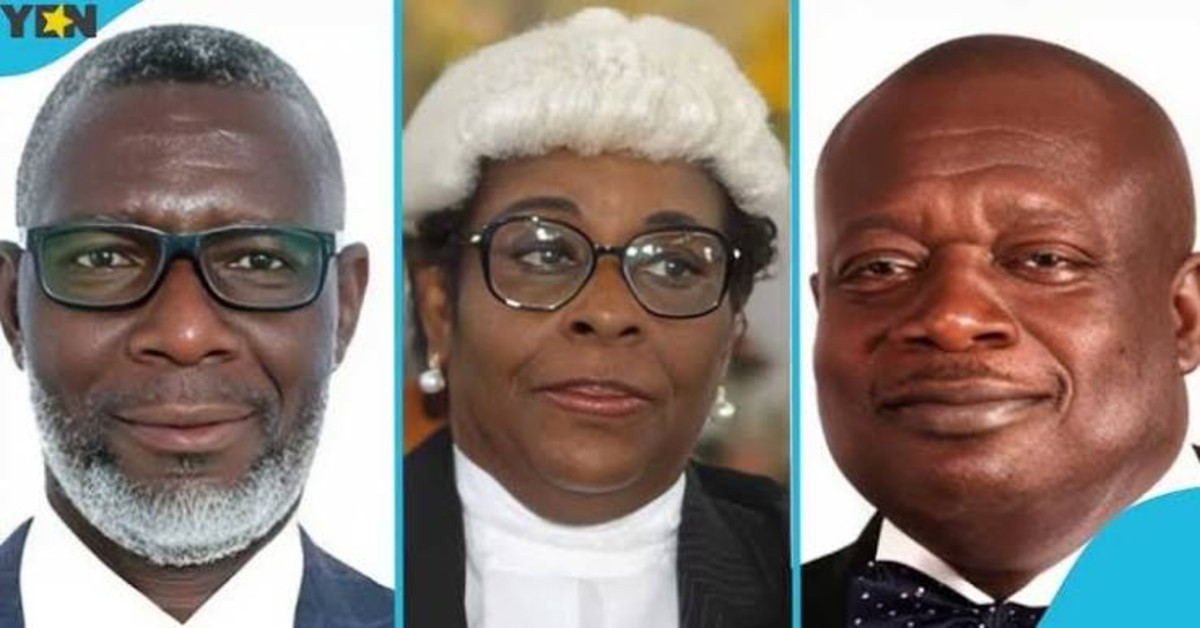
President John Dramani Mahama has nominated Tony Forson, Justice Sophia Rosetta Bernasko Essah, and Justice Edward Amoako Asante for appointment to Ghana’s Supreme Court, in a move that will strengthen the country’s highest court if Parliament approves the nominations.
The announcement was made on Friday, July 17, following consultations with the Judicial Council, as required under the 1992 Constitution. The nominations now await vetting by Parliament’s Appointments Committee before they can be considered by the full House for approval.
If confirmed, the three legal professionals will join the Supreme Court bench, increasing the number of Justices responsible for hearing the country’s most important constitutional, civil and criminal cases.
The Constitution requires the President to consult the Judicial Council before nominating Supreme Court Justices. After the consultation process, Parliament must examine the qualifications, competence and integrity of each nominee before voting on the appointments.
The Supreme Court is Ghana’s highest judicial authority. It has the final say on constitutional interpretation, hears appeals from lower courts and settles disputes involving the Constitution, elections and other matters of national importance.
One of the nominees, Tony Forson, is a respected private legal practitioner and a former President of the Ghana Bar Association (GBA). Unlike the other two nominees, he comes from private legal practice rather than the judiciary.
Forson has spent many years practising law and has earned recognition within Ghana’s legal profession. During his time as President of the Ghana Bar Association, he contributed to discussions on legal reforms, professional ethics and the administration of justice.
His nomination brings private sector legal experience to the Supreme Court, adding a different perspective alongside career judges.
The second nominee, Justice Sophia Rosetta Bernasko Essah, currently serves as a Justice of the Court of Appeal.
She has built an extensive judicial career, handling a wide range of civil and criminal cases while serving in Ghana’s courts. Her experience at the Court of Appeal has given her a strong understanding of legal interpretation and judicial decision-making.
Justice Bernasko Essah has also served in different capacities within the Judiciary, earning a reputation for professionalism and commitment to the rule of law.
The third nominee, Justice Edward Amoako Asante, also serves on the Court of Appeal and brings significant international judicial experience.
Before returning to Ghana’s judiciary, he served as President of the ECOWAS Court of Justice, where he presided over cases involving human rights, regional law and disputes affecting member states of the Economic Community of West African States.
His work at both the regional and national levels has provided him with broad legal experience that could strengthen the work of Ghana’s Supreme Court.
The three nominees are expected to appear before Parliament’s Appointments Committee, where Members of Parliament will question them about their legal careers, judicial philosophy, professional conduct and understanding of constitutional issues.
The committee will also examine their qualifications and assess whether they meet the standards required to serve on the country’s highest court.
After completing the vetting process, the committee will submit a report to Parliament recommending whether each nominee should be approved or rejected.
Parliament will then debate the report before taking a final vote on the nominations.
Appointments to the Supreme Court are among the most important constitutional responsibilities of both the President and Parliament because the Justices play a central role in protecting Ghana’s democracy and the rule of law.
Supreme Court Justices hear landmark cases that shape constitutional interpretation, determine the legality of government actions and resolve disputes with national significance.
Legal experts have often stressed that the experience, independence and integrity of Supreme Court Justices are essential to maintaining public confidence in Ghana’s judicial system.
If approved, the appointments will add three experienced legal professionals with diverse backgrounds in private practice, appellate courts and regional judicial institutions.
The nominations also reflect the constitutional process designed to ensure that appointments to the Supreme Court are subject to both executive consultation and parliamentary scrutiny.
With the vetting process expected in the coming weeks, attention will now shift to Parliament’s Appointments Committee, where the nominees will have the opportunity to outline their qualifications and vision for serving on Ghana’s highest court.
If Parliament grants its approval, Tony Forson, Justice Sophia Rosetta Bernasko Essah and Justice Edward Amoako Asante will officially join the Supreme Court, strengthening the country’s apex court as it continues to handle complex constitutional, legal and public interest cases.
Also Read: U.S. Embassy in Accra to Suspend Most Consular Services from July 20 to July 31