

 By Ishmeal
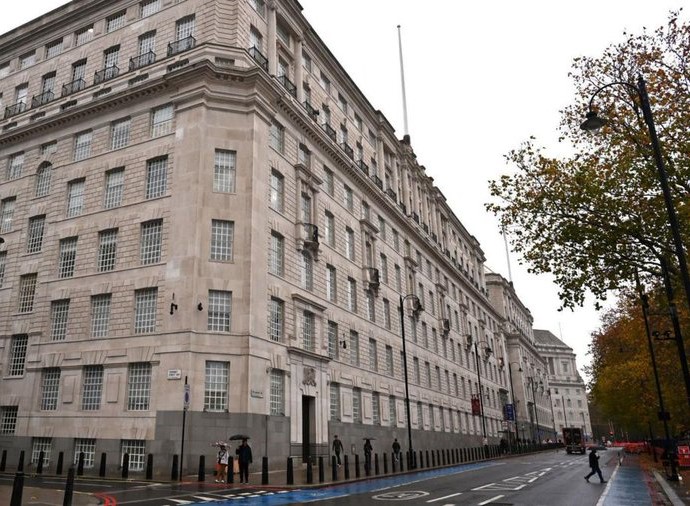
The United Kingdom’s domestic intelligence agency, MI5, will not face contempt of court proceedings despite admitting that false evidence was provided to three courts in a case involving a covert intelligence source.
The decision was delivered by senior judges at the High Court on Tuesday, November 3, 2026. The judges ruled that initiating contempt proceedings against MI5, its Director-General, Sir Ken McCallum, or individual officers would not be in the public interest.
The ruling follows investigations into serious failures within the intelligence service, including the provision of incorrect information during legal proceedings involving a man identified in court as Agent X.
According to reports, the case attracted attention after MI5 provided evidence in support of a 2022 injunction that prevented the BBC from identifying the man in a documentary.
Agent X was described in the proceedings as a covert human intelligence source. He was also accused of abusing two women, including a former partner identified in court as Beth.
How the Controversy Began
The controversy centred on MI5’s claim that it had maintained its policy of neither confirming nor denying whether Agent X was an intelligence source.
However, the BBC later informed the agency that it had recorded a conversation in 2020 in which an MI5 officer confirmed the man’s status as a source.
Despite this, MI5 maintained for about three years that the information provided to the courts was accurate before eventually admitting that it was wrong.
The false information was used in legal proceedings involving the BBC and a specialist tribunal that investigates complaints concerning Britain’s intelligence services.
The matter raised serious questions about the accuracy of evidence provided by MI5 and the internal procedures used to verify information before it is presented to courts.
Investigation Found Serious Failures
In July 2026, Deputy Investigatory Powers Commissioner Sir John Goldring reported serious and systemic failings within MI5 following an investigation into the case.
His findings included that an officer identified as Officer 2 had lied about his role in the events. The investigation also raised serious concerns about the conduct of another officer and the agency’s systems for preparing and presenting evidence.
MI5 accepted the findings of Sir John’s report.
The investigation followed earlier criticism from judges, who had questioned the reliability of the agency’s internal investigations into the matter.
Officer 2 resigned from MI5 in 2025, while another officer, identified as Officer 3, was facing disciplinary proceedings at the time of the November 2026 judgment.
Why the Judges Rejected Contempt Proceedings
Lawyers representing Beth had argued that contempt proceedings should be initiated against MI5, its director-general and the officers involved.
However, Lady Chief Justice Baroness Carr, sitting with Dame Victoria Sharp and Mr Justice Chamberlain, concluded that further contempt proceedings would not serve the public interest.
The judges said such proceedings were unlikely to achieve more than the findings already established through Sir John’s investigation.
They also noted that legal action against individual officers would require significant resources and could face substantial legal challenges.
Regarding MI5 itself, the judges said the available sanction would be financial. They concluded that imposing a financial penalty would simply reduce the funds available to an agency responsible for protecting national security.
The court therefore decided not to initiate contempt proceedings against MI5, Sir Ken McCallum or any individual officer.
Police Investigation Could Still Follow
Although the High Court declined to initiate contempt proceedings, the decision does not mean that every possible form of legal accountability has been ruled out.
The judgment indicated that a criminal investigation into the conduct of individual officers could follow. Any further action would need to be considered through the appropriate investigative and prosecutorial processes.
The judges also made clear that the seriousness of the findings could affect the level of confidence courts place in evidence supplied by MI5 in future cases.
This is particularly important because intelligence agencies often provide information that courts cannot independently verify through ordinary public sources.
MI5 Chief Acknowledges the Agency’s Failures
Following the ruling, MI5 Director-General Sir Ken McCallum acknowledged the seriousness of the agency’s failures.
He said the judgment underlined the serious shortcomings in the handling of the case and stated that the agency he leads had fallen badly short.
MI5 has also accepted the findings of the independent investigation and outlined changes intended to address the problems identified.
The case has raised wider questions about transparency, accountability and the responsibility of intelligence agencies when providing evidence to the courts.
A Significant Case for Britain’s Intelligence Oversight
The ruling brings another major development in a case that has placed MI5’s internal procedures and accountability under scrutiny.
While the agency will not face contempt proceedings, the findings highlight the importance of honesty and accuracy when intelligence organisations present evidence before the courts.
The decision also leaves open the possibility of further action through police investigations and other appropriate legal processes.
For the British intelligence service, the case represents a serious reminder that national security responsibilities do not remove the need for accountability and public confidence in the justice system.
Also Read:Joshua Wong Jailed For 10 Years In Hong Kong