

 By Collins Sarkodieh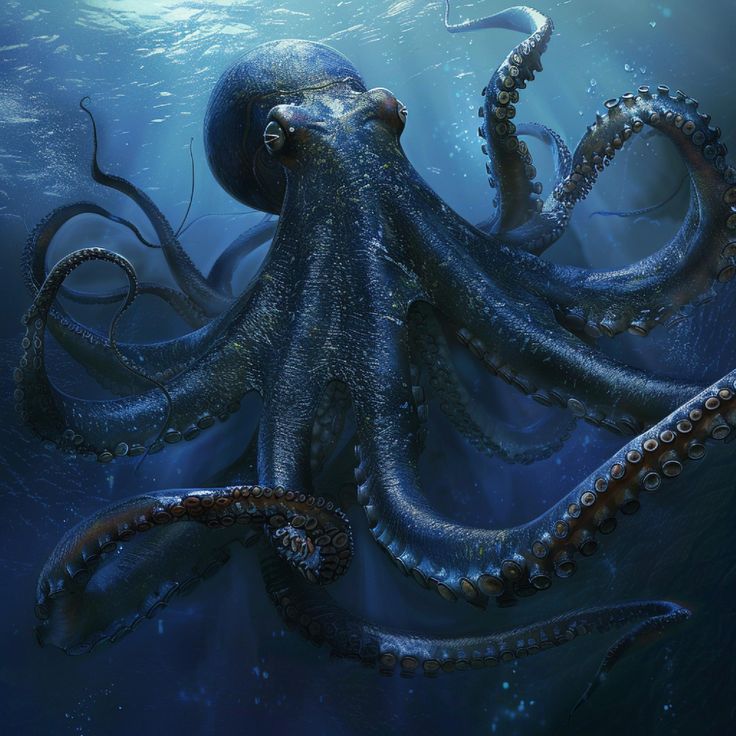
Paleontologists have uncovered evidence of a colossal prehistoric octopus that reached lengths of up to 19 metres during the Late Cretaceous period. This discovery, based on fossilized chitinous beaks, suggests that these “Cretaceous Krakens” were apex predators capable of competing with massive marine reptiles like mosasaurs roughly 100 million years ago.
For a long time, the scientific community believed that the ancient oceans were almost exclusively dominated by vertebrate predators such as sharks and prehistoric whales. However, this new research into cephalopod fossils is rewriting the history of marine ecosystems. By analyzing the scale and wear patterns of fossilized mouthparts, researchers have determined that these soft-bodied giants were not just passive drifters but active hunters that shaped the food webs of the ancient world. The existence of a 19-metre octopus proves that invertebrates reached massive sizes and high ecological status long before the modern era.
How do scientists know a 19-metre octopus existed without a full skeleton?
Because octopuses are soft-bodied invertebrates, they lack bones that typically survive the fossilization process, leaving only their hard, parrot-like beaks as evidence. Researchers used advanced 3D imaging to analyze these fossilized beaks, comparing their dimensions to those of modern species like the Giant Pacific Octopus to calculate an estimated body mass and total length.
The beak of an octopus is composed of chitin, a tough and durable material that resists decay much better than muscle or skin. By measuring the “lower rostrum” and “hood” of these ancient beaks, paleontologists can create a mathematical scaling model. In the case of these Cretaceous specimens, the beaks were so massive that they could only belong to an organism spanning between seven and 19 metres. This methodology is similar to how scientists estimate the size of giant squids today, where beak size remains the most reliable indicator of an animal’s overall scale in the deep sea.
What did the 19-metre ancient octopus eat during the Cretaceous period?
The largest fossilized beaks show significant chips, abrasions, and heavy wear, suggesting these giant octopuses regularly consumed heavily armored prey. Their estimated beak strength indicates they could crush thick shells and potentially even the bones of smaller marine vertebrates, placing them at the very top of the food chain.
During the Late Cretaceous, the oceans were filled with ammonites and other hard-shelled organisms that would have required immense force to crack. The discovery of these beaks suggests a specialized diet that allowed these cephalopods to compete directly with mosasaurs and large predatory fish. Instead of hiding in crevices like many modern relatives, these giants likely prowled open waters or ambush zones where they could use their eight powerful arms to restrain and neutralize formidable prey. This predatory behavior would have made them a significant factor in the evolutionary “arms race” of the ancient seas.
Was the ancient giant octopus as intelligent as modern species?
While soft brain tissue does not fossilize, researchers found asymmetrical wear patterns on the fossilized beaks, which they interpret as evidence of behavioral specialization or “handedness.” This suggests that these ancient giants may have possessed advanced problem-solving skills and complex hunting strategies similar to the highly intelligent octopuses we see in the ocean today.
Modern octopuses are famous for their ability to navigate mazes and use tools, traits that require significant neural complexity. If these ancient ancestors were already exhibiting “handedness”—a preference for using one side of their beak or body more than the other—it hints that cephalopod intelligence has deep evolutionary roots spanning over 100 million years. This discovery shifts the narrative from octopuses being “newly smart” to being part of a long lineage of intelligent, strategic hunters that have survived multiple mass extinctions.
Why is the discovery of “soft-bodied” giants so rare in paleontology?
The fossil record is heavily biased toward organisms with hard parts like teeth, bones, and shells, making the preservation of a 19-metre soft-bodied animal extremely unlikely. Outside of exceptionally rare “Lagerstätten” (fossil sites with extraordinary preservation), the only parts of an octopus that consistently enter the fossil record are the beaks and, occasionally, the ink sacs.
Also Read: World Malaria Day 2026: Why Scientists Are Sounding the Alarm in Ghana
This creates what scientists call the “problem of invisible giants.” There may have been countless massive invertebrate species throughout Earth’s history that left no trace simply because they lacked a skeleton. The fact that we have found these beaks at all is a stroke of geological luck. It forces a realization that our current understanding of prehistoric life is likely missing many “ghost lineages” of massive, intelligent creatures that simply vanished without leaving a bone behind. Every new beak found is a vital piece of a puzzle that describes an ocean far more diverse than previously imagined.
Factual Insights on Prehistoric Cephalopods:
- Time Period: These giant octopuses lived approximately 100 million years ago during the Late Cretaceous period.
- Comparative Size: At 19 metres, this ancient species was nearly twice the size of a modern Giant Squid, which typically reaches 10 to 12 metres.
- Material Composition: Octopus beaks are made of chitin, the same material found in the exoskeletons of crabs and insects.
- Evolutionary Rivalry: These octopuses coexisted with Mosasaurs, which could grow up to 17 metres, suggesting a fierce rivalry for apex predator status.
- Global Distribution: Fossilized cephalopod beaks of this scale have been found in various marine deposits, indicating they were likely widespread across the ancient Tethys Ocean.
- Intelligence Markers: Asymmetrical wear on mouthparts is a recognized biological marker for behavioral lateralization, also known as “handedness.”
- Biological Success: Cephalopods have survived all five major mass extinction events, though giant species like these eventually disappeared as ocean chemistry changed.
How did these giant octopuses reshape the ancient food web?
The presence of a 19-metre invertebrate predator means that the ancient food web was not solely a hierarchy of vertebrates. These “Krakens” would have regulated the populations of large fish and armored mollusks, preventing any single species from over-dominating the Cretaceous marine environment.
By functioning as apex predators, they forced other marine life to evolve defensive traits, such as thicker shells or faster swimming speeds. This creates a more dynamic ecosystem where intelligence and soft-bodied agility were just as effective as heavy scales and bone. The ecological niche occupied by these octopuses is now largely filled by sperm whales and giant squids, showing that while the players have changed over 100 million years, the role of the “deep-sea giant” has remained a constant necessity in ocean health.
What are the challenges in estimating the exact appearance of these creatures?
Without skin impressions or a full body fossil, the exact physical appearance of a 19-metre octopus remains speculative. While we can estimate size from the beak, we do not know for certain if they had defensive spikes, camouflage abilities, or if they possessed the same number of hearts as modern octopuses.
Paleontologists use “phylogenetic bracketing” to make educated guesses, assuming that if modern octopuses and their close ancestors share certain traits, these giants likely did too. However, the sheer scale of a 19-metre body would require unique physiological adaptations for oxygen transport and movement. The uncertainty keeps the “Cretaceous Kraken” in a mysterious light, reminding us that the fossil record is a book with most of its pages missing. Future discoveries in unique underwater fossil beds may one day reveal the true face of these eight-armed rulers.
Will we ever find more complete fossils of these giant octopuses?
The search continues in regions with fine-grained sediment deposits where soft tissue preservation is more common, such as the Solnhofen Limestone in Germany or certain deposits in Lebanon. While a full 19-metre “mummy” is unlikely, even a partial limb or mantle impression would provide revolutionary data on their biology.
Advanced technology like ground-penetrating radar and high-resolution CT scanning is helping scientists find smaller fragments hidden within rock slabs that were previously overlooked. As we look deeper into the Late Cretaceous layers, the goal is to find evidence of their suckers or nervous systems. Every new piece of data brings us closer to understanding how a creature without a single bone could grow larger than a modern school bus and command the respect of the most dangerous reptiles to ever swim the seas.
The discovery of the 19-metre ancient octopus is a humbling reminder of how much we still have to learn about the history of life on Earth. These “Krakens” were not myths but real, intelligent, and formidable hunters that held their own against the most famous monsters of the prehistoric world.
As research into these ancient beaks continues, we are forced to rethink our place in a world that was once ruled by the clever and the soft-bodied. The ocean has always belonged to the mysterious, and 100 million years ago, the undisputed king of the deep had eight arms and a mind far sharper than its neighbors ever realized.
Also Read: Indonesia Landslide Death Toll Rises to 74 as Search Continues
Do you think that the lack of bones in octopuses makes them more successful at surviving mass extinctions compared to vertebrate predators, or does their soft-bodied nature ultimately make them more vulnerable to environmental changes?